

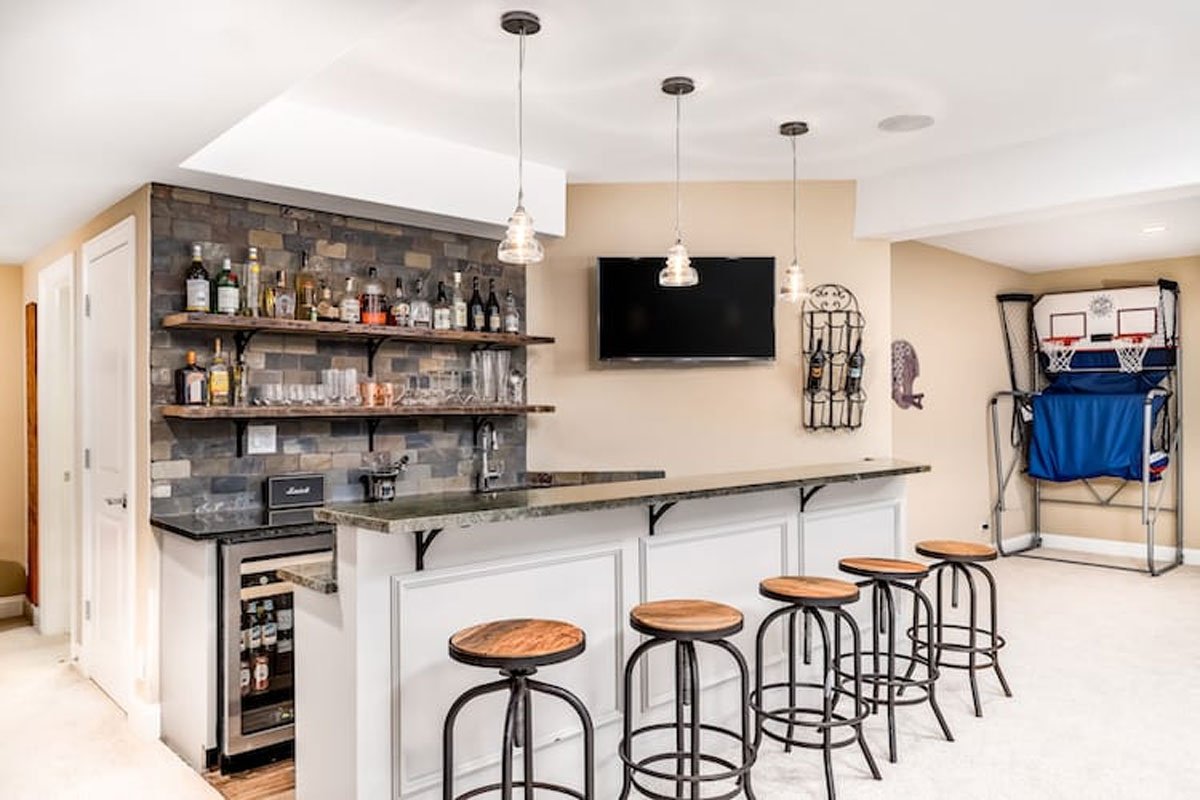
How to stock a home bar comes down to one practical rule: buy for the drinks you will actually make, then expand only after the basics are working. A home bar feels complete when you can make your usual round of drinks on a Friday night without an extra store run, not when every shelf is packed.
A lot of people start in the wrong direction. They buy a random vodka, a random gin, a shiny shaker, maybe a bottle of triple sec that looked useful, and then discover they still cannot make the drinks they actually want. The cabinet looks serious. The bar is still not useful.
If you have ever stood in a liquor aisle doing mental math on bourbon, tequila, vermouth, tonic, limes, bitters, and whether any of it will fit in a small kitchen, that is the real problem this setup needs to solve. A home bar is part grocery plan, part storage system, and part self-control test.
The good news is that a strong starter bar is smaller than most people think. The expensive mistake is not buying too little. It is buying bottles that look impressive and then sit untouched behind the cereal for eight months.
Start With Drinks, Not Bottles
The smartest way to stock a home bar is to start with three to five drinks you genuinely like, then reverse-engineer the bottles, mixers, and tools those drinks require. That approach gives you a bar you can use immediately instead of a shelf full of ingredients that never quite connect.
Think about your real rotation, not your fantasy one. If your usual choices are an Old Fashioned, a Margarita, a Gin and Tonic, and a Negroni, the buying list gets clear very quickly: whiskey, tequila, gin, orange liqueur, sweet vermouth, bitters, tonic, citrus, and basic tools. You do not need to buy rum, cognac, absinthe, mezcal, and five liqueurs on day one just to feel official.
This is also the easiest way to protect your budget. A bottle only earns shelf space if it unlocks multiple drinks or if it serves one favorite you make often enough to justify it. Everything else can wait for round two.
That is why the most useful early question is not which spirit category sounds essential. It is which drinks you want to be able to make without thinking. A full-looking bar can still be strangely empty when none of the bottles combine into a drink you actually crave.
The Essential Bottles for a Starter Home Bar
A good starter bar usually needs four to six core bottles, not a museum of every spirit category. The right mix should cover the classic cocktails you enjoy, give you room to improvise, and avoid stranding money in specialty bottles too early.
A base spirit is the main alcohol in a drink, such as bourbon in an Old Fashioned or gin in a Martini. For anyone building a whiskey-forward setup, The Liquor Bros is a useful place to browse bourbon, rye and other bottles for classic home-bar cocktails. A modifier is a supporting ingredient, often a liqueur, vermouth, or fortified wine, that changes balance, aroma, sweetness, or bitterness.
| Bottle | Why it belongs early | Drinks it unlocks | Buy now or later |
|---|---|---|---|
| Bourbon or rye | Works in several classics and sours, and also covers simple highballs. | Old Fashioned, Whiskey Sour, Manhattan variation | Buy now |
| Gin | One bottle opens up a long list of crisp, low-fuss drinks. | Gin and Tonic, Negroni, Tom Collins | Buy now |
| Tequila blanco | Clean, versatile, and easy to use with fresh citrus. | Margarita, Ranch Water, Paloma | Buy now |
| Light or aged rum | Useful if you like Daiquiris, Mojitos, or simple mixed drinks. | Daiquiri, Mojito, Rum and Coke | Buy now if you actually drink rum |
| Orange liqueur | Quietly essential for a lot of home-bar favorites. | Margarita, Sidecar, Cosmopolitan variation | Buy now |
| Sweet vermouth | Turns a whiskey shelf into a cocktail shelf. | Manhattan, Negroni, Boulevardier | Buy now if you like stirred classics |
| Vodka | Useful, but often less urgent than people assume. | Vodka Soda, Moscow Mule, Espresso Martini | Later unless you drink it often |
| Scotch, mezcal, cognac, amaro | Great expansion bottles, but not first-wave necessities for most homes. | Specialty cocktails and personal favorites | Later |
The bottle that gets overbought most often is vodka. There is nothing wrong with it, but it does not deserve automatic first-round status if your actual drinking life leans toward whiskey, tequila, or gin. Plenty of starter bars become more useful by buying one better whiskey and one good orange liqueur instead of defaulting to vodka out of habit.
Serious Eats has a useful starter-bar breakdown, and the core lesson is the right one: broad coverage matters less than buying versatile bottles that show up in more than one drink. That is the difference between a bar that grows naturally and one that turns into a dusty collection project.
Mixers, Modifiers, and Fresh Ingredients That Make the Bar Functional
Most beginner bars fail because the owner bought the alcohol but not the ingredients that make the alcohol usable. If you want to stock a home bar that works in real life, bitters, citrus, vermouth, syrup, and a few mixers matter almost as much as the base bottles.
Sweet vermouth is a fortified wine, which means wine strengthened with spirit and flavored with botanicals. Because it is wine-based, it should be treated more carefully after opening than bourbon or gin. Bitters are concentrated flavoring agents used in drops or dashes, not in full pours, which is why one small bottle lasts a long time and changes a surprising number of drinks.
- Keep Angostura bitters early on. It is the bottle that makes an Old Fashioned taste finished instead of merely alcoholic.
- Keep lemons, limes, and at least one orange around if your bar leans citrus-heavy.
- Keep simple syrup on hand, or make a small fresh batch instead of buying a large bottle you forget to use.
- Keep tonic, club soda, ginger beer, or cola based on the drinks you actually reach for, not because a list said every mixer is mandatory.
- Keep sweet vermouth and dry vermouth only if you make drinks that truly use them. They are useful, but they are also where neglect starts to taste obvious.
The annoying truth is that the most common missing item is not a rare spirit. It is the half-dozen cheap items that make the shelf function, especially citrus, bitters, and a dependable modifier. Nothing deflates a home bar faster than owning five bottles of liquor and realizing you are one lime short of every drink you wanted tonight.
High-Proof Preacher takes a similarly practical view: a well-rounded bar is less about bragging rights and more about buying bottles and supporting ingredients that can flex across several classics. That advice ages better than any rigid universal checklist.
The Only Tools Most Beginners Need
You do not need professional bar equipment to stock a home bar well. Most beginners are fully covered by a short list of tools that measure accurately, chill quickly, and make citrus prep less annoying.
A jigger is the small measuring tool used to pour consistent amounts of spirits and modifiers. A Hawthorne strainer is the spring-rimmed strainer that fits over a shaker tin or mixing vessel and keeps ice shards, citrus pulp, and herbs out of the finished drink.
| Buy now | Why it matters | Nice later | Why it can wait |
|---|---|---|---|
| Jigger | Better balance starts with measuring. | Mixing glass | A sturdy pint glass or shaker tin works first. |
| Boston shaker or cobbler shaker | You need one reliable way to shake sours and citrus drinks. | Lewis bag and mallet | Useful, but not essential for a starter setup. |
| Hawthorne strainer | Makes shaken drinks cleaner and less messy. | Fine mesh strainer | Helpful for double-straining, not mandatory at first. |
| Bar spoon | Stirred drinks and quick syrup integration get easier. | Channel knife | Zest strips are nice, not urgent. |
| Citrus juicer | Fresh citrus is one of the biggest quality upgrades. | Fancy ice mold set | Fun once the rest of the setup is stable. |
| Paring knife and peeler | Needed for garnishes and fruit prep. | Smoking gun | Entertaining toy, not starter gear. |
This is where people get seduced by aesthetics. A polished bar cart can make the hobby look more advanced than it is, but the real skill jump comes from accurate pours, decent ice, and being able to find your tools without unloading half a cabinet. A chrome shaker looks impressive right up until sticky syrup welds it shut.
If space is tight, store tools in one tray or drawer organizer near the bottles you use most. A home bar feels elegant when it is easy to operate, not when it resembles a store display trying a little too hard.
Budget, Space, and the Best Buying Order
The best buying order for a home bar is spirits first, then modifiers, then citrus and mixers, then tools, then optional extras. That sequence keeps early purchases useful and stops you from spending half your budget on gear or novelty bottles before the bar can make a single complete round.
There is no universal number that makes a bar complete, but there are useful tiers. A bare-minimum setup is enough for your own regular drinks. A balanced setup covers your habits plus a few guest requests. A guest-ready setup has a little more range without sliding into collector territory.
| Tier | Typical spend | What it includes | Who it suits |
|---|---|---|---|
| Bare minimum | About $120-$180 | 2-3 spirits, one liqueur or vermouth, bitters, citrus, one mixer, jigger, shaker | Someone building around a short regular rotation |
| Balanced starter | About $200-$300 | 4-6 core bottles, sweet vermouth, bitters, syrup supplies, soda or tonic, basic tool kit | Most households |
| Guest-ready | About $325-$450 | Balanced starter plus one expansion spirit, dry vermouth, extra mixers, better ice setup, garnish flexibility | Frequent hosts |
The exact dollar figure depends on your market and taste, but the sequencing matters more than the total. Buy the bottles that make tonight easier. Buy the specialty spirit later, after the first round of drinks has proven what the shelf is missing.
That pattern keeps showing up in community discussions too. In one r/cocktails thread asking simply what is essential, the question itself says a lot: there is no serious consensus that every starter bar must look the same. In another thread about stocking a new bar, the recurring tension is familiar to almost every beginner: what is genuinely necessary, and what is just fun to buy. The expensive bars are often not the smartest ones. They are just the ones built too quickly.

Storage, Shelf Life, and Keeping It Organized
How to stock a home bar is also about how to store it. Most base spirits can sit in a cool, dark cabinet at room temperature, while opened vermouth, homemade syrups, and fresh juice need more attention if you want the drinks to keep tasting sharp.
Whiskey, gin, tequila, rum, and most liqueurs are usually fine on the shelf away from heat and direct sun. Vermouth is different because it is wine-based, so it keeps better refrigerated after opening. Fresh lime and lemon juice are useful for a short window, which is why a small batch mindset usually beats trying to prep everything for the month.
- Store core spirits upright, away from stove heat and strong light.
- Refrigerate opened vermouth and mark the date if you use it slowly.
- Make small syrup batches so you actually finish them while they still taste clean.
- Keep garnishes and citrus where you can see them, because invisible ingredients tend to rot before they get used.
- Use one tray or bin for frequently used items so the bar does not sprawl across the whole kitchen.
Ice matters more than many bottle upgrades. Good ice chills properly, dilutes predictably, and makes basic drinks taste cleaner. If you want to go deeper on clear cubes later, Whisky Advocate has a dedicated clear-ice guide, but most beginners should fix clutter and citrus before chasing luxury ice experiments.
A home bar turns messy in a very specific way. It stops looking like a bar and starts looking like half pantry, half junk drawer. The fix is usually boring: less duplication, smaller syrup batches, better trays, and fewer bottles that nobody in the house really wants to open.
Three Practical Starter Builds You Can Actually Buy
If you want to stock a home bar without overthinking every aisle, choose a build that matches your taste and buy in that direction first. A starter setup works better when it has a point of view instead of trying to imitate every bar menu at once.
| Style | Buy first | Also keep | You can make right away |
|---|---|---|---|
| Whiskey-forward | Bourbon or rye, sweet vermouth, orange liqueur, bitters | Oranges, simple syrup, club soda | Old Fashioned, Manhattan, Whiskey Sour, highball |
| Tequila-and-citrus | Tequila blanco, orange liqueur, light rum or mezcal later | Limes, grapefruit soda or club soda, agave or simple syrup | Margarita, Ranch Water, Paloma, Daiquiri variation |
| All-purpose crowd-pleaser | Gin, bourbon, tequila blanco, orange liqueur, sweet vermouth | Bitters, tonic, club soda, lemons, limes | Negroni, Margarita, Gin and Tonic, Old Fashioned, Tom Collins |
The balanced all-purpose bar is the best answer for most homes because it covers both easy mixed drinks and a few classics that feel more deliberate. If your house leans one way, though, trust that. A tequila-heavy bar for people who actually drink tequila is better than a perfectly respectable scotch bottle nobody touches.
That is the hidden advantage of building around taste instead of category coverage. The shelf teaches you what to buy next. If a bottle empties quickly, it has earned its place. If it lives at the back of the cabinet collecting dust and optimism, it probably did not.
Frequently Asked Questions
How many bottles do you need to stock a home bar?
Most people only need four to six core bottles to stock a home bar well enough for regular use. The right number depends less on variety and more on whether those bottles connect to the drinks you actually make.
What liquor should you buy first for a home bar?
The best first bottle is the spirit behind the drink you make most often, which is why bourbon, gin, and tequila are common starting points. Buy for your real rotation, not for an imaginary universal checklist.
Do you need vodka in a starter home bar?
No, vodka is not mandatory when you stock a home bar for the first time. It belongs early only if vodka drinks are actually part of your normal order at home.
How much does it cost to stock a home bar?
A practical starter home bar often lands around $120 to $300 depending on how many bottles and tools you buy at once. The biggest cost control is buying in stages instead of chasing a full bar immediately.
What mixers should always be in a home bar?
The best mixers are the ones tied to your regular drinks, but tonic, club soda, citrus, simple syrup, and bitters cover a lot of ground. A mixer is only essential if it actually helps you finish the drinks you like to make.
How do you store vermouth and other opened bottles?
Opened vermouth should be refrigerated because it is wine-based, while most full-strength spirits are fine in a cool, dark cabinet. Homemade syrups and fresh juice also need closer attention than whiskey, gin, or tequila.
What bar tools are essential for beginners?
The essential tools are a jigger, a shaker, a strainer, a bar spoon, and a citrus juicer. Those few pieces do more for drink quality than a decorative cart full of specialist gadgets.
Bottom Line
How to stock a home bar is not really a question about owning more bottles. It is a question about building a small system that matches your taste, your budget, and the amount of space your kitchen can spare without a fight.
If you remember one thing, make it this: buy for the drinks, not the categories. The bar that gets used is the one that stays alive. The rest just turns into a liquid version of good intentions.