

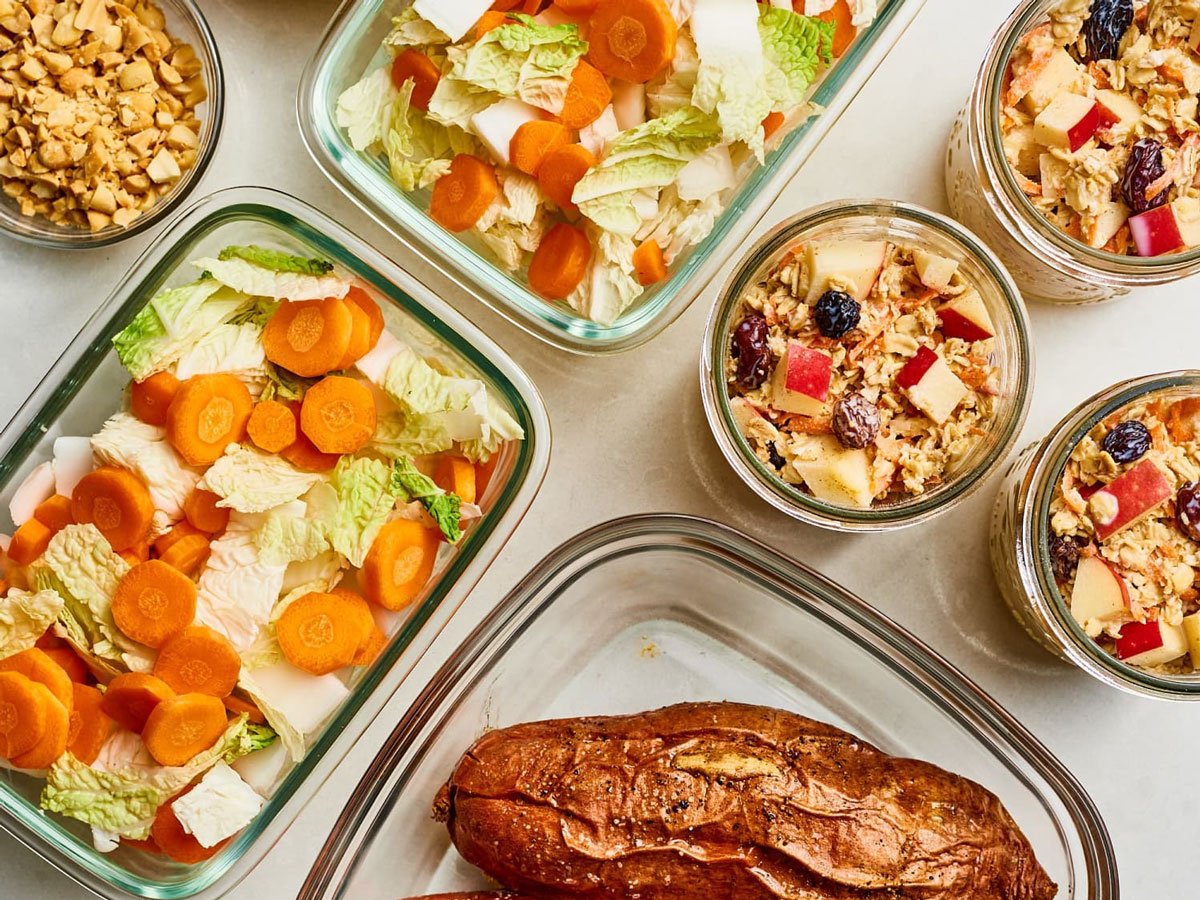
The best meal prep ideas for vegetarian eating are built around sturdy proteins, grains, vegetables, and sauces that can survive the fridge without turning sad by Wednesday. Start with beans, lentils, tofu, eggs, tempeh, Greek yogurt, paneer, or cottage cheese, then rotate the flavor so the week does not taste like one giant container of leftovers.
My strongest opinion: vegetarian meal prep fails less from lack of recipes and more from bad structure. A bowl with roasted sweet potato, chickpeas, greens, rice, and tahini sauce is useful; five unrelated recipe screenshots saved on Sunday night are just homework.
Best Vegetarian Meal Prep Ideas by Meal Type
Choose vegetarian meal prep ideas by how they behave after storage: bowls and curries reheat well, jar salads stay crisp, wraps need dry fillings, and breakfast jars work best with toppings added later.
These are the ideas I would actually trust for a busy week, especially if lunch has to survive a commute or dinner needs to be reheated while you are already hungry.
| Idea | Best For | Protein Anchor | Storage Note |
|---|---|---|---|
| Chickpea shawarma bowls | Lunch | Chickpeas plus yogurt-tahini sauce | Keep cucumber and sauce separate until serving |
| Black bean burrito bowls | Lunch or dinner | Black beans, cheese, or tofu sofritas | Rice, beans, and corn hold well for 4 days |
| Lentil bolognese | Dinner | Brown or green lentils | Freeze sauce separately from pasta for better texture |
| Tofu peanut noodle boxes | Cold lunch | Baked tofu and peanut sauce | Use sturdy noodles and add herbs at the end |
| Egg and spinach breakfast muffins | Breakfast | Eggs and cottage cheese | Reheat gently so the eggs do not turn rubbery |
| Paneer tikka bowls | Dinner | Paneer and chickpeas | Store tomato-onion sauce apart from salad toppings |
| Greek lentil jar salads | Cold lunch | Lentils and feta | Dressing goes at the bottom; greens go at the top |
| Vegetable korma | Freezer meal | Chickpeas, tofu, or peas | Freeze curry base, then add fresh rice or flatbread |
One useful test: if a meal already tastes good warm, cold, or room temperature, it is usually a safer prep candidate. Peanut noodles, lentil salads, chickpea bowls, and burrito bowls pass that test easily.
Build Every Box Around Protein First
A vegetarian prep box feels satisfying when protein is planned first, not sprinkled in later. Beans, peas, lentils, nuts, seeds, eggs, and soy products all count as protein foods in USDA MyPlate guidance.
Per MyPlate, vegetarian protein options include beans, peas, lentils, nuts, seeds, and soy products. That makes the planning easier: pick one main protein, one filling carbohydrate, two vegetables, and one sauce.
Protein Combinations That Do Not Feel Like Diet Food
For high-protein vegetarian meal prep, use two modest protein sources instead of trying to force one ingredient to do everything. Tofu plus edamame, lentils plus feta, eggs plus cottage cheese, or chickpeas plus Greek yogurt sauce usually feels more complete than a plain bean bowl.
- Tofu, brown rice, broccoli, sesame ginger sauce, and scallions.
- Lentils, roasted carrots, arugula, feta, walnuts, and lemon dressing.
- Black beans, quinoa, corn, peppers, salsa, and avocado added fresh.
- Egg muffins, roasted potatoes, spinach, and a side of fruit.
- Chickpeas, couscous, cucumber, tomato, olives, and herbed yogurt.
Beans and lentils also bring fiber, which helps vegetarian lunches feel like real meals instead of side dishes. MyPlate notes that beans, peas, and lentils sit in both the Vegetable Group and Protein Foods Group because their nutrition overlaps both categories.
“Beans and rice is very basic but never lets me down”
– r/vegetarianrecipes, March 2026
That quote is plain, but it gets the point right. Beans and rice are not glamorous; they are reliable, cheap, flexible, and easy to season three different ways before the week is over.
A One-Hour Sunday Prep Plan
A beginner-friendly vegetarian meal prep session should make components, not five finished meals. Cook one grain, one protein, one tray of vegetables, one sauce, and one backup snack.
This keeps the week flexible. You can make bowls on Monday, wraps on Tuesday, a quick skillet on Wednesday, and soup or curry on Thursday without feeling trapped by the exact same lunch.
- Start a grain: rice, quinoa, farro, couscous, or whole wheat pasta.
- Roast vegetables: sweet potato, cauliflower, peppers, zucchini, mushrooms, or broccoli.
- Cook a protein: baked tofu, lentils, chickpeas, black beans, eggs, tempeh, or paneer.
- Make one sauce: tahini lemon, peanut lime, cilantro yogurt, salsa verde, or curry simmer sauce.
- Prep a raw crunch: shredded cabbage, cucumber, carrots, herbs, pickled onions, or chopped romaine.
- Pack two fully assembled meals and leave the rest as mix-and-match components.
Do the wet, messy tasks first while your cutting board is still empty. Then all the annoying little jobs, rinsing herbs, trimming scallions, labeling lids, feel less like a second cooking session.
By week three, most people learn the same lesson: sauces save the plan. A slightly boring chickpea bowl becomes Mediterranean with tzatziki, Tex-Mex with salsa and lime, or Thai-ish with peanut sauce and basil.
Vegetarian Meal Prep Lunch Ideas That Travel Well
The best vegetarian meal prep lunch ideas are sturdy, saucy only at the right moment, and filling enough to prevent a snack raid at 3 p.m. Cold lunches need crunch; reheated lunches need moisture.
Cold Lunches
Cold lunches work when the main ingredients are firm and the dressing is controlled. Lentil salads, soba noodles, chickpea chopped salads, and hummus boxes are better choices than delicate lettuce salads.
- Mediterranean lentil jars with feta, cucumber, olives, tomato, parsley, and vinaigrette.
- Peanut soba noodles with baked tofu, cabbage, carrots, edamame, and lime.
- Chickpea salad wraps with celery, pickles, Greek yogurt, mustard, and greens.
- Hummus snack boxes with pita, boiled eggs, roasted vegetables, and fruit.
Reheatable Lunches
Reheatable lunches need enough sauce to protect the grain or protein from drying out. Curries, chili, dal, baked pasta, and burrito bowls do this better than plain roasted vegetables.
- Red lentil dal with rice and a quick cucumber salad.
- Vegetarian chili with black beans, pinto beans, corn, tomatoes, and cheddar.
- Teriyaki tofu bowls with broccoli, rice, sesame seeds, and extra sauce packed separately.
- Spinach lasagna roll-ups with marinara and a side of roasted vegetables.
Broccoli turns a dull olive green and smells faintly sulfuric by mid-week if it is overcooked on Sunday. Pull it from the oven while it still has bite, because the microwave will cook it a little more.
Storage Rules That Keep Prep Useful and Safe
Vegetarian meal prep still needs food-safety discipline: cool cooked food quickly, store it covered, keep the refrigerator at 40 degrees Fahrenheit or below, and use most leftovers within 3 to 4 days.
The U.S. Food and Drug Administration advises keeping refrigerators at 40 degrees Fahrenheit or below so cold air can protect perishable foods. The USDA Food Safety and Inspection Service says leftovers can be refrigerated for 3 to 4 days or frozen for 3 to 4 months.
| Food | Fridge Plan | Freezer Plan | Best Reheat Move |
|---|---|---|---|
| Cooked rice or quinoa | 3 to 4 days | Freeze flat in portions | Add a splash of water before microwaving |
| Lentil curry or dal | 3 to 4 days | Freezes well | Reheat slowly and loosen with broth |
| Baked tofu | 3 to 4 days | Texture gets chewier | Air fry or skillet-crisp if possible |
| Egg muffins | 3 to 4 days | Possible, but texture softens | Microwave at lower power |
| Jar salads | 2 to 4 days | Do not freeze | Shake only right before eating |
| Cooked pasta | 3 to 4 days | Freeze with sauce, not plain | Reheat with extra sauce |
Use shallow containers for hot food so it cools faster. Do not pack a deep pot of chili straight into one giant container unless you enjoy waiting forever and gambling with the warm center.
Labeling sounds fussy until Thursday, when every tomato-based container looks suspiciously similar. Painter’s tape and a marker are enough.
Freezer-Friendly Vegetarian Meals Without Weird Texture

Freezer-friendly vegetarian meals work best when they are saucy, stewy, or baked. Lentil soup, bean chili, curry, enchiladas, lasagna, and cooked sauces freeze better than crisp vegetables or creamy salads.
The texture issue is real. Zucchini, cucumber, lettuce, and lightly cooked mushrooms can release water after freezing, while potatoes can turn grainy unless they are inside a soup, curry, or mash.
Best Freezer Choices
- Red lentil soup with tomato, cumin, lemon, and spinach added after reheating.
- Black bean enchiladas with sauce, cheese, and corn tortillas.
- Chickpea coconut curry with rice frozen separately.
- Vegetarian chili with beans, tomatoes, peppers, corn, and quinoa.
- Marinara lentil sauce for pasta, stuffed peppers, or baked ziti.
Foods to Freeze With Care
Freeze tofu only if you like a spongier, chewier bite. Some people love that texture for curry or stir-fry; others find it distracting.
Do not freeze fully dressed salad, avocado, cucumber-heavy bowls, or yogurt sauces. Freeze the cooked base, then add fresh toppings after reheating.
Five Flexible Formulas for Healthy Vegetarian Prep
Healthy vegetarian meal prep ideas become easier when you use formulas instead of rigid recipes. Keep the base steady, change the sauce, and the same ingredients can carry several meals.
1. The Grain Bowl
Use quinoa, rice, farro, barley, or couscous with roasted vegetables, a protein, and a sauce. Good combinations include tofu with broccoli and peanut sauce, chickpeas with sweet potato and tahini, or black beans with peppers and salsa.
2. The Soup Plus Side
Soup alone can feel thin by dinner. Pair lentil soup, split pea soup, minestrone, or vegetarian chili with toast, salad, baked potato, or a freezer naan.
3. The Salad That Lasts
Use lentils, cabbage, kale, grains, roasted vegetables, and seeds instead of fragile greens. Keep dressing separate unless the salad is built from ingredients that improve as they marinate.
4. The Wrap Kit
Pack tortillas, hummus or yogurt sauce, roasted vegetables, greens, and a protein separately. Assemble the wrap the day you eat it so the tortilla does not go limp.
5. The Breakfast Box
Prep overnight oats, chia pudding, egg muffins, tofu scramble, or Greek yogurt jars. Add crunchy toppings in the morning, because granola loses its whole personality when it sits in yogurt overnight.
Common Mistakes That Make Vegetarian Prep Boring
Most vegetarian meal prep mistakes are small: not enough protein, no sauce, too many watery vegetables, or cooking every component all the way on Sunday. Leave room for reheating and freshness.
- Prepping five identical meals when you already know you dislike repetition.
- Using lettuce as the main lunch base for a four-day plan.
- Forgetting a fat source such as olive oil, avocado, nuts, seeds, tahini, or cheese.
- Microwaving tofu until it squeaks instead of reheating it gently or crisping it again.
- Adding crunchy toppings too early.
Not every meal needs to be a complete recipe. A container of roasted vegetables, a pot of lentils, cooked rice, and one good sauce can become more useful than a perfectly assembled bowl.
FAQ
What are good meal prep ideas for vegetarian beginners?
Good meal prep ideas for vegetarian beginners include burrito bowls, lentil soup, chickpea salad wraps, tofu rice bowls, overnight oats, egg muffins, and vegetable curry. These meals use familiar ingredients and tolerate storage better than delicate salads.
How do vegetarians get enough protein when meal prepping?
Vegetarians can build meal prep around beans, lentils, tofu, tempeh, eggs, Greek yogurt, cottage cheese, paneer, nuts, seeds, and soy products. Combining two protein sources often makes meals more satisfying.
How long does vegetarian meal prep last in the fridge?
Most cooked vegetarian meal prep lasts 3 to 4 days in a refrigerator kept at 40 degrees Fahrenheit or below. Fresh salads, cut herbs, and avocado-heavy meals may lose quality sooner.
What vegetarian meals freeze best?
Vegetarian meals that freeze best are soups, chili, dal, curry, enchiladas, lasagna, bean stews, and cooked sauces. Watery raw vegetables, dressed salads, and yogurt sauces are better added fresh.
Is vegetarian meal prep cheaper?
Vegetarian meal prep can be cheaper when it leans on beans, lentils, grains, seasonal vegetables, eggs, and homemade sauces. Specialty meat substitutes, pre-cut produce, and packaged bowls can erase those savings quickly.
A Simple Week to Start With
Start with one grain, two proteins, two vegetables, and two sauces: rice, baked tofu, black beans, roasted sweet potato, cabbage, peanut sauce, and salsa. That single prep can become tofu bowls, bean burritos, cabbage slaw lunches, and a quick skillet dinner.
Keep the system boring enough to repeat and flavorful enough that you do not abandon it by Wednesday. That balance is where vegetarian meal prep finally becomes useful.