

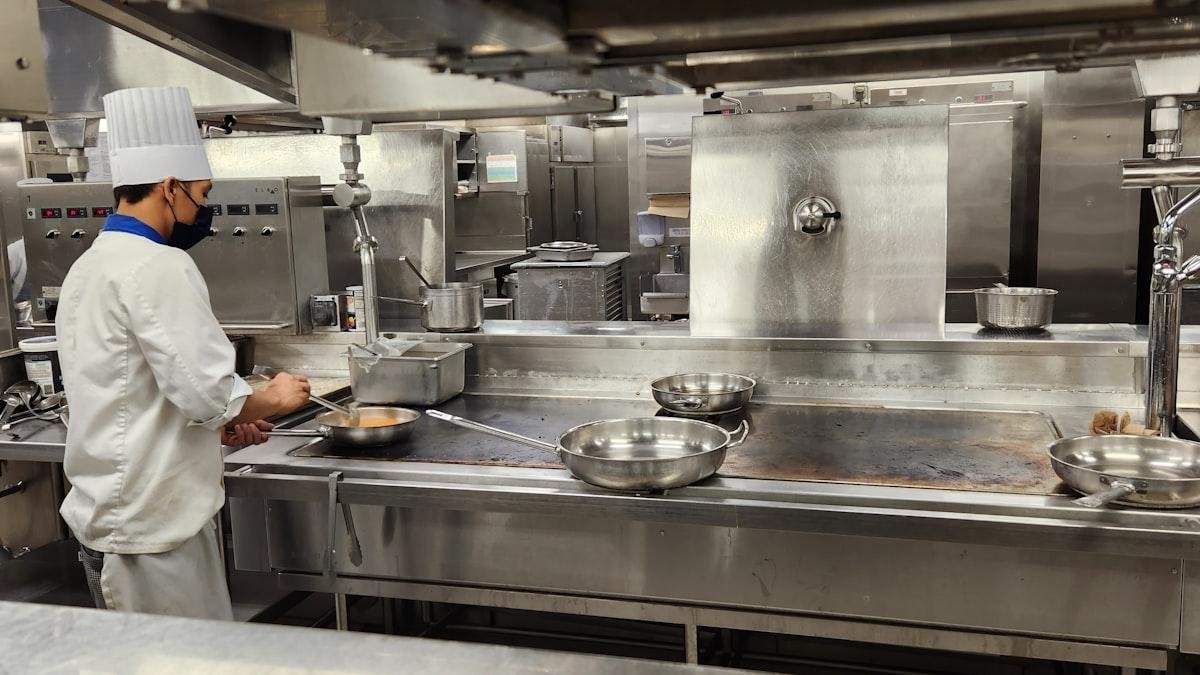
A commissary kitchen is a licensed commercial kitchen you rent. Food trucks, caterers, bakers, and delivery-only brands use it to prep, cook, and store food in a space the health department has inspected and approved, without carrying the cost of building their own.
That one sentence answers the definition. The details underneath it decide real money: whether your county lets you operate without one, what renting honestly costs, and which look-alike terms (ghost kitchen, prep kitchen) mean something different on a lease.
What makes a kitchen a commissary
Three things, and the stove is the least of them. The space holds a commercial food license and passes health inspections. It sits on land zoned for food production. And it offers the support services a mobile business runs on: cold and dry storage you can lock, dishwashing, waste disposal, and, for trucks, potable water fill and greywater dump stations.
That service layer is the legal heart of the arrangement. The FDA Food Code, the model most state and county health codes are written from, expects mobile food units to operate from an approved base of operations, and the commissary is how an operator proves one exists. When the permit application asks for your commissary address, this is the address it means.
The name is borrowed from the military and railroad supply stores that fed workers from one central depot. The lineage fits: one stocked hub, many mouths served somewhere else.
Commissary vs. ghost kitchen vs. prep kitchen
The terms overlap in marketing and differ on the lease. A ghost kitchen is a production space for delivery-only restaurant brands, often a private suite. A commissary is shared infrastructure that legalizes a food business operating elsewhere. A prep kitchen sits in between, licensed for prep work but with limited cooking capacity.
| Space | Who it serves | What you get | Typical commitment |
|---|---|---|---|
| Commissary kitchen | Food trucks, caterers, market vendors | Shared stations, storage, truck servicing, a legal home base | Hourly or monthly, low deposit |
| Ghost kitchen | Delivery-only restaurant brands | Private production suite, order pickup flow | Monthly lease, higher rates |
| Prep kitchen | Meal preppers, small-batch makers | Prep tables and limited cooking equipment | Hourly blocks |
| Your own commercial kitchen | Established operations | Total control, total liability | Six-figure build-out plus lease |
If a landlord uses one label and describes another, the description wins. Ask what the license on the wall says and which activities it covers.
Who actually needs one
Food trucks and carts are the core case: most U.S. health departments require a mobile unit to report to a licensed servicing base for cleaning, restocking, and waste disposal, and many will not issue the operating permit until a signed commissary agreement is on file. Caterers without their own facility, farmers-market vendors selling anything beyond cottage-food items, and home bakers who have outgrown their state’s home-kitchen ceiling all land in the same place.
Which raises the question every new operator eventually types into Reddit: can I skip the fee and just cook at home? The r/foodtrucks regulars have watched that movie before, and their answer has no hedge in it:
“No. The whole point of a commissary is to make sure that you cook and prep in a licensed commercial kitchen which the health department inspects. You can risk it all you want, but there’s a reason these laws are in place. Food safety is the most important thing about our job.”
– r/foodtrucks, September 2025 (23 upvotes)
The enforcement risk is not really the inspector knocking on your door. It is what happens after something goes wrong:
“It’s a huge risk, because if an outbreak occurs and you’re investigated for it, they’ll discover very quickly you are cooking at home. And then your insurance company is not going to back you up and you’ll be left in the middle of the slack line with no pole. It’s not worth the risk in my opinion, if you’ve done everything by the book so far, why stop doing so now?”
– r/foodtrucks, September 2025 (12 upvotes)
A liability policy is priced on the operation you described in the application. Prep moved to an unlicensed home kitchen gives the insurer a clean reason to walk away exactly when you need coverage most. The habits that keep a licensed kitchen clean are worth stealing either way; our piece on food safety habits from food manufacturers covers the same logic at home scale.
One honest exception exists. Some states let a truck that does every bit of its prep, cooking, and storage on board skip the commissary requirement, and cottage food laws let home producers sell a defined list of low-risk items. Both carve-outs are local, specific, and verified with one phone call to your county health department, which costs less than one month of rent you might not owe.
What renting one costs
WebstaurantStore’s rental guide puts hourly commercial kitchen rates at about $15 to $40, with monthly arrangements running roughly $250 to $1,250. Big-market hubs list higher: Los Angeles facilities advertise monthly plans from around $600 to $2,650, with day rates near $300. Against a $100,000-to-$500,000 build-out for your own space, the rental math explains why the model exists.
Hourly renting is the expensive way to buy the same hours. Once you prep more than a few sessions a week, a monthly plan wins, and the storage that comes with it matters as much as the burners: hauling every pan home after each shift gets old by week two. Operators weighing a bigger jump can read our companion piece on when a home kitchen is no longer enough before pricing equipment.
The walkthrough that decides it
Tour at the hour you will actually use it. A kitchen that looks spacious at 2 p.m. can be a queue for the flat-top at 5 a.m., and shared calendars only tell you so much. While you are there, walk the checklist below and ask the manager which health departments the facility already files with; a commissary that knows your county’s paperwork will save you a week of permit back-and-forth.
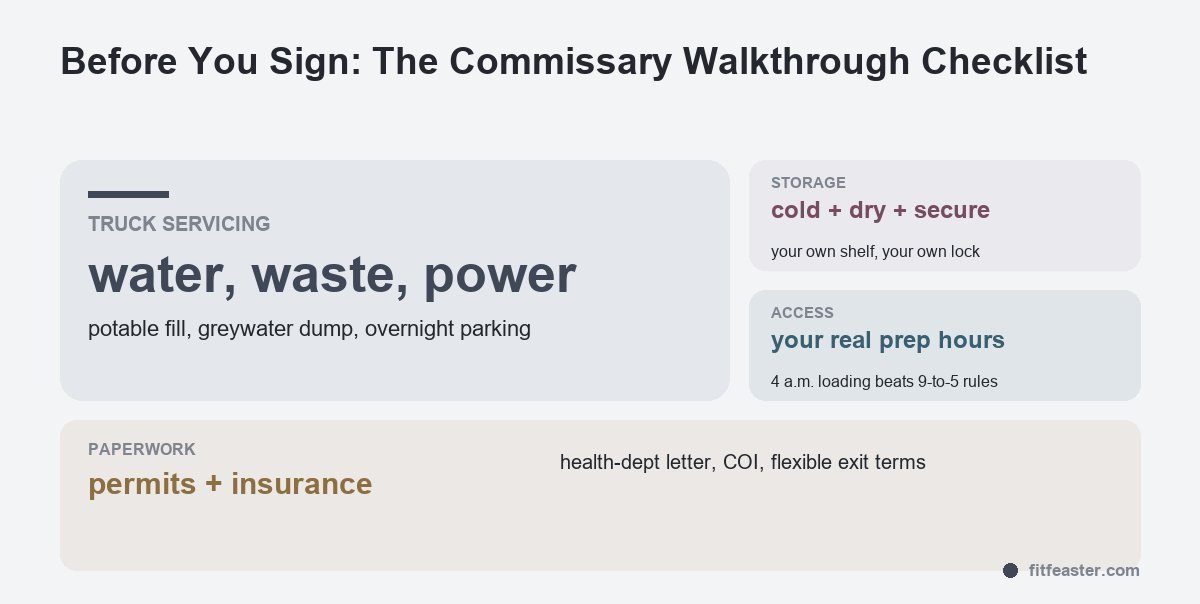
Contract terms deserve one cynical read: month-to-month beats a year lock while your revenue is still a guess, and the certificate-of-insurance requirements tell you what the facility expects to go wrong.
Before any of it, call your county health department and ask two questions: do I need a commissary for my operation, and does this facility already serve permitted operators here. Their answer is the only one that binds you.
FAQ
What are the disadvantages of a commissary kitchen?
Scheduling conflicts, hauling equipment in and out, and zero brand presence: you share stations with other businesses, work around their peak hours, and follow house rules on storage and cleanup. Costs also scale with use, so heavy production schedules can outgrow the rental math.
Does a food truck always need a commissary kitchen?
In most U.S. counties, yes: the operating permit requires a licensed servicing base for water, waste, and food storage. A minority of states waive it for trucks doing all prep and storage on board. The requirement is set by your local health department, so confirm before budgeting.
Can I use my home kitchen instead of a commissary?
Only within your state’s cottage food law, which covers a short list of low-risk foods like baked goods and jams sold directly to consumers. Meat, dairy-heavy dishes, and anything for a truck or catering operation must come from a licensed kitchen.
What do health departments require from a commissary agreement?
Typically a signed letter or contract from the commissary confirming your access, plus usage logs proving you report there for cleaning, water, and waste disposal. Inspectors can verify the logs against the facility’s records, which is how phantom commissary arrangements get caught.