

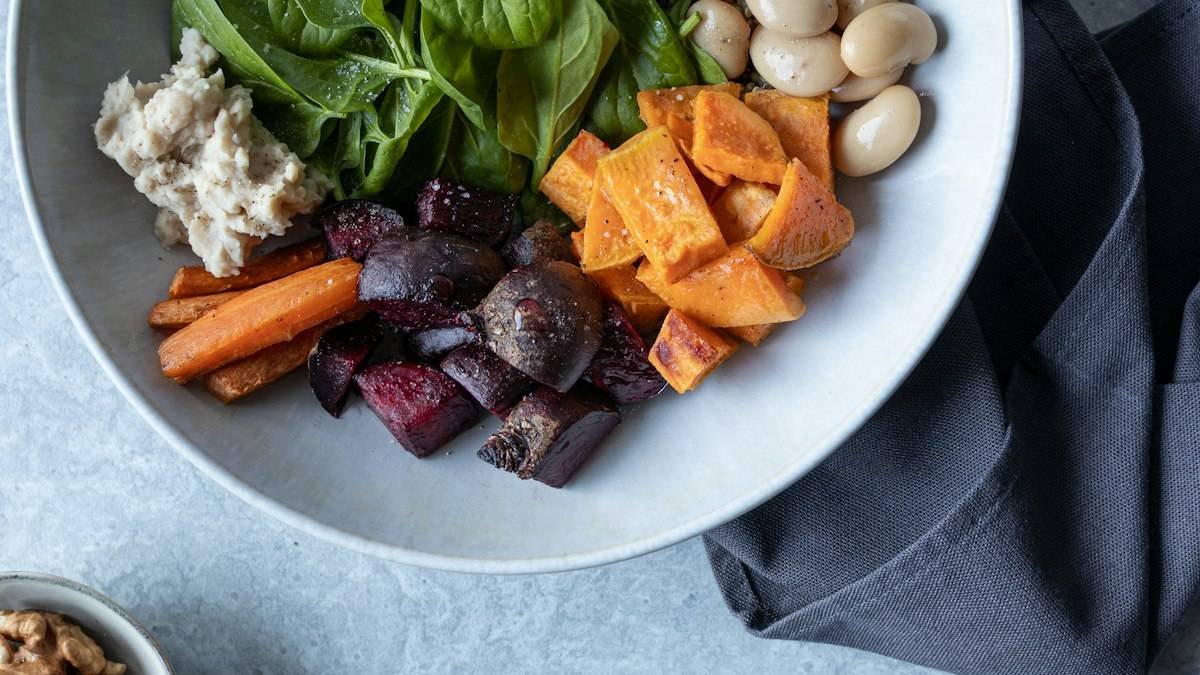
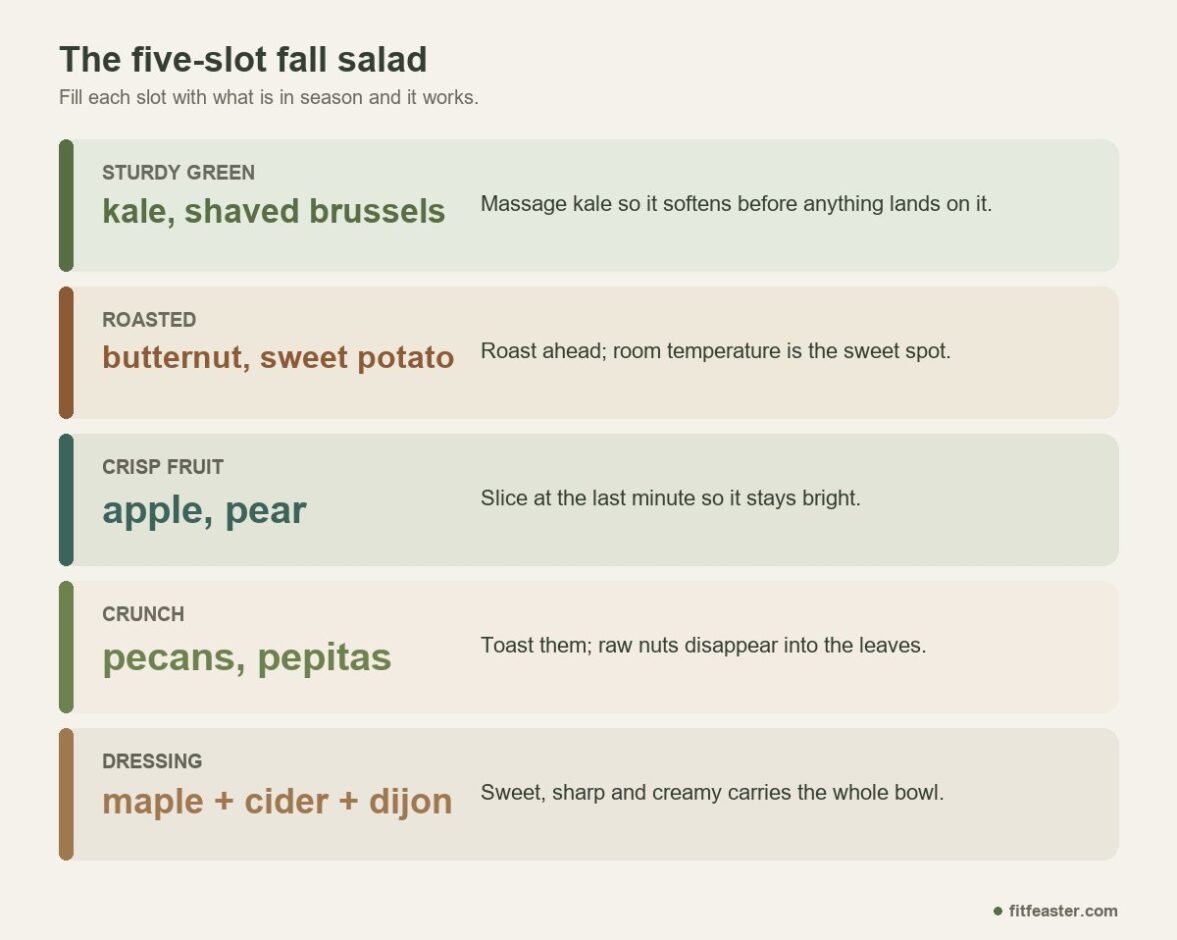
Nearly every fall salad people rave about is the same five slots filled with different groceries: a sturdy green, a roasted orange vegetable, a crisp fruit, a toasted crunch, and a maple-cider dressing. Learn the pattern once and you can build fall salads from whatever the market has, without opening a single recipe.
I noticed it while collecting salads to serve friends alongside dinner. The combinations everyone shares look different at first glance. They aren’t! Swap butternut for sweet potato or pear for apple and it’s the same bowl wearing a different coat.
The pattern, in the wild
Look at what home cooks actually post when their bowl turns out well. This one drew hundreds of upvotes on r/salads, and it reads like a checklist of the five slots:
“Shredded kale and brussel sprouts, maple mustard dressing, sauteed butternut, sweet potato, red onion, and celery. Pecans and pear ❤️ (plus garlic and salt and all that)”
– r/salads (73 upvotes)
Kale for the green, butternut and sweet potato roasted, pear for the fruit, pecans for the crunch, maple mustard to dress it. Five for five. The other crowd favorites in those threads follow the identical structure with dates, apples, pepitas, or goat cheese standing in.
Filling the slots in season
The sturdy green
Kale, shaved Brussels sprouts, or a mix of both. Massage kale with a pinch of salt and a little oil first, or it’ll chew like a hedge. Spinach and arugula work too, but only if you’re serving right away.
The roasted vegetable
Butternut squash, sweet potato, beets, or carrots, roasted until the edges caramelize. Room temperature is the sweet spot here. Hot vegetables wilt your greens, and fridge-cold ones taste muted, so roast them while you do something else and let them sit.
The crisp fruit
Apple or pear, sliced thin right before you serve so it stays bright. Dried fruit plays the same role in a chewier register: golden raisins, chopped dates, or dried cranberries. Pomegranate seeds are the showoff option, and they earn it!
The crunch
Pecans, walnuts, or pepitas, always toasted. Give them three or four minutes in a dry skillet; skip that and they’ll just vanish into the leaves. Crumbled goat cheese or sharp cheddar rides along in this slot when you want your bowl richer.
The dressing
Sweet, sharp, and a little creamy: maple syrup, apple cider vinegar, and dijon, with yogurt or olive oil to carry it. This slot decides whether your bowl tastes like fall or just tastes like salad, so it gets its own section.
A dressing baseline you can steal
When someone in the big r/salads thread asked for amounts, the cook behind the most-loved bowl answered with an honest home ratio, shortcut included:
“I didn’t measure but if I had to guesstimate: 1/4 cup Trader Joe’s Apple Cider Vinaigrette, 1/2 cup plain greek yogurt (I prefer full fat), 3 Tbsp dijon mustard, 2 Tbsp maple syrup.”
– r/salads (13 upvotes)
That’s their guesstimate, not a lab formula, and it’s a smart starting point! If there’s no Trader Joe’s near you, whisk cider vinegar with olive oil, then add the same yogurt, dijon, and maple. Taste on a leaf you’re actually using, because kale swallows acid and spinach amplifies it.
Fall salads for a crowd, made ahead
The rule that saves a big batch is simple: dress at serving, never before. A dressed and assembled bowl holds a few hours at best before the greens slump, while the parts kept separate stay happy for days in the fridge. Roast the vegetables and toast the nuts a day or two ahead, mix the dressing into a jar, and slice fruit last.
For a dinner party or a potluck, serve it as a build-your-own spread: greens in one big bowl, the roasted vegetables, fruit, and crunch in small ones, dressing in the jar. It scales without math, and it stops the leftover problem before it starts. This is also the shape that survives a holiday menu; a fresh salad is the one Thanksgiving vegetable lane that never fights for the oven, and a pitcher from my fall cocktail formula keeps the drinks just as hands-off.
Weekday lunches are a different job. If you’re packing bowls for the week, my salad meal-prep system covers containers and layering; the seasonal bowl is best built the day you eat it.
Shop whatever looks good this week, drop it into the five slots, and you’ll have the salad everyone asks about.
FAQ
What are good fall salads?
Good fall salads combine a sturdy green, a roasted vegetable, a crisp fruit, a toasted crunch, and a maple-cider dressing. Proven combos: kale with butternut, pear, and pecans; shaved Brussels sprouts with sweet potato, apple, and pepitas; spinach with roasted beets, dates, and walnuts.
How do you add protein to a fall salad?
Shredded roast chicken, white beans, chickpeas, air-fried tofu, or a soft-boiled egg all slide into the pattern without changing it. The r/salads crowd favorites lean on chicken and white beans; beans are the cheapest route and hold up best in your make-ahead bowls.
Which fall salads carry into winter?
The kale and Brussels sprouts versions, because sturdy greens and roasted roots stay in season and in stores all winter. Swap the fruit as the months turn: apples and pears early, then citrus segments and dried fruit after the new year.