


The best elote starts with hot, lightly charred corn and ends with a cool, tangy coating of mayonnaise, Mexican crema, cotija, chile, and lime. Grill the corn first, then dress it just before serving so the sauce stays creamy and the cheese clings instead of sliding off.
This elote recipe makes six ears in about 30 minutes. The flavor is bold, but the method is forgiving: you can use a charcoal grill, gas grill, grill pan, broiler, or skillet. The important part is getting some browning on the kernels without drying out the cob.
Elote Recipe at a Glance
- Yield: 6 ears of corn
- Prep time: 15 minutes
- Cook time: 10 to 12 minutes
- Total time: about 30 minutes
- Heat level: mild to medium, adjustable at the table
- Best served: immediately, while the corn is hot
What Is Elote?
Elote is corn on the cob prepared in the style of Mexican street corn. A typical serving combines cooked corn with a creamy layer, crumbled salty cheese, chile, and fresh lime. Preparations vary by vendor and household, so you may see mayonnaise, crema, or both, as well as different chile powders and hot sauces.
Elote and esquites share a flavor family, but their form is different. Elote stays on the cob. Esquites is made with kernels and served in a cup, often with some cooking liquid or a spoonable dressing. Calling every cup of dressed corn “elote in a cup” is convenient for English-language recipe searches, though esquites is the more specific name for the off-the-cob dish.
Ingredients for Elote
- 6 ears fresh sweet corn, husks and silk removed
- 1 tablespoon neutral oil, such as avocado or canola oil
- 1/3 cup mayonnaise
- 1/4 cup Mexican crema
- 1 small garlic clove, finely grated
- 1 tablespoon fresh lime juice, plus lime wedges for serving
- 1/2 teaspoon ancho chile powder or mild chili powder
- 1/4 teaspoon fine salt, plus more to taste
- 3/4 cup finely crumbled cotija cheese
- 1/4 cup chopped cilantro, optional
- Tajín, ground chile de árbol, or hot sauce for serving, optional
Fresh corn gives you the juiciest kernels and the cleanest contrast with the creamy topping. Choose ears that feel heavy for their size, with plump kernels and husks that have not dried to paper. Very sweet corn needs little more than a few dark grill marks; older, starchier corn benefits from gentler cooking and a little extra crema.
Mayo, Crema, and the Right Consistency
Mayonnaise supplies body and helps the cheese adhere. Crema loosens the mayonnaise and adds cultured tang. A mixture of the two is easier to spread than straight mayo and less likely to run than crema alone.
The finished sauce should coat the back of a spoon. If it drips like salad dressing, add another spoonful of mayonnaise. If it feels pasty, add crema a teaspoon at a time. Keep the mixture cool while the corn cooks.
Cotija Cheese Substitutes
Use feta when cotija is unavailable. Both are salty and crumbly, though feta is usually moister and tangier. Drain it well and crumble it finely. Queso fresco is milder and softer; it works, but you may need a little more salt. Finely grated Parmesan can provide salt and a dry texture, yet its nutty flavor takes the dish farther from the usual profile.
How to Make Elote
- Heat a gas or charcoal grill to medium-high. Clean and oil the grates. If using a grill pan, preheat it over medium-high heat.
- Pat the corn dry, then rub the ears with the neutral oil. This thin coat encourages browning and reduces sticking.
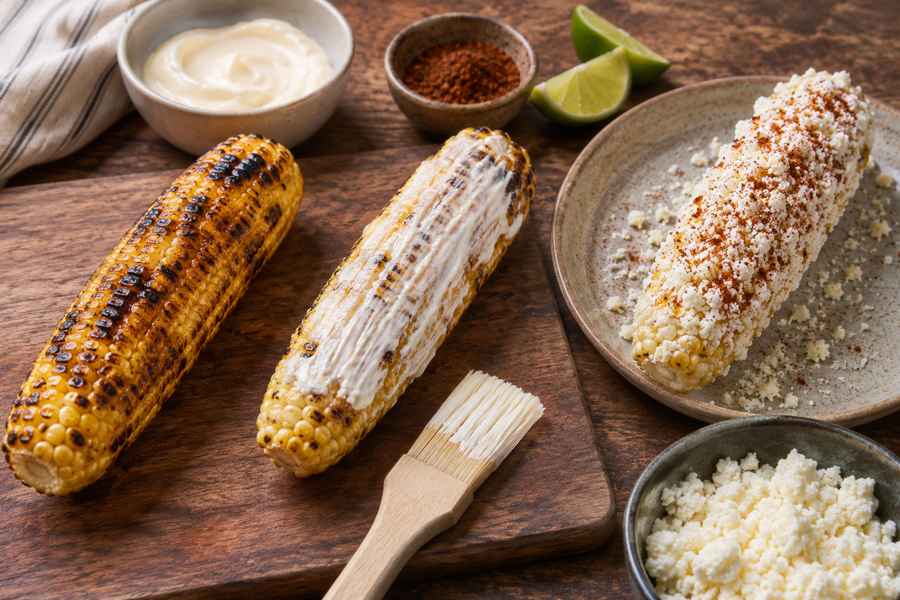
- Grill the corn for 10 to 12 minutes, turning every 2 to 3 minutes. Look for tender kernels and scattered brown or black spots rather than a completely blackened surface.
- While the corn cooks, stir the mayonnaise, crema, garlic, lime juice, chile powder, and salt until smooth. Place the cotija on a wide plate or shallow bowl.
- Let the cooked corn rest for about 1 minute. It should remain hot, but it should not be dripping steam. Brush or spoon a thin, even layer of sauce over every side.
- Roll the coated corn in cotija or press the cheese on by hand. Finish with cilantro and your preferred chile seasoning. Serve with lime wedges.
A shallow plate makes the cheese step much less messy. Rotate the cob over the plate and press loose cotija back onto bare spots; piling on more sauce usually makes the coating slide rather than stick.
What Is the Secret to Good Elote?
The secret is contrast: browned corn, a cool creamy coating, salty cheese, fresh acidity, and controlled heat. You get that contrast by cooking and seasoning in stages instead of mixing everything into one heavy sauce.
- Dry the corn before oiling it. Surface water slows browning.
- Turn the ears often. A few charred patches taste smoky; all-over blackening tastes bitter.
- Dress the corn after grilling. Sauce applied over the fire can split, scorch, or fall through the grate.
- Use a thin coat of sauce. The corn should still taste like corn.
- Add lime at the end. Its fresh edge fades when cooked for too long.
- Offer extra chile separately. Guests can increase heat without changing the whole batch.
Salt also needs restraint. Cotija and bottled chile-lime seasonings can both be salty, so taste the sauce before adding more than the measured 1/4 teaspoon. A final squeeze of lime often wakes up a flat-tasting cob more effectively than another pinch of salt.
How to Make Elote Without a Grill
You can make satisfying elote indoors. The goal remains the same: cook the kernels through, then create dry heat at the surface before adding the topping.
Broiler Method
Set an oven rack about 6 inches below the broiler and preheat a foil-lined sheet pan. Oil the corn, place it on the hot pan, and broil for 8 to 12 minutes. Turn the ears every 2 to 3 minutes and watch them closely; broilers vary widely. Dress the corn after it comes out of the oven.
Skillet or Grill-Pan Method
Heat a large cast-iron skillet or grill pan over medium-high. Add the oiled ears and cook for about 10 minutes, turning as each side browns. A skillet will not wrap heat around the cob like a closed grill, so give pale areas direct contact with the pan.
Boiled Corn Method
Boil the ears in unsalted water until crisp-tender, usually 5 to 7 minutes for fresh sweet corn, then drain and dry them thoroughly. For better flavor, brown the boiled ears in a hot dry skillet for another 2 to 3 minutes. Boiling alone produces tender corn but misses the toasted edge that makes this version especially good.
Elote on the Cob vs. Elote in a Cup
| Choose | Best for | Method adjustment |
|---|---|---|
| On the cob | Cookouts and the classic handheld experience | Grill whole ears, then coat and garnish |
| In a cup | Parties, children, or easier eating | Cut cooked kernels from the cob and fold in sauce gradually |
| Canned or frozen corn | Fast indoor preparation outside corn season | Drain well and sauté in a wide skillet before dressing |
For a cup version, cook the six ears as directed and let them cool just enough to handle. Stand each cob upright in a wide bowl and slice downward with a sharp knife. Fold in about two-thirds of the sauce first, then add more only if the kernels look dry. Spoon into cups and add cotija, chile, cilantro, and lime on top.
If you use frozen corn, thaw and dry about 5 cups before sautéing. For canned corn, drain and rinse about three 15-ounce cans, then spread the kernels on a towel to remove excess moisture. Cook either option in a wide, hot skillet with a little oil until some kernels brown. Crowding a small pan traps steam and leaves the corn soft and pale.
Ingredient Swaps and Heat Control
Elote is flexible, but each substitution changes more than one thing. Sour cream can replace Mexican crema; thin it with a teaspoon or two of milk so it spreads easily. Plain Greek yogurt adds tang and protein, though it tastes sharper and can become chalky if used as the entire creamy base. Mixing yogurt with mayonnaise gives a smoother result.
Ancho chile powder brings mild, earthy flavor. Tajín adds chile, lime, and salt in one shake. Cayenne or chile de árbol is much hotter, so use a small pinch. Smoked paprika is gentle and smoky but does not provide much heat. Avoid relying on a generic seasoning blend until you check its salt level.
Cilantro is traditional in many home recipes but not essential to the structure of the dish. Leave it off if you dislike it. The combination that should remain recognizable is corn, creamy coating, crumbly salty cheese, chile, and lime.
Make-Ahead, Storage, and Reheating
Mix the sauce up to two days ahead and refrigerate it in a covered container. Crumble the cheese and prepare the dry garnishes separately. Corn tastes best when cooked shortly before serving, but you can grill it a few hours ahead, refrigerate it, and rewarm it on the grill or in a skillet before dressing.
Store leftover dressed corn in the refrigerator for up to three days. Reheat it gently in a 350°F oven or remove the kernels and warm them in a skillet. The coating will lose some of its fresh texture, so add a small squeeze of lime and a little fresh cheese after warming. Do not freeze fully assembled elote; the creamy layer and cheese become watery and grainy after thawing.
What to Serve With Elote
Serve elote beside grilled chicken, carne asada, fish tacos, black beans, or a crisp cabbage salad. At a cookout, plan one ear per person as a side, or cut each cob in half when several sides are available. Wooden skewers inserted into the stem end make hot ears easier to hold, though leaving a short section of stalk attached works too.
Set out lime wedges, extra cotija, and two chile options rather than fully seasoning every ear alike. A mild chile-lime blend and a hotter ground chile let each guest finish the corn to taste.
Elote Recipe Questions
What are the ingredients for elote?
Elote is made with cooked corn on the cob, a creamy coating such as mayonnaise or Mexican crema, cotija cheese, chile, and lime. Garlic, cilantro, butter, and hot sauce are common optional additions. This recipe combines mayonnaise and crema for a coating that is rich but still easy to spread.
Do you use mayo or crema for elote?
You can use either, but combining them gives the most balanced texture. Mayonnaise helps cotija stick to the cob, while crema makes the coating lighter and tangier. If you choose only one, use mayonnaise for better adhesion or crema for a looser, less rich finish.
What can I use instead of cotija cheese?
Well-drained feta is the closest widely available substitute because it is salty and crumbly. Queso fresco is milder, while finely grated Parmesan is drier and nuttier. Taste before adding extra salt because each cheese has a different salt level.
How do you pronounce elote?
In English-friendly phonetics, elote is roughly “eh-LOH-teh,” with the stress on the middle syllable. The Spanish word refers to an ear of corn, while the menu term commonly points to dressed Mexican street corn.
Keep the final assembly quick: hot corn, a restrained swipe of cool sauce, plenty of finely crumbled cotija, then chile and lime. That order preserves the smoky, creamy, salty, and bright contrasts that make elote worth eating straight away.