

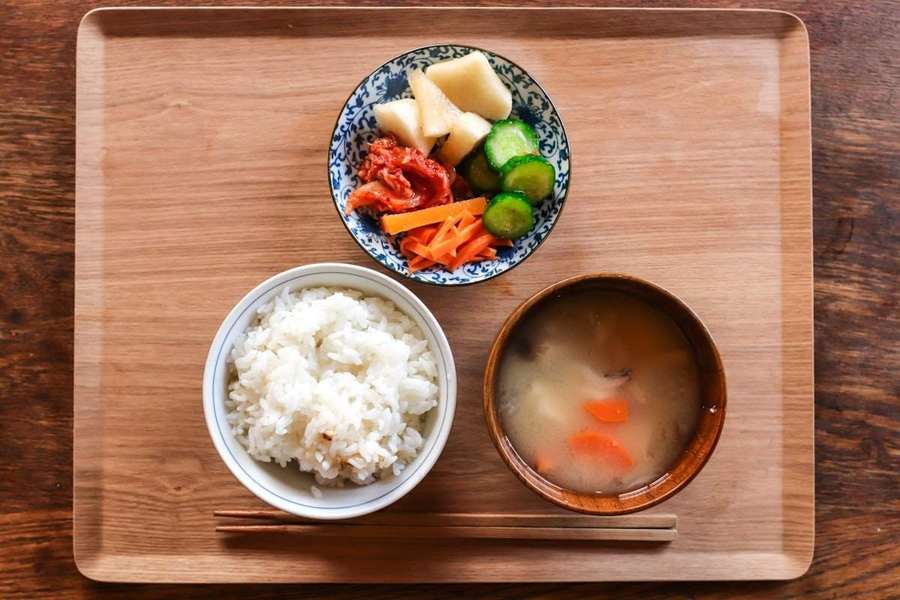
Five methods produce nearly every Japanese vegetable side dish. Dressed (goma-ae), steeped (ohitashi), simmered (nimono), salt-pickled (asazuke), and soy-braised (kinpira) cover most of what lands in those little bowls beside the rice, and each method runs on one seasoning ratio you can memorize in a minute.
Recipe collections treat this as 20 or 25 separate dishes to bookmark. That framing hides the useful part: horenso no goma-ae and green bean goma-ae are the same dish with a different vegetable, and once you know the 2:1:1 dressing, you never need either recipe again. This guide teaches the five methods, the ratio behind each, and which vegetables belong to which method, so a bag of spinach or half a daikon becomes a side without a search.
Why the vegetables live in the small bowls
A traditional Japanese meal spreads vegetables across several small dishes, called kobachi, instead of piling one large salad next to the protein. The format is ichiju-sansai: soup, rice, a main, and two or three sides of roughly 50 to 80 grams each. Three small bowls of spinach, simmered kabocha, and pickled cucumber add up to more vegetable weight than most dinner salads, without any of it reading as “health food.”
The numbers behind this are less rosy than the stereotype of the immaculate Japanese diet. Japan’s Ministry of Health sets a daily vegetable target of 350 grams under its Health Japan 21 program, while nippon.com’s summary of the national data puts average intake at about 280 grams, with women in their twenties reaching only around 60% of the target. Per-person vegetable consumption hit a record low of 87 kilograms a year in 2019, per the agriculture ministry. The same summary notes the shortfall of 70 grams equals one small bowl of boiled spinach. That is a kobachi. The format survives because it closes the gap in units small enough to make daily.
Restaurant menus are a different story, as travelers keep discovering on Reddit:
“As a local, I’m not paying for veggies that I could cook and eat at home. I can’t make char grilled yakitori at home. Maybe consider going to a shabu shabu place, there’s usually a veggie buffet.”
– r/JapanTravelTips, June 2026 (228 upvotes)
The vegetable side dish is home cooking. Which is good news, because the home versions need no special equipment and very little time.
Greens: goma-ae and ohitashi
Goma-ae and ohitashi are the two fastest routes from raw greens to a finished side, and both start the same way: blanch, shock in cold water, squeeze dry. A full pot of raw spinach collapses to something the size of your fist. Squeeze harder than feels polite; watery greens dilute both dressings into nothing.
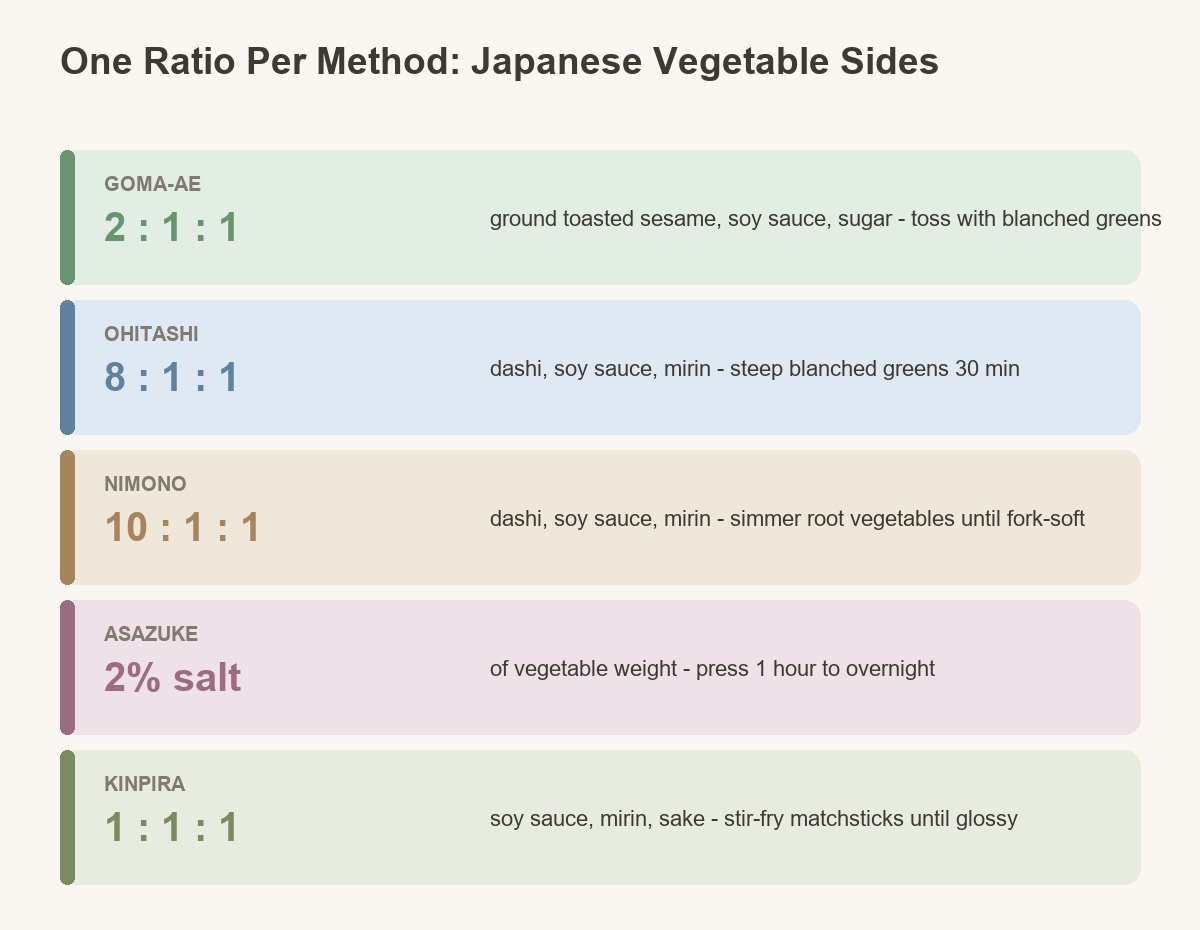
Goma-ae is the dressed version. The ratio is 2:1:1, ground toasted sesame to soy sauce to sugar, tossed with the squeezed greens just before serving. Spinach is the classic (horenso no goma-ae), but green beans, broccoli, asparagus, carrots, and even shredded cabbage take the dressing well. Grind the sesame yourself in a mortar if you can, because pre-ground sesame goes stale fast and the dressing flattens with it. If a jar of sesame paste is all you have, thin a spoonful with the soy and a splash of water.
Ohitashi is the steeped version. Mix dashi, soy sauce, and mirin at 8:1:1, pour it over the blanched greens, and let them sit at least 30 minutes in the fridge. No fat, no emulsifying, nothing to split. The greens drink the broth and come out tasting gently of smoke and sea. Spinach, komatsuna, chrysanthemum greens, snow peas, and okra all work. A pinch of katsuobushi on top before serving is traditional and takes two seconds.
Between the two, ohitashi keeps better, two to three days covered, and improves on day two. Goma-ae is best the day it is dressed. Both eat well cold, which matters for the batch plan later.
Roots: nimono and kinpira
Hard vegetables take heat instead of a quick blanch. Nimono means simmered: dashi, soy sauce, and mirin at roughly 10:1:1, vegetables cut in large chunks, low heat until a chopstick slides through. Kabocha no nimono is the dish most people meet first, and kabocha is forgiving because its starch thickens the broth as it cooks. Daikon, taro, lotus root, carrots, and turnips follow the same pattern. Use a drop lid, or a circle of parchment resting on the surface, so the pieces cook evenly without breaking apart in a rolling boil.
Kinpira flips the cut and the heat. Matchstick the vegetables, stir-fry in a little sesame oil, then add soy sauce, mirin, and sake in equal parts, 1:1:1, and cook until the liquid turns to glaze. Kinpira gobo, burdock root with carrot, is the standard, and a pinch of chili flakes at the end is normal. No burdock in your store? Carrot alone, celery, parsnip, lotus root, and even broccoli stems cut to matchsticks all behave the same way in the pan.
One boundary saves disappointment here: watery vegetables fail in both methods. Cucumber, lettuce, and tomato collapse when simmered and weep when glazed. They belong to the next method.
Asazuke: pickles by weight, not recipe
Asazuke, the quick version of tsukemono, needs one number: salt at 2% of the vegetable’s weight. Slice cucumber, cabbage, napa, or turnip thin, toss with the salt in a zip bag, press the air out, and refrigerate from one hour to overnight. A strip of kombu or a few chili rings in the bag is the entire upgrade path. Squeeze before serving.
Two limits. Eat asazuke within about two days, since 2% salt flavors but does not preserve. And if you watch your sodium, treat pickles as the garnish of the plate, not the bulk of it; the salt is the point of the dish.
A week of japanese vegetable side dishes from one shopping trip
One realistic basket: a bag of spinach, a kabocha quarter, two carrots, a burdock root or parsnip, one cucumber, and a small cabbage. On Sunday, blanch all the spinach and steep half in ohitashi broth while the other half waits squeezed and bagged for goma-ae midweek. Simmer the kabocha. Matchstick the burdock and carrot for kinpira. Salt a bag of cucumber and cabbage.
That is four kobachi in about 45 minutes of mostly passive time, and the fridge math works in your favor: nimono and kinpira keep three to four days, ohitashi two to three, asazuke two. Each dinner, three small bowls come out of the fridge cold or reheated for a minute. By the government’s own arithmetic, any one of them covers the average adult’s daily 70-gram shortfall.
If you want named dishes to grow into from here, the classics map straight onto the methods you already know: sunomono is cucumber dressed in vinegar instead of sesame, hijiki no nimono is the simmer ratio applied to seaweed and soybeans, and yamitsuki cabbage from izakaya menus is asazuke logic with sesame oil and garlic. Reddit’s r/JapaneseFood regularly points beginners to Just One Cookbook for dish-by-dish recipes once the method framework is in place.
FAQ
What vegetables are served with Japanese food?
Spinach, daikon radish, kabocha squash, cucumber, cabbage, carrots, burdock root, eggplant, and seaweeds like wakame and hijiki appear most often in Japanese side dishes. Mushrooms (shiitake, enoki), lotus root, green beans, and edamame round out the common set, usually served in small 50-to-80-gram portions.
What are typical Japanese side dishes?
Typical Japanese side dishes include goma-ae (sesame-dressed greens), ohitashi (dashi-steeped spinach), kabocha no nimono (simmered pumpkin), kinpira gobo (soy-glazed burdock), tsukemono pickles, sunomono (vinegared cucumber), hijiki seaweed salad, and Japanese potato salad. Most are vegetable-based and served cold or at room temperature.
What are popular Japanese vegetable dishes?
Horenso no goma-ae, nasu dengaku (miso-glazed eggplant), kinpira gobo, kabocha no nimono, and yamitsuki salted cabbage are among the most popular Japanese vegetable dishes. All five come from the same base methods, so learning one ratio opens up several dishes at once.
What vegetables do Japanese usually eat?
Cabbage, onions, daikon, and tomatoes top Japan’s household vegetable purchases by volume, with spinach, carrots, cucumbers, and eggplant close behind. Average intake is about 280 grams a day against the government’s 350-gram target, and national data shows consumption declining since around 1989.
Start with the spinach. Blanch it tonight, mix soy, dashi, and mirin at 8:1:1, and check the bowl after 30 minutes in the fridge. One method, learned once, feeds every week after it.