

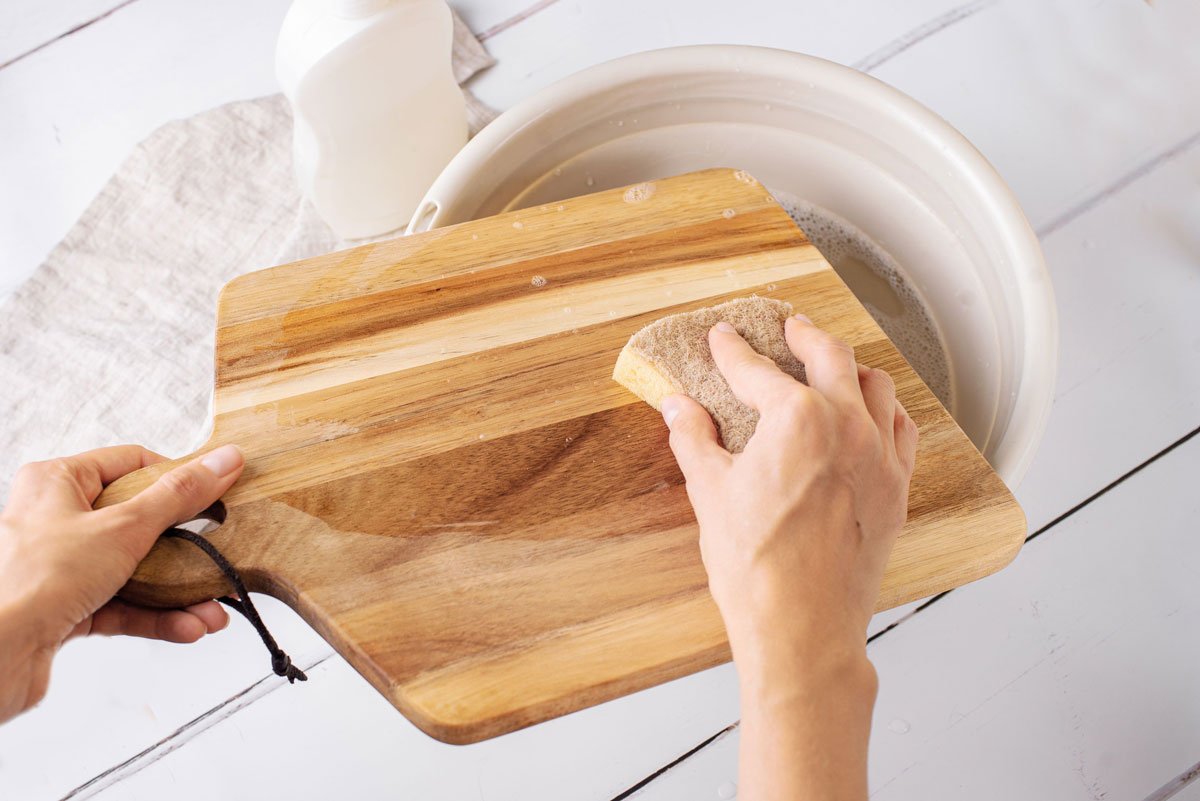
Clean a bamboo cutting board with warm water, mild dish soap, a soft sponge, and fast drying. Use vinegar, salt, lemon, or a diluted bleach solution only when the board actually needs deodorizing or sanitizing.
The mistake that ruins most bamboo boards is not a bad cleaner. It is too much water for too long. Bamboo is tough under a knife, but it does not like soaking, steam, dishwasher heat, or being left flat with dampness trapped underneath.
The Quick Cleaning Method for Everyday Use
For normal prep, wash the bamboo board by hand, rinse quickly, towel it dry, then stand it upright so both faces can air-dry. That is enough after bread, fruit, herbs, cooked foods, and most vegetable prep.
- Scrape off crumbs and food bits with a bench scraper, spatula, or the back of a knife.
- Wet a soft sponge or dish cloth with warm water and a few drops of mild dish soap.
- Wipe with the grain, paying extra attention to knife marks and the juice groove if the board has one.
- Rinse under running water for a few seconds. Do not fill the sink and let the board sit.
- Dry both sides with a clean towel.
- Stand the board on its edge until it feels completely dry to the touch.
That last step matters more than people think. A board left flat on the counter can look dry on top while the underside stays damp and slightly tacky.
The United States Department of Agriculture says bamboo cutting boards should be cleaned with hot, soapy water and sanitized when needed, especially after raw meat, poultry, or seafood contact. The same USDA guidance also says bamboo boards should not go in the dishwasher unless the manufacturer specifically says they are dishwasher safe.
What to Use, and What to Avoid
The safest cleaners for bamboo are boring: dish soap, warm water, white vinegar, coarse salt, lemon, and food-grade mineral oil. Harsh soaking, dishwasher detergent, and cooking oils create the problems people are usually trying to fix later.
| Situation | Use this | Skip this | Why it matters |
|---|---|---|---|
| Daily crumbs, fruit, herbs, cooked food | Warm water and mild dish soap | Bleach every time | Regular soap removes residue without drying the board out. |
| Garlic, onion, fishy smell, avocado oil | White vinegar wipe or salt and lemon scrub | Perfumed cleaners | Odor cleaners should rinse away cleanly and not scent tomorrow’s food. |
| Raw chicken, meat, seafood | Diluted unscented bleach solution after washing | Vinegar as the only sanitizer | Food safety calls for a real sanitizing step after high-risk foods. |
| Dry, pale, rough-looking board | Food-grade mineral oil | Olive oil, vegetable oil, coconut oil | Cooking oils can go rancid and leave a stale smell. |
| Sticky film or heavy buildup | Gentle soap wash, dry, then reassess | Abrasive scouring powder | Deep scratching gives food residue more places to hide. |
Personally, I would rather clean a bamboo board gently twice than attack it once with something harsh. The surface should feel clean and dry, not bleached, perfumed, or fuzzy.
A Reddit home cook summed up the everyday approach in a way that matches real kitchen use:
“I don’t know that I’d even bother after an apple? But a soapy rag is the go-to for cleaning big in-place boards. Then wipe dry.”
– r/Cooking, May 2026
Deep Cleaning for Stains, Odors, and Sticky Spots

Deep clean a bamboo cutting board when it smells like garlic, looks stained, or has an oily patch that soap did not remove. Start with the least aggressive method, because bamboo fibers and glue joints do not benefit from heavy scrubbing.
White Vinegar Wipe
White vinegar is useful for light odor control and greasy films. After washing the board with soap and water, wipe the surface with distilled white vinegar, let it sit for a minute, then rinse and dry well.
This is the cleaner I reach for after onions or avocado because it cuts that slick feeling without leaving a fragrance. The kitchen may smell sharp for a few minutes, but it fades quickly once the board is dry.
Salt and Lemon Scrub
Use coarse salt and half a lemon when the board has surface stains or stubborn odors. Sprinkle salt over a damp board, scrub with the cut side of the lemon, let the paste sit briefly, then rinse and dry.
Keep the pressure moderate. If the surface starts to feel raised or hairy, stop scrubbing, rinse, dry, and plan to smooth the board later with very fine sandpaper before oiling.
Baking Soda Paste
Baking soda helps with sour smells and mild discoloration, but it should be used as a paste, not as a gritty punishment. Mix baking soda with a small amount of water, rub it gently over the stain, rinse, and dry.
Do not combine every home cleaner in the pantry just because the board looks tired. Vinegar plus baking soda mostly foams, entertains the sink, and leaves you with a diluted cleaner.
Sanitizing After Raw Meat Needs a Separate Step
After raw meat, poultry, or seafood, wash the board first, then sanitize it with a diluted unscented bleach solution. Cleaning removes food residue; sanitizing reduces germs on the already-clean surface.
The USDA Food Safety and Inspection Service recommends sanitizing wooden and plastic cutting boards with 1 tablespoon of unscented liquid chlorine bleach in 1 gallon of water, followed by rinsing with clear water and air drying or drying with clean paper towels. Bamboo is included in USDA cutting board guidance as a hand-wash material.
- Wash the bamboo cutting board with hot, soapy water.
- Rinse the soap off completely.
- Mix 1 tablespoon unscented liquid chlorine bleach with 1 gallon of water.
- Apply the solution over the board, including the sides and juice groove.
- Let it sit briefly, then rinse with clean water.
- Dry with a clean towel and stand the board upright.
The U.S. Food and Drug Administration also advises washing cutting boards with hot, soapy water after preparing each food item and before moving to the next. That habit matters more than any special cleaner.
If raw meat is a regular part of your cooking, consider keeping a separate plastic board for it. Plastic can usually handle dishwasher sanitation better, while bamboo is nicer for bread, vegetables, fruit, cheese, and serving.
Drying and Oiling Keep the Board Alive
Drying prevents warping, and oiling slows moisture swings that make bamboo look pale, rough, or cracked. A clean board that is never dried properly will age faster than a slightly messy board that gets dried and stood upright every time.
After washing, dry the face, flip it, dry the back, then run the towel around the edges. The edges are where small splits often begin because water sits there while the board is leaning in the dish rack.
Oil the board when it looks dry, feels rough, or absorbs a few drops of water immediately. For many home kitchens, that means every 3 to 6 weeks, though dry winter air, heavy use, and frequent washing can shorten the interval.
Oiling Without a Sticky Finish
Use food-grade mineral oil or a cutting board conditioner made for food-contact surfaces. Pour on a small amount, rub it over every surface with a lint-free cloth, let it absorb for several hours or overnight, then wipe off excess.
Do not use olive oil, canola oil, or vegetable oil. They may seem harmless, but they can oxidize and turn stale, especially in a board that already holds faint onion or garlic smells.
Board cream or wax can go on after mineral oil if the surface feels thirsty and gets washed often. It is not mandatory, but it gives the board a smoother hand feel and helps water bead a little longer.
Why the Dishwasher Is Usually a Bad Idea
Most bamboo cutting boards should not go in the dishwasher because prolonged water, detergent, and heat can warp the board, split glued layers, and dry out the surface. Only use the dishwasher if the board’s manufacturer clearly labels that exact board dishwasher safe.
Bamboo cutting boards are often made from strips of bamboo bonded together. That construction is stable in normal kitchen use, but repeated heat and water cycles can stress the seams.
Soaking is the quieter version of the same problem. A five-second rinse is fine; a twenty-minute sink bath lets water work into edges, scratches, and seams.
Heat is another trap. Do not dry a wet board in direct sun, on a radiator, in a warm oven, or right beside a burner. Fast heat can make one side shrink faster than the other, which is how a flat board becomes a rocking board.
Troubleshooting Common Bamboo Board Problems
Most bamboo board problems come from moisture imbalance, heavy abrasion, or neglected oiling. The fix depends on whether the issue is surface-level, structural, or a food-safety concern.
| Problem | Likely cause | What to do | When to replace it |
|---|---|---|---|
| Sour or onion smell | Food oils in knife marks | Soap wash, vinegar wipe, then dry upright | If odor remains after repeated cleaning and sanding |
| Black spots | Trapped moisture or mildew | Clean, dry fully, sand lightly if superficial | If spots are deep, spreading, or in cracks |
| Warping | One side dried differently than the other | Dry both sides evenly; store upright | If the board rocks badly and is unsafe to cut on |
| Rough, fuzzy surface | Raised fibers from water or scrubbing | Let dry, sand lightly, oil | If splinters remain after smoothing |
| Open cracks or separating strips | Water damage, heat, age, failed glue joints | Stop using for wet or raw foods | Replace it; cracks can hold residue |
Small knife marks are normal. Deep grooves, open seams, and persistent dark spots are different because they trap food residue where a sponge cannot reliably reach.
A Simple Weekly and Monthly Routine
A good bamboo cutting board routine is short: wash after use, dry upright, deodorize only when needed, and oil before the board looks neglected. Consistency beats dramatic cleaning sessions.
After Each Use
- Wipe off scraps right away.
- Wash with warm soapy water.
- Rinse quickly.
- Dry both sides.
- Stand upright with air around both faces.
Weekly, If You Use It Often
- Check for odors near the juice groove and edges.
- Use a vinegar wipe or salt and lemon scrub only if needed.
- Inspect for black spots, lifted fibers, or small cracks.
Monthly, or As Needed
- Oil with food-grade mineral oil when the board looks dry.
- Apply board cream after oiling if the surface gets heavy use.
- Sand lightly before oiling if the surface feels rough.
If you are wondering how to clean a bamboo cutting board without overthinking it, this is the rhythm: soap most days, vinegar or salt when it smells, bleach solution after raw meat, mineral oil when it dries out.
FAQ
Can you use vinegar on bamboo cutting boards?
Yes, white vinegar can be used on bamboo cutting boards for odor control and light cleaning after the board has been washed. Wipe it on, let it sit briefly, rinse, and dry the board upright.
What is the safest way to clean bamboo after normal food prep?
The safest way to answer how to clean a bamboo cutting board after everyday prep is warm soapy water, a quick rinse, towel drying, and upright air-drying. Save vinegar, lemon, and bleach solution for specific odor or sanitation problems.
Can you put a bamboo cutting board in the dishwasher?
No, most bamboo cutting boards should not go in the dishwasher unless the manufacturer labels that specific board dishwasher safe. Dishwasher heat, water exposure, and detergent can warp, split, or dry the board.
How do you remove smells from a bamboo cutting board?
Remove smells with a soap wash followed by white vinegar, or scrub gently with coarse salt and lemon. Rinse well, dry immediately, and stand the board upright so trapped moisture does not keep the smell alive.
Is bleach safe for a bamboo cutting board?
Yes, diluted unscented bleach can be used to sanitize a bamboo cutting board after raw meat, poultry, or seafood. Use 1 tablespoon bleach per gallon of water, rinse afterward, and dry completely.
What oil is best for bamboo cutting boards?
Food-grade mineral oil is the best simple oil for bamboo cutting boards because it is odorless, stable, and does not turn rancid. Avoid olive oil, vegetable oil, and other cooking oils.
The Practical Rule That Keeps Bamboo Boards Usable
The best bamboo board care is almost dull: clean it promptly, keep it out of standing water, dry it on both sides, and oil it before it gets chalky. That routine protects the surface better than any once-a-year rescue scrub.
Use stronger cleaning only when the board gives you a reason. A board that smells clean, feels dry, and sits flat is already telling you the method worked.