

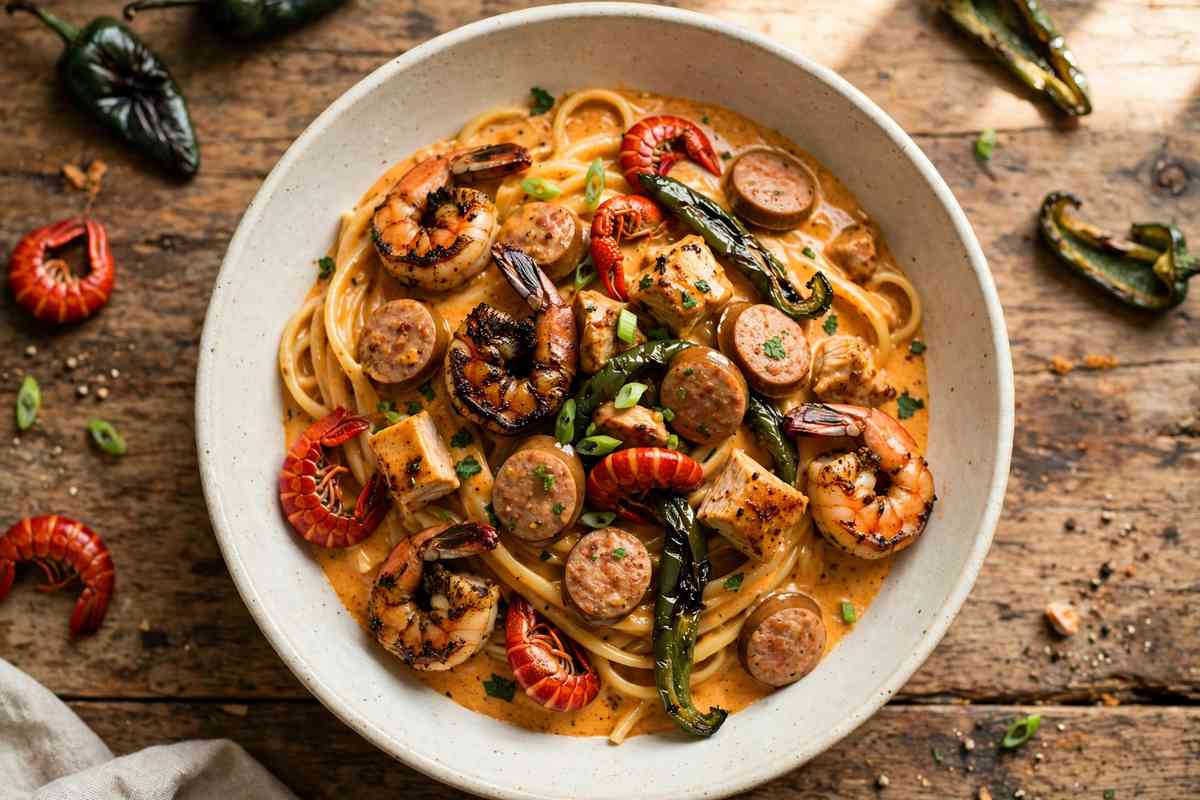
The Yard House jambalaya is a cream-sauce bowl: blackened shrimp, andouille sausage, crawfish, chicken and roasted poblano over linguine, jasmine rice or brown rice.
The name sets the wrong expectation. A Louisiana jambalaya simmers raw rice in the pot with the trinity and the stock, and the grains take on everything. This one is a sauce with a starch underneath it.
That decides the order of work: sauce first, shrimp last, base whenever it is ready.
What Yard House Jambalaya Is Made Of
The menu lists blackened shrimp, andouille sausage, crawfish, chicken, roasted poblano peppers and a Cajun cream sauce. The base is your choice of linguine, brown rice or jasmine rice.
- Shrimp: blackened, not simply sauteed
- Andouille: sliced sausage, browned
- Crawfish: tail meat, the part most home cooks skip
- Chicken: a second protein, usually thigh
- Poblano: roasted first, so the skin and the sweetness change
- Sauce: Cajun cream, the body of the whole bowl
- Base: linguine, brown rice or jasmine rice
- Portion: small or large, depending on the location
Read the list and you see four proteins, one vegetable and one sauce. There’s no tomato, no okra and no celery, which a Louisiana cook would reach for first.
The poblano is the only vegetable, and it goes under the broiler until the skin blisters. Peel it, seed it, slice it. Raw pepper in this sauce tastes green and sharp, and the char takes that edge off.
Check the item on the Yard House menu before you shop. What follows is a home version of the Yard House jambalaya, built to match those parts. It isn’t the restaurant’s recipe, and nobody outside those kitchens has that one.
Why This Is Not a Louisiana Jambalaya
Classic jambalaya is a one-pot rice dish, and the rice goes in raw with onion, celery, bell pepper, stock and smoked sausage.
The grains absorb the liquid as they cook, which is why the dish holds together on a plate. Yard House separates the starch from the sauce. Cream goes on at the end, over pasta or cooked rice, so the bowl carries a richness the rice-cooked version never has.
Both are worth cooking, and they’re not interchangeable. If you want the Louisiana bowl, the Stalekracker jambalaya on this site is the one to make.
Pastalaya keeps the one-pot method and swaps rice for pasta, and the pastalaya recipe reads like a jambalaya with penne in it.
Build the Cajun Cream Sauce First
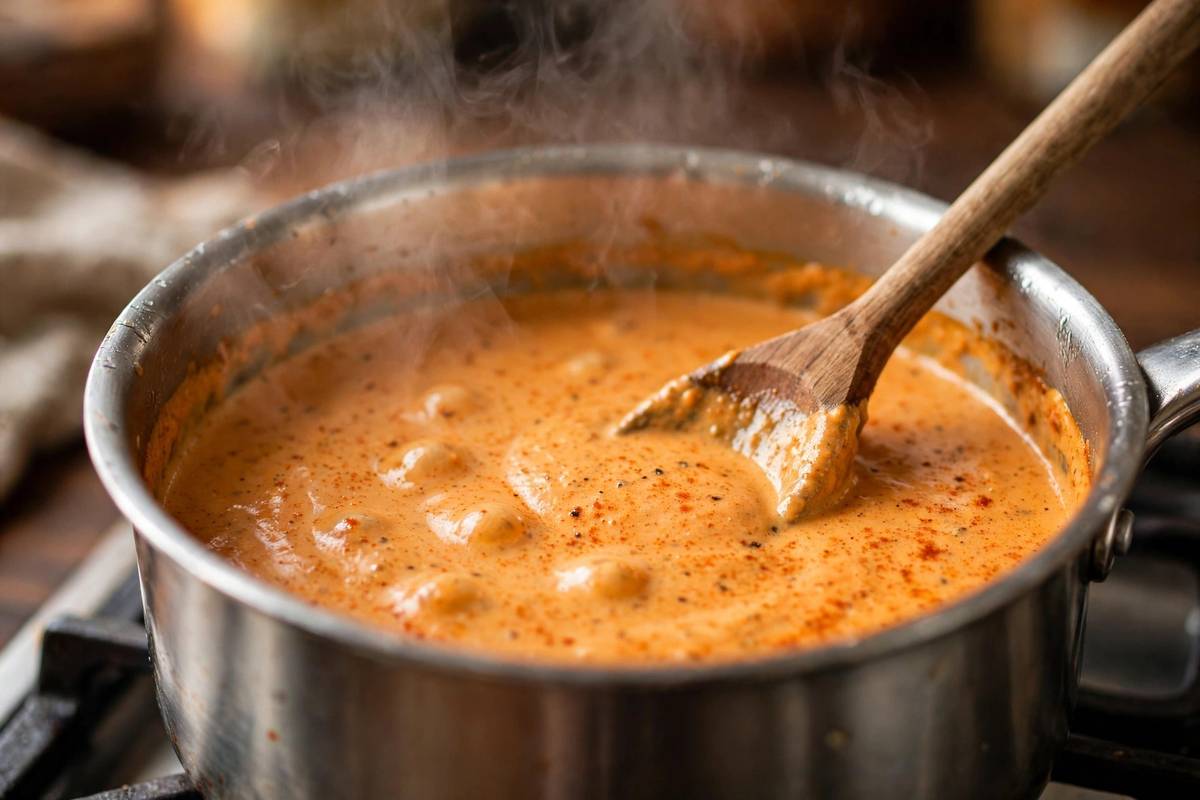
A roux, then cream, then seasoning, and the sauce is ready in about 15 minutes. Everything else waits, because a cream sauce that sits while you cook shrimp turns thick and gluey.
- Melt 2 tablespoons of butter in a Dutch oven over medium heat, whisk in 2 tablespoons of flour, and cook 2 minutes, until it smells like toast instead of raw flour.
- Add 1 small onion, diced, and 2 cloves of garlic, minced. Cook 3 minutes, until the onion turns translucent.
- Pour in 1/2 cup of chicken stock and scrape the bottom of the pot, then add 1 1/2 cups of heavy cream and 2 teaspoons of Cajun seasoning.
- Simmer on medium-low for 6 to 8 minutes, until the sauce coats the back of a spoon. Taste, then add salt.
Two things go wrong here. The flour needs its full 2 minutes, or the sauce tastes like paste. Cream also scorches above medium-low, so stir the bottom of the pot as it simmers.
Lift the spoon, run a finger through the sauce, and if the line holds for a second, it’s ready. A sauce that’s too thin still tastes fine, but it will run off the pasta and pool in the bowl!
Make the sauce the night before if the evening looks tight. I cool it uncovered for 20 minutes first, because condensation from a hot lid will thin it in the refrigerator. Reheating takes low heat, a splash of stock and a spoon. Pull the pot off the burner before it boils, since a hard boil is what makes cream sauce grainy.
Blacken the Shrimp, Then Assemble
Get a cast-iron skillet very hot, oil the shrimp, not the pan, and cook them 1 to 2 minutes a side. I use a 12-inch skillet so they fit in one layer. They’re done at 145F, when the flesh turns opaque and springs back.
Brown 8 ounces of sliced andouille in the same pan, then sear 2 boneless chicken thighs to 165F and slice them. Roast 2 poblano peppers under the broiler until the skins blister, then peel, seed and slice.
Crawfish tails go in last, off the heat. Frozen tail meat is already cooked, and a hot pan turns it rubbery. I keep a 12-ounce bag in the freezer, because fresh tails are hard to find outside Louisiana.
No crawfish at your store? Use another 8 ounces of shrimp, or lump crab meat folded in at the very end. The bowl loses the swampy sweetness and keeps everything else!
Now build it. Warm the sauce, fold in the chicken, andouille and poblano, then spoon it over the base. Shrimp and crawfish go on top at the last second so they stay whole.
Linguine, Jasmine Rice or Brown Rice?
Linguine holds the cream best, because the sauce clings to the flat strands. Jasmine rice keeps the bowl lighter, and brown rice adds chew and a nutty edge that cuts the richness.
Cook 12 ounces of linguine in well-salted water to just under al dente, then finish it in the sauce for a minute so the starch thickens everything. If pasta is the plan, the salt and timing notes here are worth a look before the water goes on.
For rice, cook 2 cups of jasmine or brown rice and spoon the sauce over it at the table instead of stirring it in. The bowl stays cleaner, and you can see what you’re eating.
Choose linguine when you want the restaurant plate. Choose jasmine rice when the sauce feels too heavy for the evening, and brown rice when you want a grain dish with the sauce on top.
Reheating the Leftovers
Cream sauces don’t survive a microwave on high. Reheat gently with a splash of stock, stirring, and stop before it bubbles.
Shrimp shouldn’t be reheated twice, so pick them out before storing if you plan a second meal. The sauce holds 2 days in the refrigerator and doesn’t freeze well, because the cream separates on thawing.