

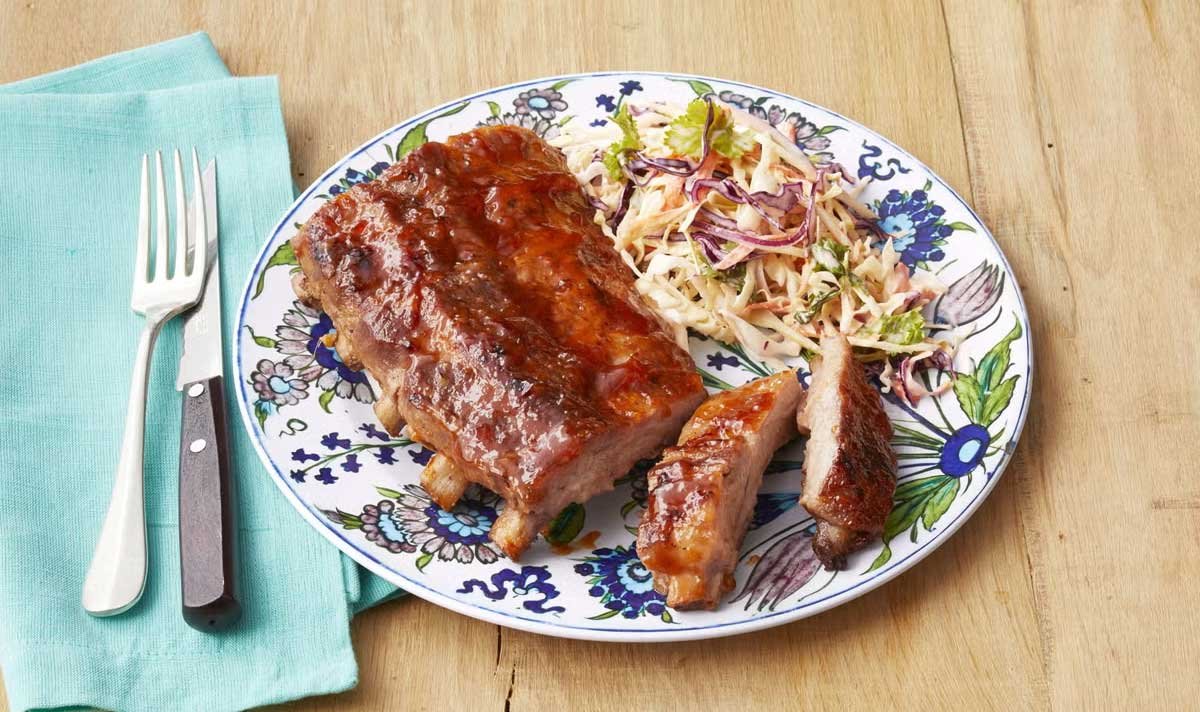
What to serve with ribs comes down to three jobs: one acidic side to reset the palate, one cool or creamy side to calm the smoke, and one starch to hold the sauce. Coleslaw, mac and cheese, and cornbread is the classic version of that trio, and every combination below follows the same logic.
Ribs are the loudest thing on any table: sweet, smoky, fatty, and sticky at the same time. Most side-dish roundups respond with 40 recipes in no particular order, which leaves you exactly where you started. The fix is choosing sides by the job each one does on the plate, then splitting the list by season, because a rack coming off a July grill and a rack coming out of a January oven want different company.
What to serve with ribs: the three-job rule
A side earns its spot next to ribs by doing one of three things. It cuts, meaning acid or bite scrubs the richness off your palate between mouthfuls: vinegar slaw, pickles, a sharp tomato salad. It cools, meaning cream, mild cheese, or fresh crunch gives the smoke and spice somewhere to land: potato salad, mac and cheese, cucumber anything. Or it catches, meaning starch soaks up the sauce that ends up on the plate no matter how carefully anyone eats: cornbread, mashed potatoes, plain rice.
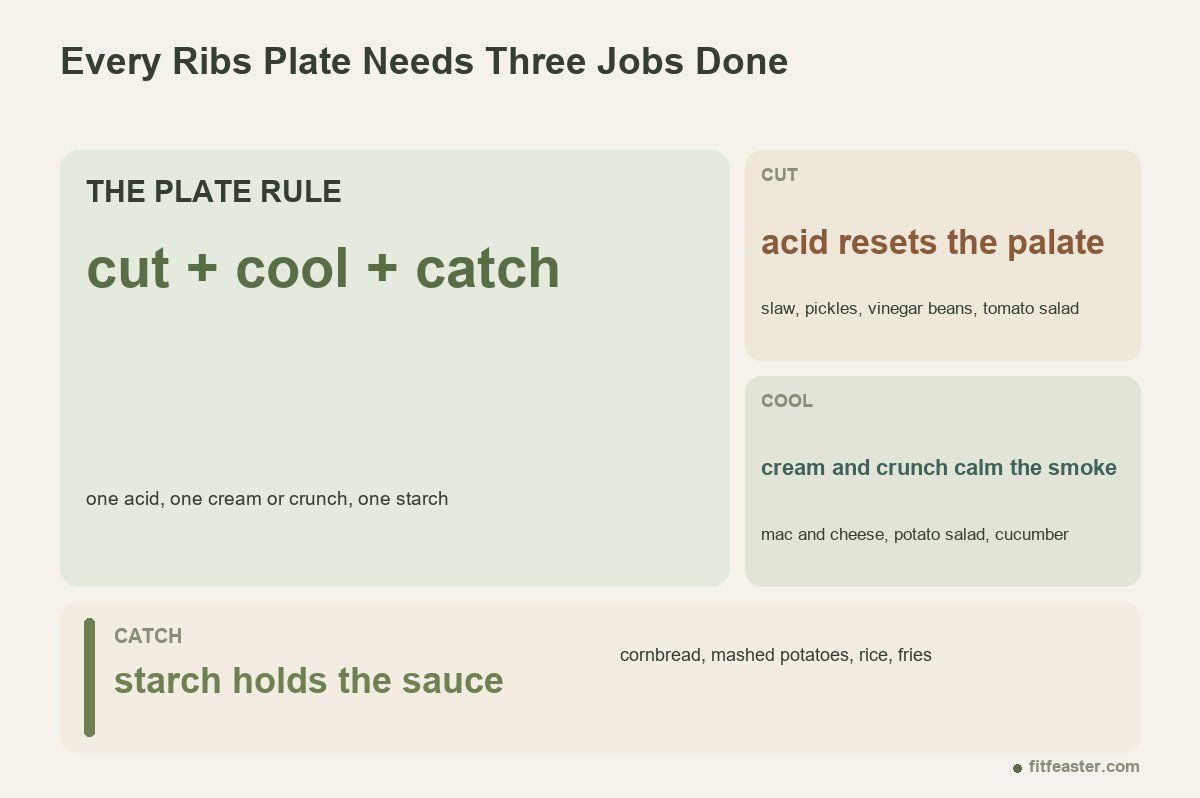
One from each column feeds a table properly. Doubling up on a column is where menus go wrong: two creamy sides read as heavy, two starches read as filler, and a plate with no acid at all makes the fourth rib taste like work. If one idea survives dinner, let it be the column check.
Starches: cornbread, potatoes, and rice
The starch column answers two of the most-searched pairings directly, potatoes and rice, so it gets the detail treatment.
- Cornbread, the default for a reason: sweet enough to echo the sauce, sturdy enough to wipe the plate. Bake it in a skillet for crisp edges.
- Mashed potatoes, the winter pick. Keep them plain; butter and salt only, since the sauce brings everything else.
- Baked potato salad, dressed warm with mustard and pickle brine so it lands in the cut column and the catch column at once.
- Plain white rice, underrated with ribs and standard in Hawaiian and Korean barbecue plates. It absorbs sauce better than any bread and adds zero competing flavor.
- Dirty rice or red rice, when the ribs run Cajun or smoky rather than sweet.
- Crispy smashed potatoes, the compromise when half the table wants fries: roast-crisp outside, fluffy inside, no fryer.
- Mac and cheese, technically a starch, spiritually a cooler; it counts as either column but never as both on the same menu.
Vegetables and fresh sides that cut
The vegetables that work with pork ribs share one trait: bite. Roasted-soft vegetables fade next to barbecue; charred, pickled, or raw ones hold their ground.
- Vinegar coleslaw, the single most useful side in the whole lineup. Skip the mayo version if the ribs are heavily sauced; our Costco-style cabbage coleslaw converts to vinegar dressing with one swap.
- Charred corn, on or off the cob. Mexican street corn brings its own acid and cream, covering two columns in one dish.
- Quick-pickled cucumbers or red onions, ten minutes ahead, they do the palate work of a full salad from a jar on the table.
- Collard greens or braised kale, cooked with a splash of vinegar at the end; the Southern pairing that treats the pot liquor as a sauce of its own.
- Green beans, blistered hard in a skillet with garlic, never steamed limp.
- Tomato-cucumber salad with red onion and a sharp dressing, the summer cutter.
- Grilled zucchini or asparagus, brushed with the rib rub before grilling so the plate tastes intentional.
- Watermelon, technically fruit, functionally the coldest, cleanest palate reset barbecue knows.
For the health-minded version of the plate: slaw with olive-oil vinaigrette, blistered green beans, and a half portion of rice covers all three jobs at roughly the calorie load of a single scoop of mac and cheese.
Summer spread vs. winter table
Search data splits this question by season, and the instinct is right. Summer ribs come off a grill surrounded by cold sides made ahead; winter ribs come out of a low oven and want hot, braised company. The same three columns apply, but the picks change.
Summer, everything made ahead and served cold or warm: vinegar slaw, corn on the cob, tomato-cucumber salad, watermelon, baked beans finished on the grill, potato salad from the fridge. This is the same cold-chain logic that runs a good BBQ side spread: nothing on the table should compete with the grill for attention or timing.
Winter, oven ribs and stovetop sides: mashed potatoes, braised collards, skillet cornbread, roasted Brussels sprouts with a vinegar glaze, mac and cheese baked while the ribs rest. Home cooks who braise ribs indoors already pair by instinct here; a r/Cooking thread on country-style ribs put it in one line:
“Braise in lots of sliced onions and a beer. Serve with mashed potatoes.”
– r/Cooking, December 2025 (26 upvotes)
That comment is the whole winter formula: the braise supplies the cut (onions and beer), the potatoes catch, and nobody misses the grill.
Three menus you can copy tonight
Weeknight dinner for four, 20 minutes of side work: quick-pickled cucumbers, microwave-then-crisped smashed potatoes, bagged slaw with vinegar dressing. All three jobs done while the ribs rest.
Cookout for eight: vinegar slaw and tomato-cucumber salad made in the morning, corn charred alongside the ribs, one skillet of cornbread, watermelon last. Five sides, one grill, zero oven.
Winter Sunday for six: mashed potatoes, braised collards, skillet cornbread, and a jar of pickles opened at the table. Heavier on catch, as cold weather asks, with the pickles carrying the cut column alone.
FAQ
What is the 3-3-3 rule for ribs?
The 3-3-3 (or 3-2-1) rule is a smoking method, not a side-dish rule: roughly three hours of smoke, a wrapped stretch, and a final sauced stretch for spare ribs. For the plate itself, the working rule is one acid, one creamy or crunchy side, and one starch.
What goes well on the side of ribs?
The five most reliable sides are vinegar coleslaw, cornbread, mac and cheese, baked beans, and corn on the cob. Together they cover acid, starch, and cream; pick three of the five and the plate is balanced without further planning.
What vegetables go well with pork ribs?
Vegetables with bite: charred corn, blistered green beans, braised collard greens with vinegar, grilled zucchini, and quick-pickled cucumbers or onions. Soft roasted vegetables fade next to barbecue sauce, so char, pickle, or serve them raw.
What should I add when serving ribs and rice?
Rice covers the starch column, so add one cutter and one cooler: kimchi or quick-pickled cucumber for acid, and a cucumber salad or a fried egg for the cool side. That combination is how Korean and Hawaiian barbecue plates balance the same richness.