

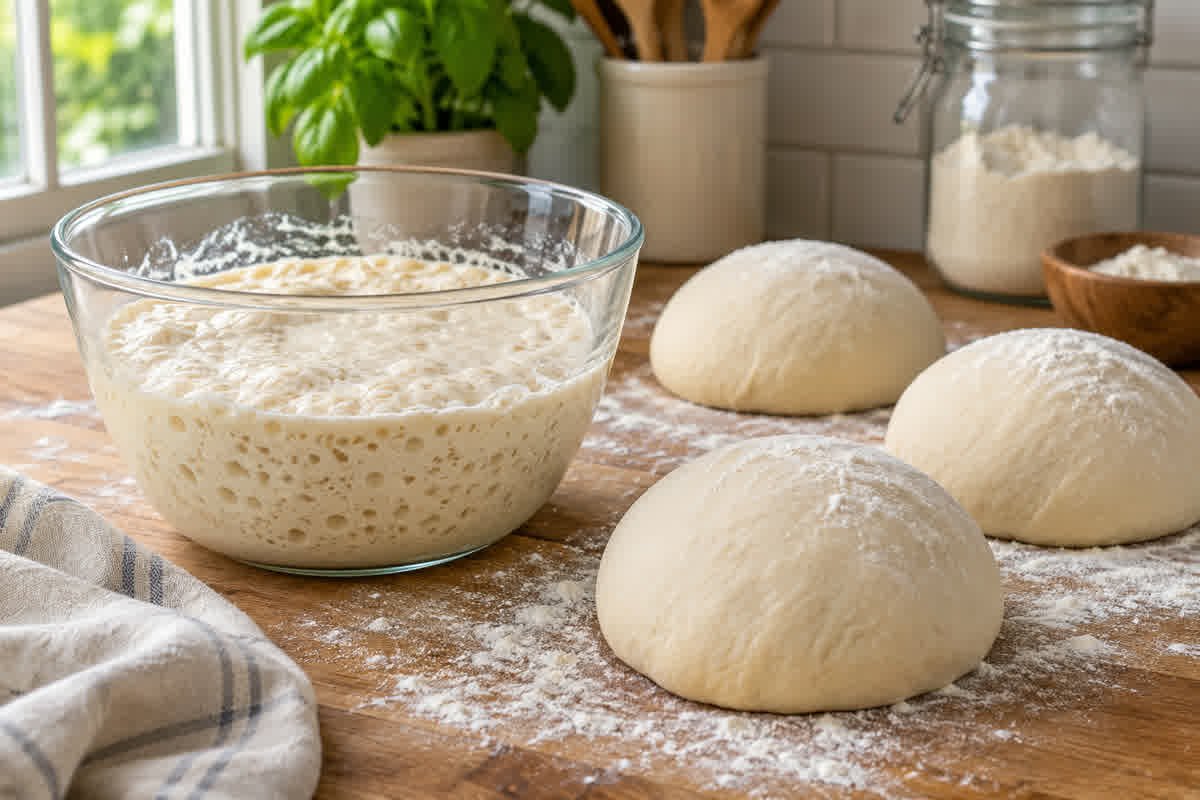
The Vito Iacopelli pizza dough recipe is a two-day poolish dough: a wet starter of flour, water, a little yeast and honey rests in the fridge for 16 to 24 hours, then goes into a dough of 00 flour, water and salt that rises twice before baking. I plan it like any pizza night for my kids, with the starter mixed the evening before and the real work the next afternoon.
One thing up front. I couldn’t reach an official recipe card from Vito himself. Everything below comes from two published transcriptions that credit him. Where they disagree, I say so. A dough built from half of one card and half of another is the quickest way to a bad crust.
The Vito Iacopelli Pizza Dough Recipe in Short
The dough has three working parts: the poolish, the dough day, and a second rise as dough balls. Both transcriptions use 00 flour, the fine Italian flour. The poolish is what sets this dough apart from a same-day recipe. It adds flavor while you sleep!
The sauce is a separate job. Our Vito Iacopelli pizza sauce recipe covers it, and here it’s all dough.
The Poolish the Night Before
A poolish is equal weights of flour and water. In the version from Christina’s Cucina, which she credits to Vito, the card for five pizzas uses roughly 100 ml of water, 100 g of 00 flour, 1 teaspoon of dry yeast and ½ teaspoon of honey. Mix it until it looks sloppy and scraggly, because smooth isn’t the goal.
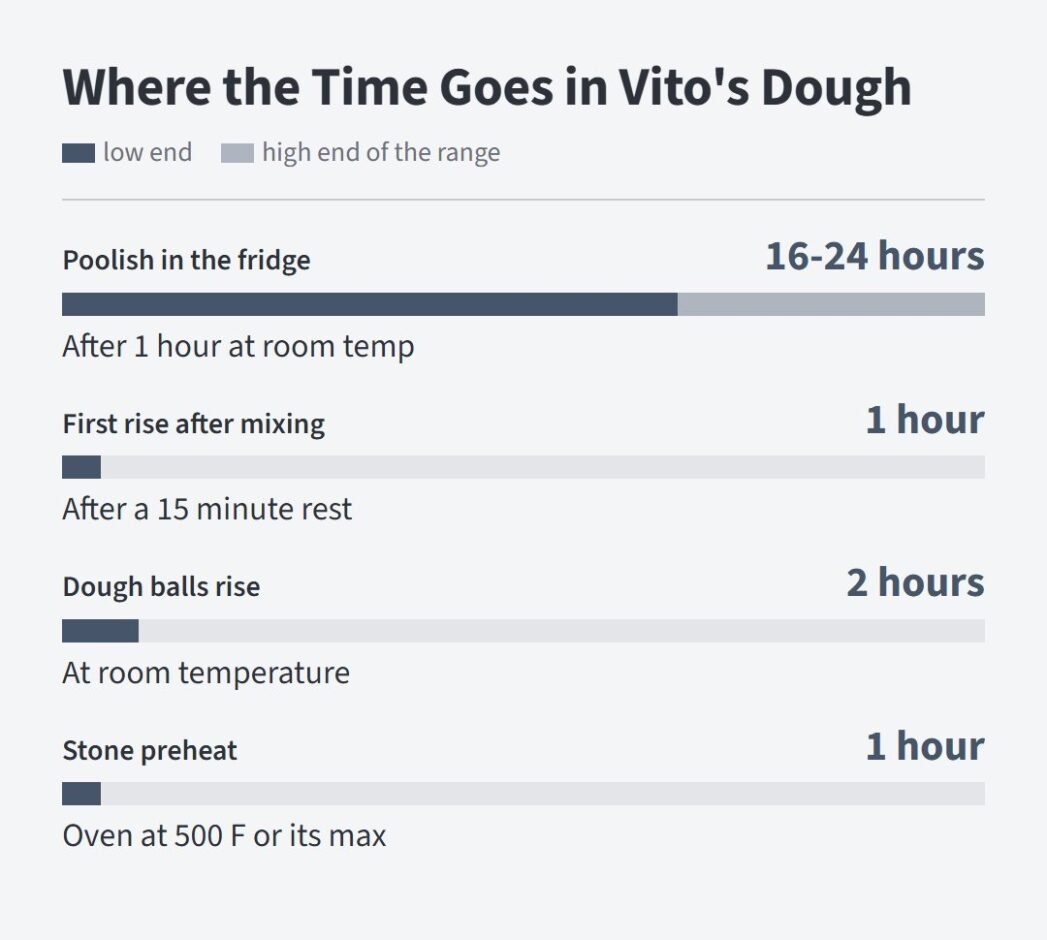
Cover the bowl and leave it at room temperature for one hour. Then move it to the fridge for 16 to 24 hours. She warns against going longer than 24 hours, because the poolish can turn sour and overproof. On a hot day, she suggests a cooler spot for that first hour.
Dough Day, Step by Step
These steps follow the same card, which makes five 12-inch pizzas. You’ll need 13½ oz of water, 5½ cups plus 1 tablespoon of 00 flour, 2½ teaspoons of sea salt, and a tablespoon of olive oil for your hands.
- Pour the water into a large bowl and add the cold poolish straight from the fridge. Stir until it dissolves.
- Add half the flour and mix. Add the salt, then the rest of the flour.
- Work the sticky dough on the counter until it comes together, then cover it with the upturned bowl and rest it for 15 minutes.
- With oiled hands, lift the dough from underneath, let the ends fall, and turn it a quarter. Repeat until it forms a smooth shape. Put it in an oiled bowl and let it rise for one hour.
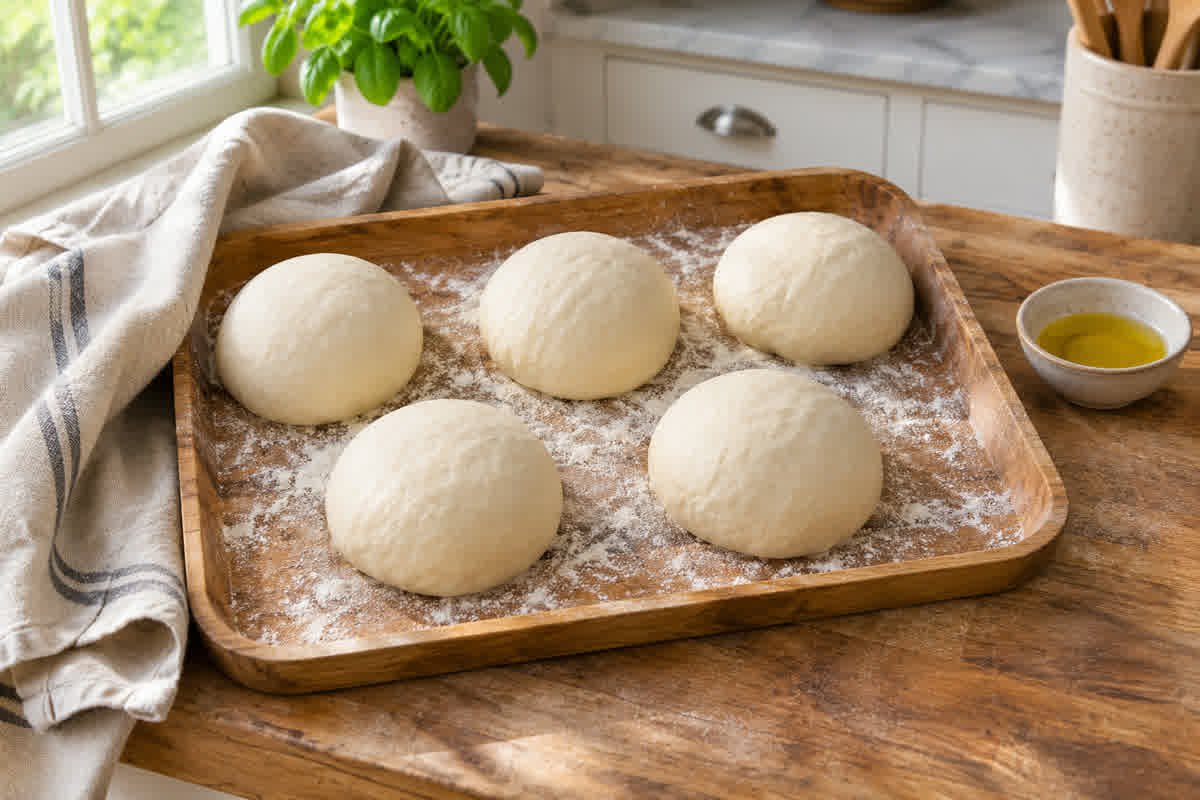
- Divide it into five equal pieces and shape each into a ball. Set them on a tray dusted with semolina or flour, brush with oil, and cover.
- Let the balls rise for about two hours at room temperature.
- Preheat the oven to 500°F, or its maximum, for about an hour if you use a pizza stone. Then press each ball out and bake.
The card says to scale the flour and water for a different batch size but keep the yeast and honey the same. It’s an odd rule, but I’d follow it exactly as written.
Why the Numbers Differ Between Copies
One page in the results is a recipe-saving site that copies the dough as “The Perfect Pizza Dough By Vito Iacopelli.” Put its numbers next to Christina’s and they don’t line up. No wonder people get confused.
| Detail | Cooked copy | Christina’s Cucina |
|---|---|---|
| Poolish water and flour | 300 ml water, 300 g 00 flour | Roughly 100 ml water, 100 g flour |
| Poolish yeast and honey | 5 g dry yeast, 5 g honey | 1 tsp yeast, ½ tsp honey |
| Poolish rest | 1 hour at room temp, then overnight in the fridge | 1 hour at room temp, then 16 to 24 hours |
| Salt | 40 g | 2½ tsp |
| Mixing | Stand mixer 8 to 10 minutes, or hand knead 10+ minutes | Stir, hand work, 15 minute rest, stretch and fold |
| Dough balls | 250 to 310 g each, 2 hours rest | Five balls, about 2 hours rise |
The Cooked copy lists its dough-stage water and flour twice with different amounts, so I won’t quote them. The poolish yeast also looks different once you compare it with the poolish flour, since 1 teaspoon of dry yeast is roughly 3 g. My advice is simple. Choose one card and use every number from it. Dough that feels too stiff or too loose? You may have blended two.
Both copies agree on the shape of the process, and that part you can trust. Poolish overnight, a one-hour rise after mixing, then about two hours as dough balls. The Cooked copy also says the finished balls keep in the fridge for up to five days. You can read it at Cooked.
If the Crust Turns Out Tough
This dough has a reputation for crunch, so a tough crust stings. Why does it happen? One home baker on r/Pizza asked for help:
“First time trying a 48 hour ferment. I used the dough recipe from Vito Iacopelli. Good flavor, crust was a bit on the tough side. Any recommendations?”
– r/Pizza, 103 upvotes
The thread doesn’t give one clear verdict, so I won’t invent one. Neither card above mentions a 48-hour wait. They stop at 24 hours for the poolish and about three hours of rising on the dough day. Stretch the schedule past that and you’re beyond what these copies describe. Common home-baking explanations for a dense crust include too much flour worked in on the counter and an oven that isn’t hot enough. Those are general reasons, not Vito’s own advice.
Making It Ahead
This dough suits a planned weekend. The Cooked copy says the balls can wait in the fridge for up to five days. Cover them well. I haven’t verified that window myself, so treat it as the copy’s claim.
Same-day and no-poolish versions exist online, but neither card covers them, and I won’t invent timings. If you need pizza tonight, our Little Caesars pizza dough recipe is the quicker, non-Italian route. Save Vito’s schedule for a night you can plan ahead!