

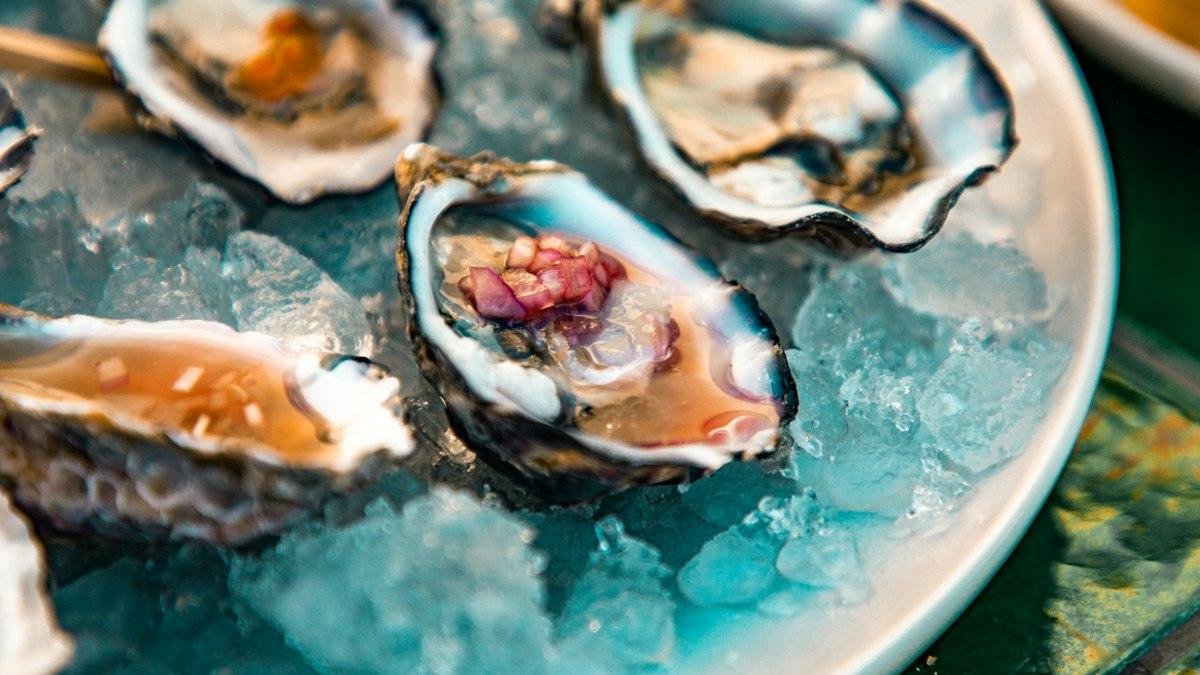
A mignonette is three things stirred in a jar: good wine vinegar, finely minced shallot, and cracked pepper. Use about half a cup of vinegar and two tablespoons of shallot, let it sit a few minutes, and spoon a little over each oyster. That’s the whole mignonette recipe, and it takes five minutes.
Where people go wrong isn’t the ingredients, it’s the amounts. Line up five ranking recipes and they don’t agree on a single number, so you’ll want to know which one to trust before you start mincing!
The mignonette recipe ratio to start with
Here’s the version I’d build from the middle of what the five recipes below print. It lands right on Chez Us and Epicurious, which both use half a cup of vinegar.
- 1/2 cup red wine vinegar, the best one you’ve got
- 2 tablespoons very finely minced shallot
- 1 teaspoon freshly cracked black pepper (white pepper works too)
- Pinch of kosher salt
Stir everything in a small glass jar and give the shallot a few minutes to soften in the vinegar. Taste a drop on a spoon before it touches an oyster. If it’s too sharp, add a little more shallot, and if it’s flat, add a splash more vinegar. Serve about a teaspoon per oyster, which is the amount Epicurious spoons over each one.
Five ranking recipes, side by side
Every quantity below is copied from the recipe page itself. The last column shows how many oysters the page says it serves, and a dash means the page doesn’t say.
| Recipe | Vinegar | Shallot | Pepper and extras | Oysters |
|---|---|---|---|---|
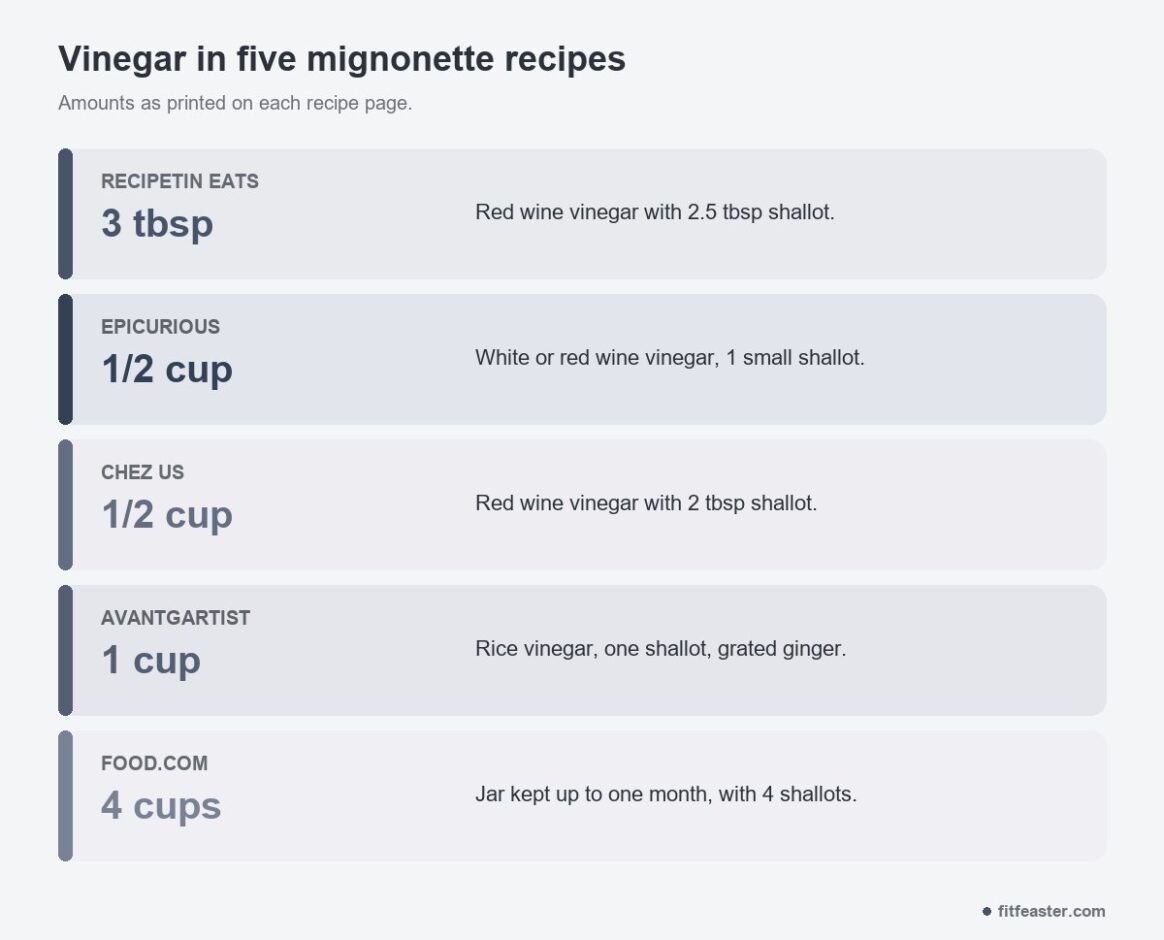
| RecipeTin Eats | 3 tbsp red wine | 2 1/2 tbsp eschalot | Black pepper to taste | 12 to 24 |
| Epicurious (Virginia Willis) | 1/2 cup white or red wine | 1 small shallot | 1 tsp white pepper, zest of 1 lemon, pinch of salt | 12 |
| Chez Us | 1/2 cup red wine | 2 tbsp | 1 tbsp white peppercorns, 1 tbsp lemon zest, salt | – |
| The Avantgartist | 1 cup rice vinegar | 1 shallot | Black pepper, 2 tsp sugar, 1 inch grated ginger | 12 |
| Food.com (Chuck Hughes) | 4 cups red wine | 4 shallots | 2 tbsp crushed black peppercorns | – |
The spread is wild. RecipeTin Eats calls for 3 tablespoons of vinegar and Food.com calls for 4 cups, which is more than 20 times as much. Food.com’s own page explains the difference: it says to keep the jar in the refrigerator for up to one month, so that recipe is a pantry condiment, not a sauce built for one platter.
What each ingredient does
Vinegar is the brightness, and it’s most of the sauce, so quality shows. Four of the five recipes use red or white wine vinegar, and the Avantgartist uses rice vinegar instead.
Shallot brings texture and mild sweetness that keeps the vinegar from biting. Mince it so fine it almost disappears into the liquid, because big chunks slide off the oyster and end up on the plate.
Pepper is the warmth. Crack it fresh and coarse rather than reaching for the dusty kind. The five recipes split between black and white pepper, so use whichever you’ve got.
Lemon zest (Epicurious and Chez Us) and a little sugar (the Avantgartist) are optional tweaks. Zest adds perfume without the extra liquid lemon juice would bring, and sugar softens a sharp vinegar. The Avantgartist pairs it with grated ginger for a different direction entirely.
Making it ahead, and serving it
You can mix the sauce before guests arrive. The Avantgartist sets its sauce in the refrigerator until serving, and Food.com keeps its large batch up to a month, though that’s its own claim for its own four-cup jar. For the half-cup version, I’d make it the day you serve it.
Put it in a little bowl with a spoon so your guests can dose their own. Some people like it with nothing else, while others add cocktail sauce and prepared horseradish alongside, the way the Avantgartist serves its platter.
Planning a bigger spread? Pair the platter with a charcuterie board for guests who’d rather skip raw oysters, and set out a pitcher from the gin cocktail list so nobody’s hunting for a drink.
When oysters taste best
A commenter on the Chez Us post says New Englanders eat oysters in months with an R in them, September through April.
The author replied that it’s the same where they live, and that June and July oysters were good but a little milky. That’s two home cooks talking, not a health rule, but it suggests fall is when your mignonette season starts.
FAQ
What goes into a classic mignonette recipe?
Classic mignonette is wine vinegar, finely minced shallot, and cracked black or white pepper. Some recipes add lemon zest, a pinch of salt, or a little sugar.
How much mignonette do you need per oyster?
About a teaspoon per oyster. Epicurious spoons a teaspoon of sauce over each one in its oyster recipe, so half a cup covers a dozen with plenty left in the jar.
What’s the best vinegar for mignonette?
Good-quality red or white wine vinegar is the common choice: Epicurious asks for best-quality white or red wine vinegar, and RecipeTin Eats prefers a good-quality red. The Avantgartist shows rice vinegar works too.