

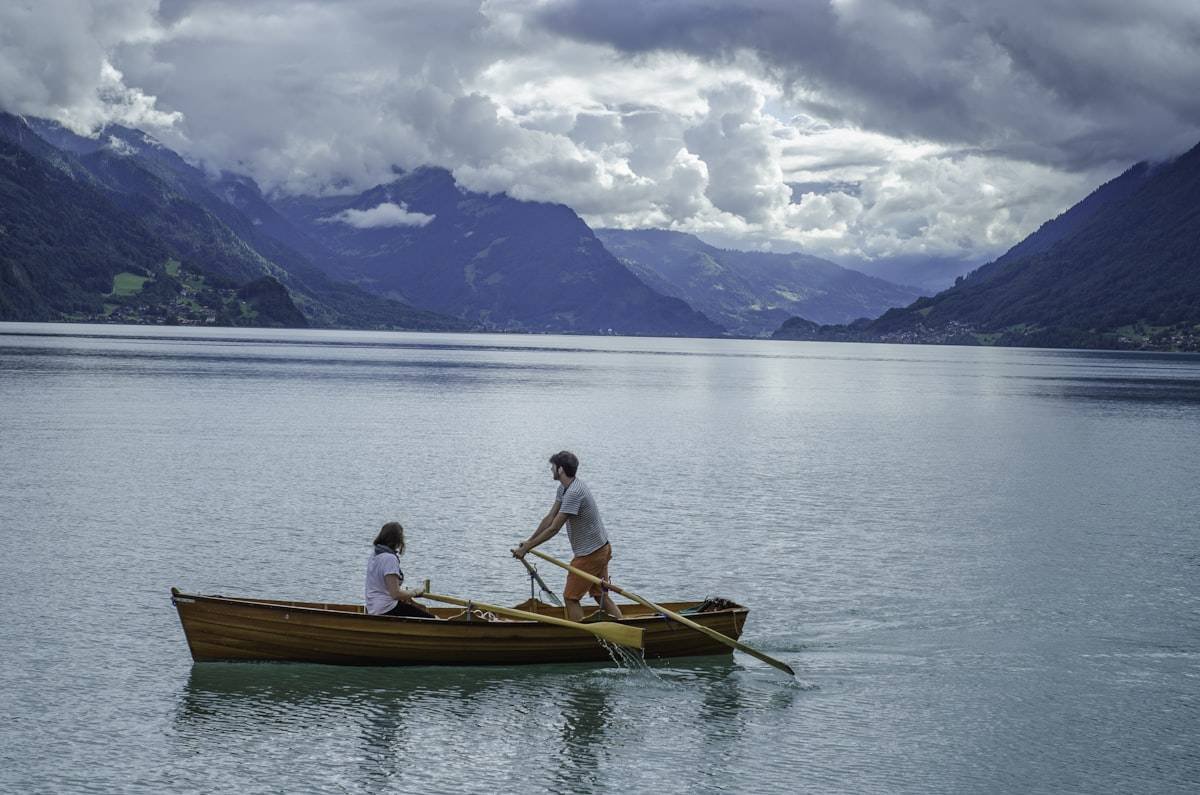
The rowing boat drink is the Row The Boat cocktail. Tasty’s version shakes vanilla vodka, coconut rum, cream of coconut, and pineapple juice into a sugar-rimmed martini glass in about five minutes, and it tastes like a piña colada that dressed up for a dinner party.
That answer covers the kitchen. The same three words also name a team drinking race beloved by rugby clubs, plus a genuine legal question about alcohol on the water, and each meaning calls for different advice. The cocktail comes first; the game and the law follow, and the last section names the only drink worth carrying aboard.
What’s in a rowing boat drink?
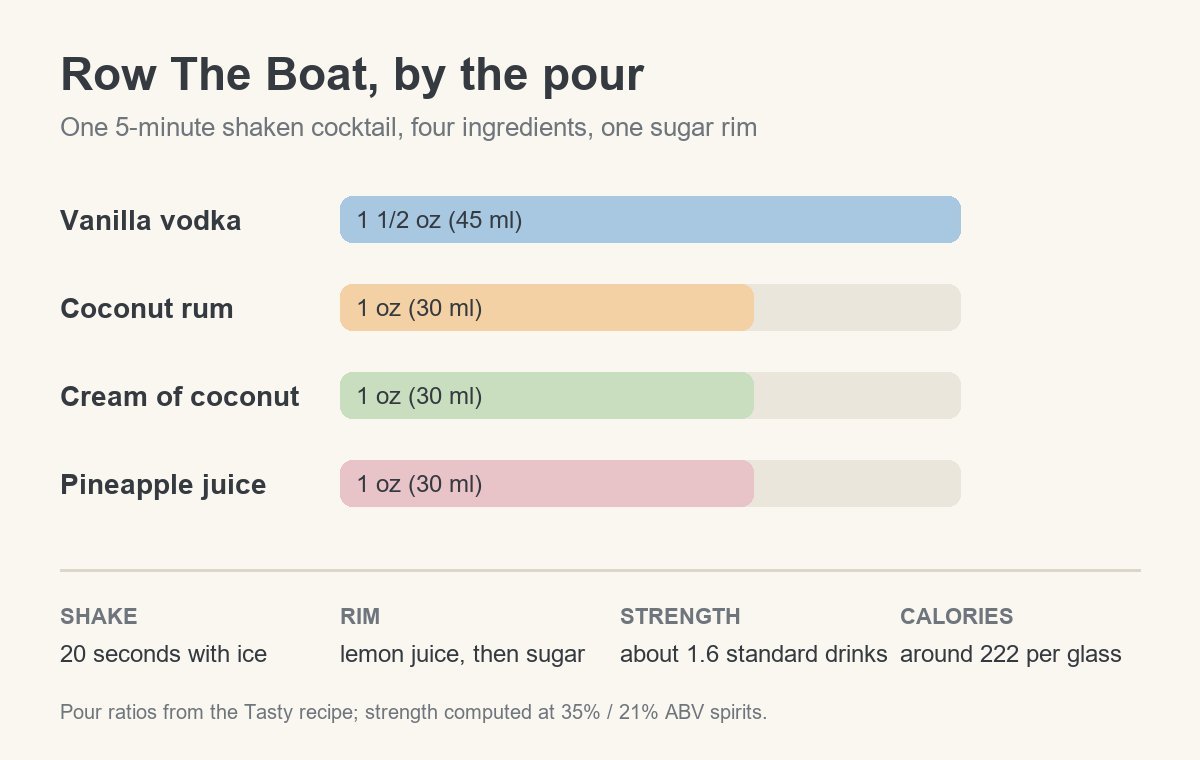
A Row The Boat combines 1½ oz vanilla vodka, 1 oz coconut rum, 1 oz cream of coconut, and 1 oz pineapple juice, shaken with ice for 20 seconds and strained into a glass rimmed with lemon juice and sugar.
The 20-second shake is not fussiness. Cream of coconut is dense and syrupy, and in a gently stirred drink it settles into sweet sludge at the bottom; a hard shake chills it, thins it with meltwater, and folds it into the juice. Rim the glass before you shake, not after: dip the lip in lemon juice, press it straight into a saucer of sugar, and give the crust a minute to set so it doesn’t slide. Skip the rim on round two, because 21 grams of sugar per glass adds up fast.
It smells like a beach and drinks like dessert.
Now the number the recipe card leaves out. At 35 percent alcohol for the vodka and around 21 percent for a typical coconut rum, one serving holds roughly 22 ml of pure alcohol, which works out to about 1.6 US standard drinks. Two of these carry more alcohol than three light beers, hidden under coconut cream and pineapple. Tasty pegs a glass at 222 calories. Treat it as a slow sipper, not a session drink.
For a pitcher, multiply everything by six, stir it very cold over plenty of ice, and accept a slightly thinner texture, since no shaker holds six servings.
The boat race: when the drink is a team sport
Order a rowing boat drink in a rugby clubhouse and you will not get a martini glass. You will get a line of teammates, a table of full cups, and a referee.
A boat race is a relay: teams of equal size line up, the lead drinker starts on the signal, and each emptied cup gets flipped upside down on its owner’s head before the next person may touch theirs. The inverted cup is the anti-cheating device, since a splash of beer down your neck proves the cup wasn’t empty. The format runs through Australian amateur rugby leagues, appears in Germany as a team version of Bierjunge, and had its Hollywood moment in the 2006 film Beerfest.
The name has competing origin theories. The Concise Macquarie Dictionary was defining boatrace as a team beer-drinking competition back in 1982, and one theory reads the name as an acronym for beer on a table, while another hears the Australian slang skulling, downing a beer in one motion, punning on the sculling of a rowing race.
Either way, the rowing here happens with elbows.
Can you drink in a rowing boat?
In most US states, boating-under-the-influence laws apply to every vessel, rowboats and canoes included, with the same 0.08 blood-alcohol threshold as driving; penalties range from fines to arrest and suspended boating privileges. The US Coast Guard treats operating any boat while intoxicated as a federal offense, and states layer their own rules on top, so check your local boating authority before you pack anything stronger than lemonade.
Hire operators go further than the law. Pub & Paddle, a rental outfit, bans alcohol in its canoes and rowing boats outright, reserves the right to search bags and confiscate bottles, and will refuse to launch a group that arrives drunk, with no refund.
The physics deserve more respect than the statute. A rowboat rewards a low center of gravity and small movements, and alcohol degrades balance well before it clouds judgment, so a tipsy passenger lunging for a floating hat is how a calm afternoon becomes a swim. Cold water raises the stakes: sudden immersion triggers a gasp reflex that can pull water into the lungs within seconds, sober or not. Drink aboard the way you would drink before cycling home through traffic, and give the person on the oars the same zero you would give a driver.
Drinks that hold up on the water
Cream cocktails fail on boats for plainly practical reasons. Cream of coconut splits in a warm cooler, a sugar rim turns sticky in lake spray, and a martini glass belongs nowhere near a hull that flexes when you shift your feet.
Sailors have a standing answer. In a long-running Cruisers Forum thread on boat drinks, the recipe that opens the discussion goes like this:
“Hereis a recipe, it’s quite simple -you pick ice, about 100 ml of ginger beer, 50-60 ml of dark Rum, and a lime. You fill a tall glass with ice.”
– Cruisers & Sailing Forums
That build travels. Ginger beer ships in cans, limes survive a week in a dry bag, and the rum stays optional: 50 to 60 ml for a passenger where drinking aboard is legal, zero for the rower. Three packing rules keep it civilized:
- Cans or a sealed flask only; broken glass and bare feet share a very small floor.
- Chill everything on shore, because a rowboat carries no ice for long.
- Alcohol is a passenger’s privilege, and whoever rows sticks to the ginger beer.
Rowing boat drink FAQ
What is a row boat?
A row boat is a small open vessel moved by oars pivoting in oarlocks, with the rower seated facing the stern; it typically carries one to three people on lakes, rivers, and sheltered harbors. The cocktail borrowed the name, not the workout.
What is a steamboat drink?
A steamboat is a highball of 45 ml Southern Comfort, 30 ml lime juice, and lemonade to top, poured over ice in a tumbler and ready in about three minutes. Southern Comfort is a whiskey liqueur, so recipes that list whiskey and Southern Comfort in the same breath mean one bottle, not two.
What is the best rowing boat drink for a hot afternoon?
On shore, the Row The Boat cocktail; on the water, cold ginger beer over ice with half a lime, adding dark rum only for passengers where the law allows it. A fizzy lime colada, coconut cream lengthened with soda and fresh lime, splits the difference when the boat is tied to a dock.
Give each version its setting. Shake the cocktail on a counter that stays level, run the boat race on grass with plastic cups, and keep the on-water version simple, canned, and mostly ginger. Whoever holds the oars gets their pour at the dock.