

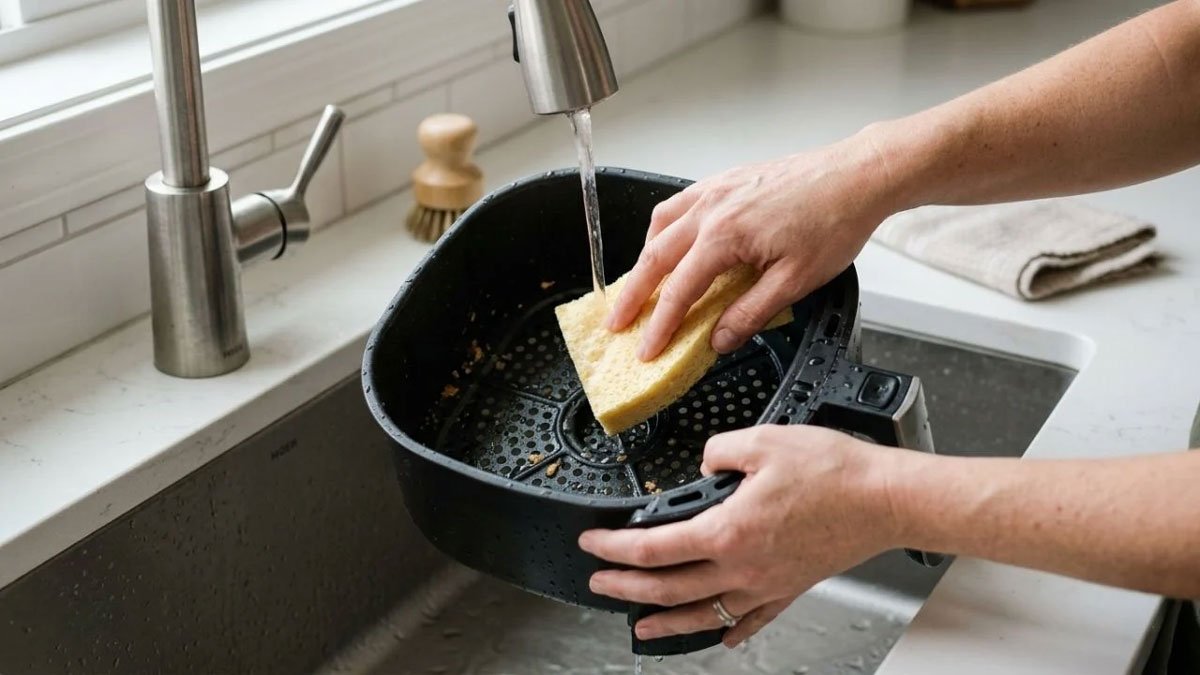
To clean an air fryer, unplug it, let it cool, remove the basket or tray, wash removable parts with warm water and dish soap, wipe the interior with a damp cloth, and dry everything fully before using it again.
The part people underestimate is not the basket. It is the sticky brown film that collects around corners, screws, vents, and the upper heating area. That film can smoke, smell stale, and make perfectly good fries taste faintly like last week’s chicken wings.
The Fast Cleaning Method After Normal Cooking
A normal after-dinner clean should take about 5 to 10 minutes: remove loose crumbs, wash the removable basket or tray, wipe the cavity, and leave the drawer open until dry. If someone asks how to clean an air fryer after a routine cook, this is the version that actually gets done on a busy night.
Use this method after fries, vegetables, frozen snacks, toast, or anything that did not spit heavy fat. It keeps the nonstick coating intact and prevents small crumbs from baking into black specks the next time the fan starts.
- Unplug the air fryer and let it cool until the basket is warm, not hot.
- Pull out the basket, crisper plate, rack, or tray and dump crumbs into the trash.
- Wash removable parts with warm water, a few drops of dish soap, and a soft sponge or nylon brush.
- Wipe the inside walls with a damp microfiber cloth. Do not pour water into the appliance body.
- Clean the exterior and control panel with a barely damp cloth.
- Dry every part, then leave the drawer slightly open for a few minutes before reassembling.
KitchenAid’s air fryer cleaning guidance also centers on soft cloths, warm water, and gentle cleaning for interior surfaces. Philips gives similar advice for its Airfryer pan and basket: hot water, washing-up liquid, and a soft sponge are the baseline tools.
For daily use, a nylon dish brush is the sweet spot. It reaches the corners better than a flat sponge but is not as aggressive as steel wool.
What to Use, and What to Keep Away From the Air Fryer
The safest air fryer cleaning supplies are warm water, mild dish soap, microfiber cloths, soft sponges, nylon brushes, baking soda paste for stubborn grease, and wooden or silicone scrapers. Learning how to clean an air fryer also means knowing what never belongs near food-contact parts: steel wool, metal scouring pads, drain cleaner, engine degreaser, and harsh oven cleaner.
An air fryer is a small convection appliance, not a sink-safe pot. The basket can usually handle hand-washing, and some models allow dishwasher cleaning, but the appliance body contains electrical parts, fan openings, and a heating element.
| Cleaning need | Use this | Avoid this | Why it matters |
|---|---|---|---|
| Light oil after one cook | Dish soap, warm water, soft sponge | Dry paper towel only | Oil left behind turns tacky after repeated heating. |
| Crumbs in corners | Pastry brush, nylon brush, damp cloth | Knife tips or metal picks | Sharp tools can chip coatings and gouge plastic seams. |
| Sticky brown grease | Baking soda paste and a short soak | Drain cleaner or engine cleaner | Industrial cleaners are not designed for food-contact appliance parts. |
| Window or exterior | Damp microfiber cloth, then dry cloth | Abrasive powder | Abrasives can cloud plastic windows and glossy control panels. |
| Upper heating area | Damp cloth, soft brush, patient wiping | Spraying cleaner upward | Liquid can run toward electrical areas or leave fumes near the element. |
The United States Environmental Protection Agency’s Safer Choice program describes safer cleaning products as those that meet ingredient and performance criteria for human health and the environment. That does not mean every Safer Choice cleaner belongs inside an air fryer, but it is a useful reminder: food appliances should be cleaned with products that are meant for kitchen surfaces and can be rinsed clean.
A good smell test is simple. If the basket smells strongly like cleaner after rinsing and drying, rinse again. Soap perfume should not be the first thing that hits you when the drawer slides open.
How to Deep Clean a Greasy Air Fryer Basket
For baked-on grease, soak only the removable basket, tray, or crisper plate in hot soapy water, then loosen residue with baking soda paste and a nylon brush. Repeat in short rounds instead of attacking the coating with harsh abrasives.
This is where air fryers frustrate people. The grease is thin at first, then it polymerizes into a shiny amber film that laughs at a quick sponge pass. More pressure is not always better; more soak time usually is.
- Remove the basket and tray from the appliance body.
- Fill a sink or tub with hot water and a squirt of dish soap.
- Soak removable parts for 10 to 20 minutes. Keep the appliance body dry.
- Mix baking soda with a little water until it becomes a spreadable paste.
- Rub the paste onto greasy areas and let it sit for 5 to 10 minutes.
- Scrub gently with a nylon brush, following corners, holes, and raised ridges.
- Rinse until the water runs clear and the surface no longer feels slippery.
- Dry with a towel and air-dry completely before reassembling.
If the basket still feels waxy after rinsing, there is still oil on it. A clean nonstick surface should feel smooth, not greasy, and water should sheet or bead normally instead of dragging through a sticky film.
“Dawn and nylon brush after EACH use, before it cools completely. Takes 30 seconds.”
– r/airfryer, January 2026 (62 upvotes)
That blunt little routine is the least glamorous answer, and probably the most useful one. Fresh grease is washable. Old grease becomes a project.
How to Clean the Interior and Heating Element Area

Clean the air fryer interior with the appliance unplugged and cool, using a damp cloth for walls and a soft brush for crumbs near the heating element. Never soak the main unit, spray cleaner into vents, or scrub the element with metal tools.
The upper area is awkward because you are working upside down under a coil or guarded heating surface. Turn the appliance so light reaches the top, then use patience instead of force.
- Remove the drawer and any loose accessories.
- Hold the appliance over a trash can and gently tap or brush out dry crumbs.
- Use a damp microfiber cloth on interior walls and the bottom cavity.
- For the heating area, use a soft dry brush first, then a barely damp cloth if needed.
- Let the unit sit open until all moisture has evaporated.
Philips’ support guidance for its Airfryer models separates the basket and pan from the inside and heating-element cleaning, which is the right mental model for most brands. Removable parts can be washed more directly. The main unit needs controlled wiping, not a bath.
If the air fryer smokes after cleaning, stop and check for leftover grease, wet patches, or soap film. Smoke after a deep clean often means residue got loosened but not fully removed.
Should You Steam Clean an Air Fryer With Water?
Steam can soften greasy residue, but it should be used cautiously and only in a heat-safe dish or manufacturer-approved mode. Do not fill the basket like a pot, boil water inside the drawer, or rely on steam as a substitute for wiping and drying.
Some newer air fryer ovens include a steam-clean instruction in the manual. Many basket-style air fryers do not. That difference matters because the fan, element, drawer depth, and drain paths are not the same across models.
If your manual allows a water-assisted clean, keep the water shallow, use the recommended temperature and time, and let the appliance cool before wiping. If your manual does not mention it, skip the improvised steam cycle and use a hot damp cloth instead.
“Relax! This is no biggie. Give it a quick wipe to remove any loose stuff then stick a pan of water in there and steam it up good and properly, give it a good 20 minutes.. while still hot, scrub gently with any non plastic abrasive or scraper (metal spatulas work well). Wipe out with paper towel while it’s still warm. Be very careful not the burn yourself. Be patient and repeat if necessary.”
– r/CleaningTips, March 2026 (54 upvotes)
The caution in that quote is doing a lot of work. Heat helps, but burns happen fast, and metal tools can damage coatings. Treat steam as a loosening step, not the whole cleaning plan.
Dishwasher vs. Hand-Washing: Which Is Better?
Hand-washing is usually gentler and more reliable for air fryer baskets, even when the manual says removable parts are dishwasher-safe. Dishwashers can help with convenience, but they may not remove sticky grease from mesh, corners, or crisper-plate holes.
Use the dishwasher only if your manual allows it, and place parts so water can reach the greasy side. If the basket has a nonstick coating that already looks dull, chipped, or peeling, hand-washing is the safer habit.
| Method | Best for | Weak spot | Practical verdict |
|---|---|---|---|
| Hand-washing | Daily cleaning, nonstick care, stuck crumbs | Requires a few minutes of attention | Best default for most air fryers. |
| Dishwasher | Manual-approved baskets after light cooking | Can miss corners and baked-on oil | Convenient, but inspect after the cycle. |
| Soaking | Sticky grease on removable parts | Not for the main appliance body | Best first move before scrubbing. |
America’s Test Kitchen has also recommended hot water, dish soap, and a good kitchen sponge as a practical air fryer cleaning baseline. That advice sounds almost too plain, but plain is exactly what protects a coating over months of repeated use.
How Often Should You Clean an Air Fryer?
Clean the removable basket or tray after every greasy or crumb-heavy cook, wipe the interior weekly if you use the appliance often, and deep clean whenever you notice smoke, stale smells, sticky corners, or visible brown buildup.
The schedule depends on what you cook. Frozen fries leave starch and crumbs. Bacon, burgers, chicken thighs, and marinated foods leave grease and spatter. Reheating pizza can leave melted cheese in places you will not notice until it burns.
| Use pattern | What to clean | Frequency |
|---|---|---|
| Light snacks | Basket, tray, crumb corners | After use or before the next cook |
| Greasy meats | Basket, tray, interior walls | After every cook |
| Daily use | Interior cavity and heating area check | Weekly |
| Smoke or stale odor | Full deep clean of removable parts and interior wipe | Immediately, before cooking again |
There is one small habit that saves the most work: wash the basket before the grease cools into a film. It does not need drama. Thirty seconds with soap and a nylon brush beats twenty minutes of scrubbing next weekend.
Common Cleaning Mistakes That Damage Air Fryers
The most damaging air fryer cleaning mistakes are soaking the main unit, using harsh industrial cleaners, scraping nonstick coating with metal, blocking airflow with loose liners, and reassembling parts while still wet. Most smoke and odor problems start with one of these shortcuts.
Air fryers look rugged because they handle heat, but the coatings and airflow path are fussy. A scratched basket can start sticking more, and cleaner residue near the heating area can create odors when the appliance preheats.
- Do not submerge the appliance body in water.
- Do not use drain cleaner, engine cleaner, bleach, or ammonia inside the cooking chamber.
- Do not use steel wool on nonstick baskets or crisper plates.
- Do not spray cleaner directly into vents, fans, or the upper heating area.
- Do not run the air fryer with loose paper towels or lightweight liners inside.
- Do not put parts away wet, especially racks, screws, and drawer corners.
If the basket coating is peeling, stop scrubbing that area harder. Check the manual for replacement parts. Loose coating and food-contact surfaces are not a place to improvise.
Frequently Asked Questions
Can you put water in an air fryer to clean it?
You can use water on removable parts and a damp cloth inside the appliance, but you should not fill the air fryer body with water unless the manual specifically gives a steam-clean method.
For most basket-style models, soaking belongs in the sink after the basket and tray are removed. The main unit should stay unplugged and only lightly dampened during wiping.
Can you use vinegar to clean an air fryer?
Vinegar can help with odor on removable parts, but dish soap and warm water usually do a better job on grease.
If you use vinegar, dilute it, keep it away from electronics, rinse well, and do not mix it with bleach or other cleaners.
How do you clean baked-on grease from an air fryer?
The safest way to handle baked-on grease is to follow the same basic method for how to clean an air fryer: soak removable parts in hot soapy water, apply baking soda paste to greasy spots, wait several minutes, then scrub with a nylon brush.
Repeat the cycle instead of switching to steel wool. Baked-on grease usually needs time more than aggression.
Why does my air fryer smell after cleaning?
An air fryer may smell after cleaning because soap, grease, or moisture is still trapped in corners, vents, or the heating area.
Rinse removable parts again, wipe the interior with a clean damp cloth, and let everything dry open. If the smell is chemical, do not cook food until it is gone.
Is it safe to use oven cleaner on an air fryer?
Oven cleaner is not a good default for air fryer baskets, nonstick trays, or interior surfaces because it can be too harsh and difficult to rinse completely.
Some people use strong cleaners on severe grease, but that is a riskier path than hot water, dish soap, soaking, and baking soda. For food-contact parts, stay with kitchen-safe cleaners and the manufacturer’s instructions.
The Routine That Keeps It Easy
The best answer to how to clean an air fryer is to prevent grease from becoming old grease: wash removable parts after use, wipe the cavity before buildup hardens, and save deep cleaning for the moments when smoke, smell, or sticky residue tells you the appliance needs more attention.
Do the boring version most of the time. Warm water, dish soap, a nylon brush, a damp cloth, and full drying will solve far more air fryer messes than dramatic cleaning hacks.