

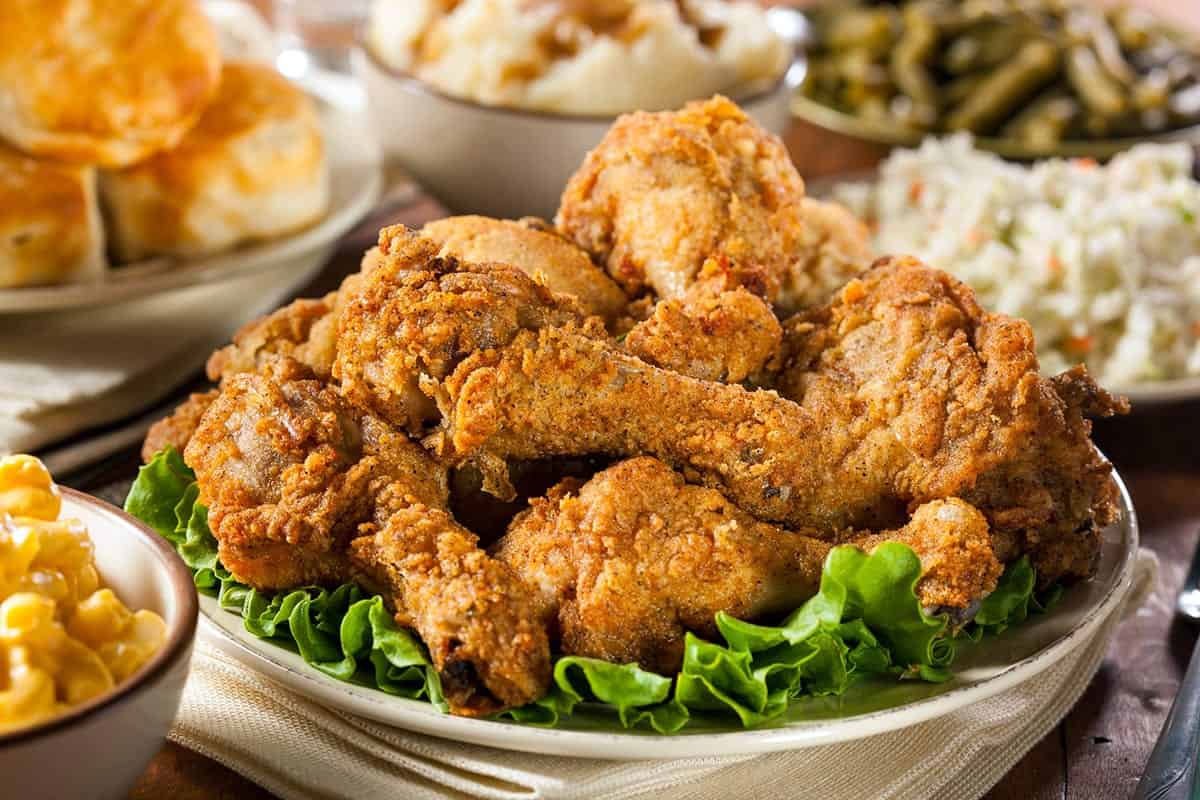
When deciding what sides to serve with fried chicken, the best plates fall into two camps: bright, acidic dishes that cut through the richness, and creamy, starchy comfort foods that double down on indulgence. A well-built plate typically includes one from each category. Coleslaw and mashed potatoes, for instance, have anchored more Southern dinner tables than any other combination because they nail this balance instinctively.
What matters more than picking a specific recipe is understanding why certain sides work. Once you know the principles, you can build a plate around whatever is in season, whatever your crowd prefers, or whatever you have in the fridge.
Contrast vs. Comfort: The Two Schools of Pairing
Fried chicken is loud. It is salty, fatty, crunchy, and deeply savory. Every side dish on your plate is either competing with those qualities or calming them down.
Contrast sides lean on acid, freshness, and lightness. Think vinegar-based slaws, cucumber salads, pickled vegetables, or a squeeze of lemon over sautéed greens. These cut through the oil and reset your palate between bites. Comfort sides go the other direction: buttery biscuits, creamy mac and cheese, mashed potatoes with gravy. They amplify the richness and turn a meal into something closer to a feast.
Most Southern cooks plan a plate around one contrast side and one comfort side, plus something green. The math is simple. One bright, one creamy, one vegetable. That is the framework this guide is built on.
Classic Southern Sides That Never Miss
If you walked into any meat-and-three in the American South and ordered fried chicken, these are the sides that would show up on your plate without you having to ask. They have earned their place through decades of repetition, and for good reason: each one solves a specific pairing problem.
| Side Dish | Category | Why It Works | Prep Time |
|---|---|---|---|
| Classic Coleslaw | Contrast | Vinegar and crunch cut through fried coating | 15 min |
| Mashed Potatoes & Gravy | Comfort | Creamy starch soaks up juices and gravy | 30 min |
| Buttermilk Biscuits | Comfort | Flaky, buttery layers complement crispy skin | 25 min |
| Collard Greens | Vegetable | Earthy bitterness balances salt and fat | 45 min |
| Macaroni and Cheese | Comfort | Gooey richness matches fried chicken’s decadence | 40 min |
| Corn on the Cob | Vegetable | Sweetness provides contrast without acid | 10 min |
| Baked Beans | Comfort | Smoky-sweet sauce mirrors barbecue notes | 60 min (mostly unattended) |
Over on r/Cooking, the debate about which sides are truly essential has been running for years. A thread from 2018 with 49 upvotes and 46 comments captures the range of opinions well:
“Mashed potatoes and gravy, coleslaw, mac & cheese, and collard greens. If I’m feeling ambitious I’ll throw in some cornbread too.”
— r/Cooking, 49 upvotes, 46 comments (2018), source
The responses in that thread reveal an unspoken rule: four sides is the sweet spot. Fewer than three and the plate feels incomplete; more than five and you are running a restaurant out of your kitchen.
Fresh Sides to Cut Through the Richness
A fried chicken dinner without something acidic on the plate is a missed opportunity. The coating is engineered for crunch and savoriness, and without a counterweight, your palate fatigues halfway through the second piece.
Coleslaw is the default choice, but it is far from the only option. Cucumber and tomato salads, especially in summer, do the same job with less prep. A simple mixture of sliced cucumbers, rice vinegar, a pinch of sugar, and dill takes five minutes and tastes brighter than anything from a deli container. Pickled red onions or quick-pickled jalapeños can sit in a small bowl on the side and add punch without taking up plate space.
Fruit-based salsas work surprisingly well with fried chicken. A mango-jalapeño salsa or a peach and red onion relish leans into the sweet-heat dynamic that fried chicken naturally invites. Watermelon and feta salad, a staple at Southern cookouts, performs double duty as both a side and a palate cleanser.
Starchy Sides for a Hearty Plate
If the fresh sides are about restraint, the starch section is about commitment. These are the dishes that turn fried chicken from a Tuesday dinner into a Sunday spread.
Mashed potatoes are the anchor. Made well, with enough butter and a splash of warm milk, they carry gravy better than anything else on the table. Some cooks swear by Yukon Golds for creaminess; others insist on Russets for fluff. Either way, the gravy made from the chicken drippings is non-negotiable.
Macaroni and cheese competes with mashed potatoes for the most-requested spot. A baked version with a breadcrumb crust adds a second layer of crunch alongside the chicken. Cornbread, whether skillet-baked with buttermilk or sweetened with honey, bridges the gap between bread and side dish. Biscuits belong in the same category: flaky, buttery, and best eaten within ten minutes of coming out of the oven.
For something less expected, consider corn fritters or hush puppies. Both are fried, both are corn-based, and both double down on the crunch factor. Serving fried sides with fried chicken sounds like overkill, but the texture difference between a hush puppy’s craggy exterior and a chicken drumstick’s smooth golden coating keeps things interesting.
Vegetable Sides Worth Making
Green beans, okra, and collard greens form the vegetable backbone of a Southern fried chicken plate. Green beans slow-cooked with bacon or quickly sautéed with garlic both work, depending on how much time you have. Okra, when roasted at high heat rather than boiled, loses the sliminess that makes people avoid it and develops a crisp, almost nutty exterior.
Collard greens demand patience. Simmered low with smoked turkey or ham hocks, they need at least 45 minutes to soften and absorb the broth. The payoff is a pot of greens with enough depth to stand up to fried chicken’s intensity without fading into the background.
Roasted vegetables deserve more credit than they get in fried chicken discussions. A sheet pan of broccoli tossed in olive oil and roasted until the edges char brings a bitter, caramelized note that few other sides provide. Brussels sprouts halved and roasted with balsamic vinegar hit both the vegetable and acid requirements in one dish.
What to Drink with Fried Chicken
The drink you pour matters almost as much as the sides you plate. Sweet tea is the canonical pairing and for good reason: the sugar and tannins cut through salt and fat simultaneously. Unsweetened iced tea with lemon works if you prefer a drier counterpoint.
For beer, a crisp pilsner or a citrusy wheat beer cleanses the palate without competing. Champagne and fried chicken is a pairing that sounds like a gimmick but works because the bubbles and acidity perform exactly the same function as a vinegar slaw. A dry Riesling or a sparkling rosé does the same job at a lower price.
Common Mistakes When Picking Sides

The most frequent error is loading the plate with nothing but starch. Mashed potatoes, mac and cheese, biscuits, and cornbread on one plate means four variations of beige. The meal becomes heavy and monotonous three bites in.
Another mistake is treating sides as an afterthought. A bag of chips or a sad handful of baby carrots does not count. The sides should be made with the same attention as the chicken itself, even if the recipes are simpler. Fried chicken takes effort; the sides should honor that effort rather than undercut it.
Finally, timing matters. Many sides, especially biscuits and cornbread, are best right out of the oven. Plan your cooking sequence so that the chicken comes out of the oil last, not first. Cold fried chicken is still good. Cold biscuits are a disappointment.
Frequently Asked Questions
What are the most popular sides to serve with fried chicken?
Mashed potatoes with gravy, coleslaw, macaroni and cheese, biscuits, and collard greens appear on more Southern tables than any other sides. Corn on the cob and baked beans round out the top tier. These seven dishes cover all three pairing categories: creamy comfort, bright contrast, and cooked vegetables.
How many sides should I serve with fried chicken?
Three to four is the practical sweet spot. One contrast side like coleslaw or a vinegar-based salad, one comfort side like mashed potatoes or mac and cheese, and one green vegetable. Add a bread option like biscuits or cornbread if serving more than four people.
What vegetables go well with fried chicken?
Green beans, collard greens, roasted okra, sautéed broccolini, corn on the cob, and roasted Brussels sprouts all pair well. The key is cooking them with enough seasoning that they hold their own against the chicken. Plain steamed vegetables tend to disappear on a plate next to fried chicken.
Can you serve salad with fried chicken?
Yes, and it is one of the smartest moves you can make. A crisp salad with a vinaigrette dressing provides the acid and freshness that fried chicken needs. Coleslaw technically counts as a salad, but a leafy green salad with cherry tomatoes and a sharp dressing does the job with less effort. Avoid creamy dressings; they blur the contrast that a salad is supposed to provide.
What sides go best with spicy fried chicken?
Cooling, creamy sides work best. Coleslaw, potato salad, cucumber salad, and ranch-dressed greens tame the heat. Slightly sweet sides like honey cornbread or sweet potato casserole also balance the spice. Avoid adding more heat through jalapeño-heavy sides unless you are deliberately building an all-spicy plate.
Building Your Plate, One Meal at a Time
The sides you pick tell a story about the meal you are trying to create. Mashed potatoes and collard greens say Sunday dinner at grandma’s. A cucumber-tomato salad and grilled corn say summer cookout. Mac and cheese and biscuits say comfort, no further questions.
Start with the contrast-versus-comfort framework. Pick one bright side, one creamy side, and something green. After that, the variations are endless. The goal is balance, not volume. A plate with three well-made sides beats a buffet of eight half-hearted ones every time.