

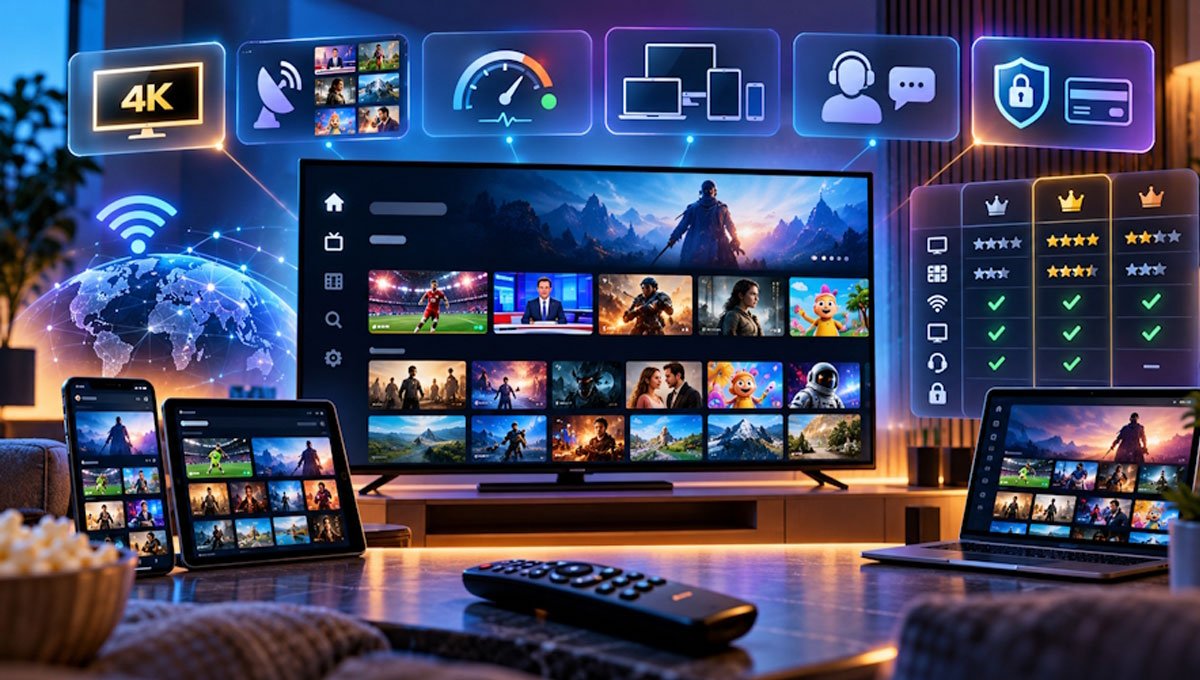
An IPTV subscription can sound straightforward: choose a plan, receive access details, and watch television through an internet connection. In practice, the decision involves more than choosing the lowest price or the longest channel list. The terms of a plan, the content available in your region, and the way a provider handles problems all affect whether the service meets everyday expectations.
Anyone looking for the best IPTV provider should start with a realistic checklist rather than a superlative in an advertisement. The following questions help separate useful information from marketing claims before money changes hands.
1. What Do You Actually Watch Each Week?
Begin with viewing habits rather than headline numbers. Someone who watches a small group of local news and entertainment channels may need a very different package from a multilingual household. A broad catalog is not necessarily valuable if most of it is irrelevant or difficult to navigate.
Write down the channels, languages, and program types that matter most. Then ask whether those specific options are available in your location. Channel lineups can change, so a current list is more useful than an outdated screenshot or a vague promise of “everything.”
2. Are the Subscription and the Player App Separate?
Many IPTV services supply account credentials or a playlist, while a separate player application presents the channels on screen. The player may have its own purchase, licensing, or activation terms. An apparent low subscription price can become less attractive when additional app charges were not explained in advance.
Before paying, find out exactly what the plan includes: access to the stream, a recommended player, a guide, customer support, or any extra software costs. Keeping these responsibilities clear also helps if an issue appears later.
3. How Many Streams Can Run at the Same Time?
A service may allow installation on several devices while permitting only one active stream at a time. Those are different policies. For a household where two people often watch different channels simultaneously, concurrent-stream limits are central to the real cost.
Ask whether the stated limit applies per account, per location, or per purchased connection. If extra streams cost more, compare the total household price rather than the price of a single account.
4. Are Content Availability and Viewing Rights Clear?
A trustworthy buying decision includes understanding where the requested channels and programs can legally be offered. Rights to sports, films, and television programming vary by territory and platform. Availability in a promotional list does not, on its own, establish that a service has the necessary distribution permissions.
Look for transparent provider information, understandable terms, and lawful access to the content you want. Avoid assuming that any service can legitimately remove regional restrictions or guarantee every broadcast in every country.
5. What Happens If Playback or Activation Fails?
Support quality becomes visible when something goes wrong. Before signing up, check whether the provider has an accessible help center, identifiable contact channels, clear activation instructions, and written guidance for billing issues. A useful support page should explain which information customers need to provide and what kind of response they can expect.
Check the published terms rather than relying only on social-media recommendations. For example, the public information on Strong8K IPTV (strong8k.site) describes plan durations, supported devices, and a one-active-stream limit. Those are the types of details buyers should verify directly, because service policies and availability may change over time.
6. How Does Renewal Really Work?
A discounted annual plan may look attractive, but a long commitment has consequences if the service does not meet expectations. Confirm whether the subscription renews automatically, how cancellation works, and whether payment details are stored. Read any refund or service-credit policy before deciding how long to subscribe.
Compare the monthly equivalent of different durations, but do not treat the longest plan as automatically the best value. Predictable billing and clear remedies for service interruptions can be more important than a small price difference.
7. Can You Judge Quality Under Normal Conditions?
A service may seem responsive in the middle of the day and behave differently during popular evening viewing hours. Where an authorized trial or short plan is available, evaluate it using the same home connection and device you normally use. Check navigation, channel availability, picture consistency, and the accuracy of program information.
Remember that performance comes from a chain of factors: the original feed, encoding, network route, local internet connection, player app, and television. A resolution label alone cannot guarantee a particular viewing experience.
8. Is Your Account and Personal Information Protected?
Television subscriptions may involve personal details, billing records, and account credentials. Check for a privacy notice, secure payment handling, and a way to contact the provider about account access. Avoid sharing login details with unrelated people or entering credentials into unknown apps.
If a provider offers account recovery or credential replacement, understand how identity is verified. Clear privacy practices are part of service quality, not an optional extra.
A Simple Way to Compare IPTV Subscriptions
To make the decision less subjective, give each candidate a basic rating for content fit, stated viewing rights, concurrent-stream policy, ease of use, support, billing clarity, and privacy. Do not let one attractive feature erase a weakness in something essential, such as unclear costs or missing terms.
The best IPTV subscription for one viewer may be unsuitable for another. A plan with a smaller but relevant catalog, transparent policies, and responsive assistance can be more useful than a bigger package that makes basic questions difficult to answer.
Final Thoughts
The sensible order is to define your needs, examine the terms, verify content and device compatibility, and only then compare prices. This approach reduces avoidable surprises and helps buyers focus on long-term usability instead of promotional claims.
A subscription should make television simpler. The right questions, asked before purchasing, give you a much better chance of choosing one that does.
Frequently Asked Questions
Does a higher price always mean better IPTV quality?
No. Price alone does not show channel relevance, reliability, customer support, or content rights. Evaluate the whole service and its terms.
Can one IPTV subscription work on multiple screens?
It depends on the provider. Permission to sign in on several devices is not always permission to stream on them simultaneously.
What should I check first when comparing providers?
Start with the content you actually want, licensing and regional availability, concurrent-stream rules, full cost, and written support and refund policies.