

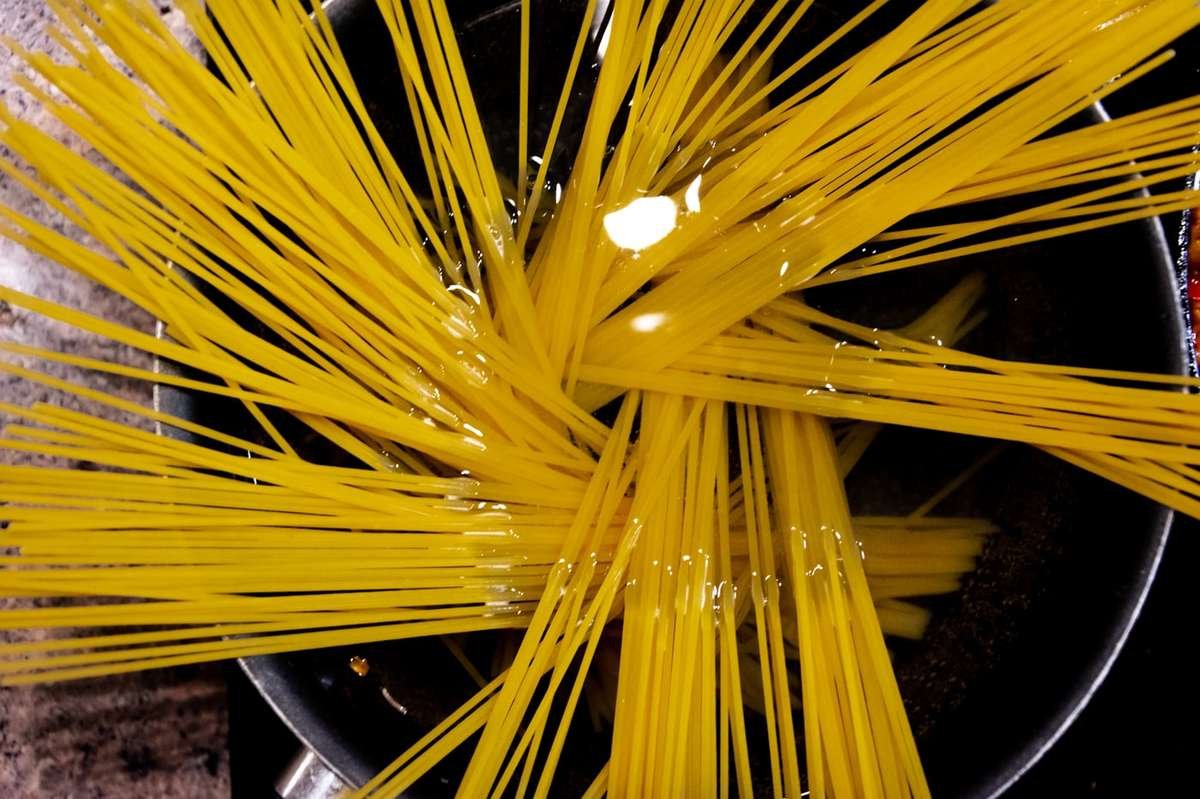
Salt the water to 10 g per litre and taste early. Those two habits separate pasta you would serve to someone from pasta you would apologise for. Everything else about how to cook pasta comes down to heat, a timer you distrust, and what you do in the ninety seconds after draining.
The oil question gets all the airtime. Guides on this subject stage a small fight over whether a splash of olive oil belongs in the pot, and it is the least consequential decision at the stove.
Salt is where those same guides disagree by a factor of five, and not one of them mentions it.
How to cook pasta in six moves
Boil a tall pot of water, salt it heavily, add the pasta and stir hard for thirty seconds, hold a strong simmer, taste from two minutes before the packet time, and save a mug of the cooking water before you drain.
Nobody is born knowing this, and the questions people ask out loud are the practical ones:
“Never done much cooking, and I’m trying to make some sort of pasta. Am I missing anything important?”
– r/WhatShouldICook, July 2025 (236 upvotes)
Six moves cover it.
- Fill a tall pot. Three to four litres for 400 g of dried pasta, with a hand’s width of space left at the top so the foam has somewhere to climb.
- Bring it to a rolling boil, then salt it. Salt raises the boiling point a fraction and slows you down for no gain, so let the water get there first.
- Add the pasta and stir for the first thirty seconds. That is the window when the surfaces are sticky with fresh starch and will weld together if left alone. Long shapes soften enough to fold under the water in about ten seconds.
- Hold a strong simmer, not a violent one. A furious boil batters the shapes and sends starch foam over the rim. Stir twice more while it cooks.
- Scoop out a mug of the water before you drain. Put the mug in the colander so you physically bump into it on the way to the sink.
- Drain, skip the rinse, and get it into the sauce hot. Cold water strips the starch that makes sauce cling and drops the temperature you need for the last step.
One thing worth unlearning: the enormous pot is optional. Pasta cooks perfectly well in half that water, and the water comes out starchier, which makes it better at binding a sauce. The reason to use a lot of water is that it recovers its boil faster when 400 g of cold pasta lands in it, which matters more on a weak electric hob than on gas.
How much salt does pasta water need?
About 10 grams per litre, which is roughly two level teaspoons of fine salt. That seasons the pasta through to the middle and still leaves room for the salt arriving later in the sauce and the cheese.
Now the part the popular guides skip. Almost every one of them repeats the same instruction: make the water as salty as the sea. Sea water runs at about 3.5 percent salinity, which the NOAA figure puts at roughly 35 grams of salt per litre. Nobody who repeats that phrase actually means it.
Convert the top-ranking guides into one unit and the spread is embarrassing. Jill Hough’s 1½ teaspoons of fine salt per quart works out near 10 g per litre. Sicilian Girl’s 2 tablespoons of kosher salt per pound of pasta, spread across 5 to 6 quarts, lands closer to 5 g. BBC Good Food asks for a teaspoon in the pot, which over three or four litres is about 2 g per litre and seasons almost nothing. Three sources, one metaphor, five times the difference between the extremes.
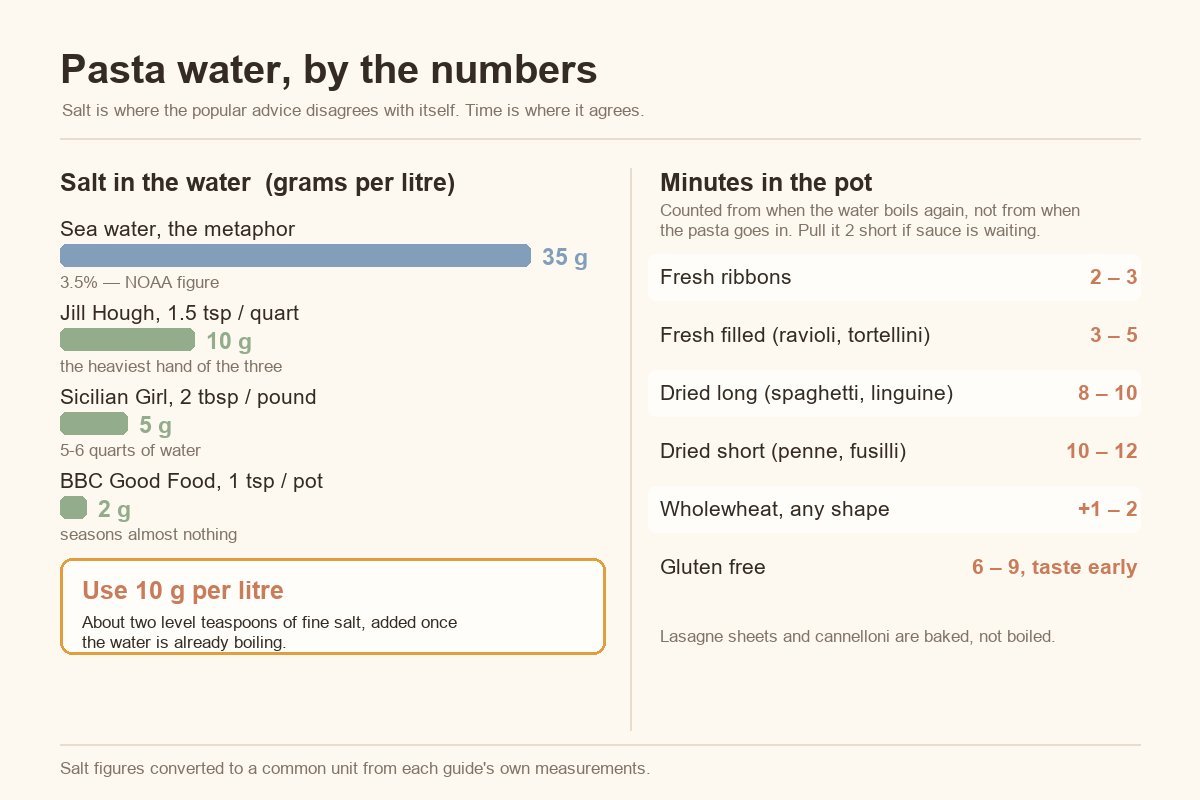
Ten grams is the number I would defend. It is high enough that the pasta tastes of something on its own, low enough that a salty pecorino or a cured-pork sauce will not tip the plate over.
Under-salted pasta has a particular sting, because you find out at the table and there is no fix. Salt added on top sits on the surface and tastes like salt. Salt taken up during the boil tastes like the pasta. A dish you spent an hour on can arrive flat for want of a spoonful of something that costs pennies, which is the sort of failure that stays with you.
Get a feel for the amount by pouring it into a cupped palm a few times, then look. After three or four dinners you will stop reaching for the spoon.
How long do you boil pasta?
Dried long shapes take 8 to 10 minutes, dried short shapes 10 to 12, fresh ribbons 2 to 3 and fresh filled shapes 3 to 5. Start counting when the water comes back to a full boil, not when the pasta goes in.
Packet times are a starting guess written for a factory’s average kitchen. They assume a hard boil, a full pot and sea-level pressure, and they have no idea what you are doing next.
The test that matters takes ten seconds. Two minutes before the packet says, fish out a piece, let it cool for a moment and bite through. A thin chalky core at the centre means al dente, which translates as “to the tooth” and describes grain and pasta cooked to a firm bite. A white line thicker than a pencil mark means give it another minute. No core at all means you are past the point where the shape holds sauce well, and it will keep softening on the way to the plate.
Two situations move the number. High altitude lowers the boiling point, so above about 1,500 metres pasta needs a few extra minutes and the bite test replaces the clock entirely. Gluten-free shapes go from firm to collapsed in the space of sixty seconds, so start tasting at six.
If the sauce is hot and waiting, pull the pasta a full two minutes early. It finishes in the pan.
Where pasta goes wrong
Nearly every disappointing bowl fails in one of the same ways: the shapes stick together, the texture turns to mush, the pasta tastes of flour, or the sauce refuses to cling to it. Each one has a specific cause and a specific fix.
It sticks together
Starch released in the opening seconds glues the surfaces before the water can wash it away. Stir immediately after it goes in, then again at the halfway mark. Oil in the water does prevent sticking, and it coats the pasta so thoroughly that the sauce slides off later, which trades a small problem for a bigger one.
It comes out mushy
Either the clock beat the taste test, or the pasta sat in the colander steaming for five minutes while you finished the sauce. Have the sauce ready before the pasta is. Draining pasta that has nowhere to go is the most common version of this mistake.
It tastes of flour
Under-salted water, every time. See the number above.
The sauce slides off
Rinsed pasta, oiled pasta or cold pasta will all shed sauce into a puddle at the bottom of the bowl. The rough starchy surface of freshly drained pasta is the thing sauce grips, and rinsing it under the tap washes that surface away. Save the rinse for pasta destined for a cold salad, and toss that in its dressing while it is still warm so the flavour goes in rather than sitting on top.
Finishing pasta in the pan
Tip the drained pasta into the pan with its sauce over medium heat, add a splash of the cooking water you saved, and toss it hard for a minute. Those ninety seconds are what separates restaurant pasta from home pasta, and almost nobody at home does them.
Starch suspended in that water pulls the fat and the liquid in the sauce into something glossy that coats each piece, and the pasta finishes cooking while it takes on flavour. Add more water a spoonful at a time if the pan tightens up. A sauce that looked thin will thicken as it clings.
Chicken belongs in that same pan-toss. Cook it separately, seared or poached and sliced, then fold it through during the last minute so it warms in the sauce. Chicken dropped into the pasta water poaches into something grey and washed out, and it clouds the water you were saving.
Leftovers reheat best the same way: a splash of water in a hot pan, thirty seconds of tossing, done.
Pasta questions worth a straight answer
Most of what remains has a one-line answer: no oil in the water, no rinsing afterwards, sauce ready before the pasta is, and about 90 g of dried pasta a head. The reasoning behind each one is below.
What is the rule for cooking pasta?
Plenty of boiling water, 10 g of salt per litre, no oil, no rinsing, and taste it two minutes before the packet time says you should. Sauce waits for pasta, never the reverse.
What are the seven steps to boiling pasta?
Fill the pot, boil, salt, add pasta, stir, taste from about two minutes out, drain while reserving a mug of water. Some versions split stirring and simmering into separate steps to reach seven; the sequence is the same.
Should you put oil in pasta water?
No, though the reason is about the sauce, not the pasta. Oil coats the strands and stops sauce from sticking to them later. Stirring in the first thirty seconds solves the sticking problem it was meant to fix.
Can you cook pasta in the sauce?
Yes, if you thin the sauce with roughly three times its volume of water or stock and stir often. The result is starchier and more like a risotto, it uses one pan, and it needs closer attention because the shapes can catch on the base.
How much dried pasta per person?
80 to 100 g dried for a main course, 50 to 60 g when it comes before something else. A rich sauce pushes you toward the lower end of that range.
Salt heavier than feels comfortable, keep a mug of the water back, and give the pasta its last minute in the pan with the sauce. Grandmothers have poured oil into that pot for generations and dinner survived it. Bland water is the one that quietly ruins things, and the fix weighs about ten grams.