

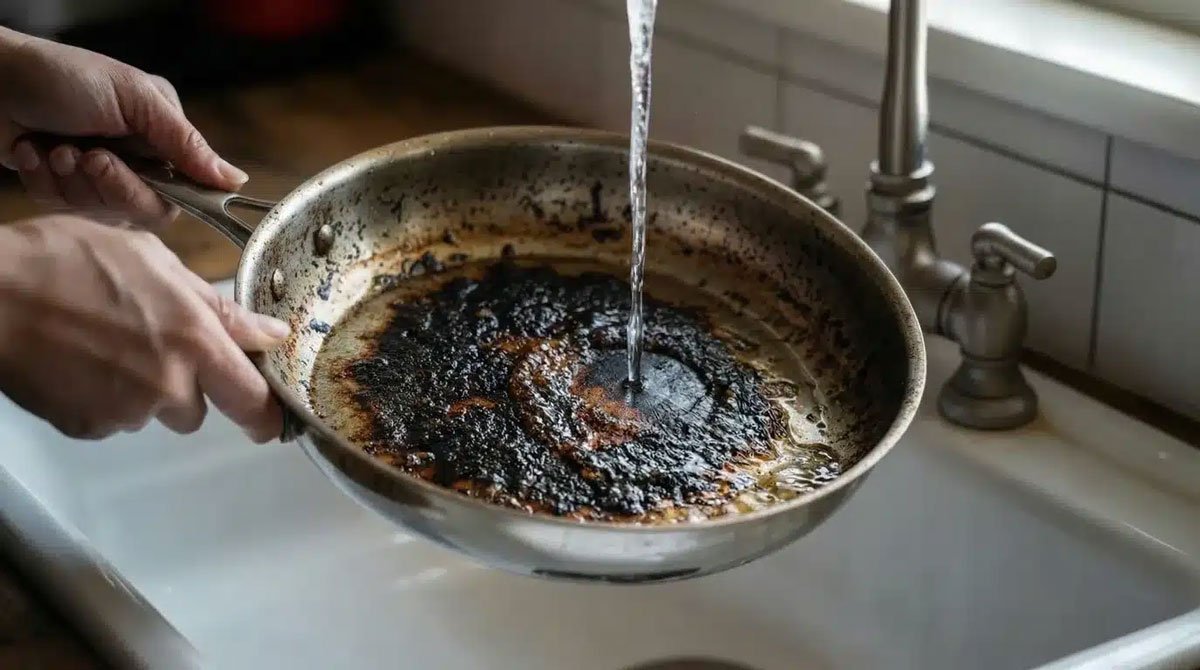
The fastest way to clean burnt stainless steel pans is to boil water with a few tablespoons of baking soda for about ten minutes, then scrub the loosened residue with a baking-soda paste and a crumpled ball of aluminum foil. For thick, baked-on carbon, a powder cleanser like Bar Keepers Friend finishes the job. Almost every scorched pan is salvageable.
What looks like a destroyed pan is usually just carbon and cooked-on food sitting on a tough surface. Stainless steel shrugs off heat and acid that would wreck a nonstick coating, so you have room to work. Knowing how to clean burnt stainless steel pans comes down to matching the right method to how bad the damage actually is, and avoiding the habits that make things worse.
Match the Method to How Bad the Burn Is
Match the method to the damage. A light brown film lifts with a hot soak, moderate stuck-on food needs a baking-soda boil, and a black charred layer calls for Bar Keepers Friend or a baking-soda paste scrubbed with foil. Starting with the gentlest option protects the finish and saves effort.
| Burn level | What you see | Best method | Rough time |
|---|---|---|---|
| Light | Thin brown film, faint dullness | Hot water and dish soap soak | 30–60 min soak |
| Moderate | Stuck-on food, patches of black | Baking soda boil, then scrub | 15–25 min |
| Heavy | Thick black carbon, rainbow tint | Bar Keepers Friend or paste and foil | 5–15 min |
On r/CleaningTips, a community built around dramatic before-and-after cleaning wins, one cook posted a photo of a pan that looked past saving:
“Ugh help, severely burnt stainless steel pan…”
— r/CleaningTips, 311 upvotes, 150 comments (2026), source
The replies converged on the same advice you will find below: heat, baking soda, and patience beat brute force almost every time. It is a strange thing about stainless steel. The pan that looks destroyed after dinner can look showroom-new by morning, with no special equipment involved.
The Baking Soda and Water Boil Method (Everyday Burns)
Boiling water with baking soda loosens burnt-on food from your pan with almost no scrubbing. Fill the pan with enough water to cover the burn, add two to three tablespoons of baking soda, and simmer for ten to fifteen minutes. The hot alkaline solution softens charred residue until it slides off the steel.
- Scrape out any loose food and debris first.
- Add water until the burnt area is covered by about an inch.
- Stir in 2–3 tablespoons of baking soda.
- Bring to a boil, then reduce to a simmer for 10–15 minutes.
- Cool slightly, pour out the water, and scrub the loosened bits with a nylon brush or non-scratch sponge.
- For anything stubborn, sprinkle on more baking soda and scrub again.
According to Arm & Hammer (2024), baking soda works on two fronts here: its alkaline pH helps neutralize acidic burnt food, and its fine grit acts as a mild abrasive that lifts grime without scratching steel.
The method is popular for a reason. A tip on r/LifeProTips, a forum for crowd-tested shortcuts, became one of the platform’s most upvoted pan-cleaning posts:
“Burnt the living daylights out of your stainless steel pan? Fill it with water, throw in a couple teaspoons of baking soda, and let it boil for a few minutes. The burnt stuff will come right off and you won’t need to scrub.”
— r/LifeProTips, 1,288 upvotes, 60 comments (2025), source
This aligns with guidance from both Arm & Hammer and GreenPan, which recommend the same boil-and-scrub sequence for badly burnt cookware. In side-by-side testing by The Kitchn, the hands-off versions of this approach did the job in under fifteen minutes, most of it spent waiting rather than working.
Baking Soda Paste and Aluminum Foil (The Tested Winner)
For burns that survive a soak, a baking-soda paste scrubbed with crumpled aluminum foil is the quickest fix for your pan. Cover the burnt area with two to three tablespoons of baking soda, add a splash of water to form a paste, and scrub in small circles with a balled-up piece of foil until the residue lifts.
- Sprinkle 2–3 tablespoons of baking soda over the burnt area.
- Add just enough water to make a spreadable paste.
- Crumple a sheet of aluminum foil into a loose ball.
- Scrub in circles with light pressure, refreshing the paste as it darkens.
- Rinse with warm, soapy water and dry.
When The Kitchn tested five popular methods on identical burnt pans (2020, updated 2026), the baking soda and aluminum foil combination won outright. It cleaned the pan in about three minutes with the least effort of any method, earning a perfect rating, while a boiling vinegar mix landed near the bottom of the list.
Three minutes, less time than it takes to reheat last night’s coffee, for a pan the tester described as looking like it had just come off the assembly line. That gap between effort and result is why this method spreads by word of mouth.
Bar Keepers Friend for Stubborn, Baked-On Layers
Bar Keepers Friend is your go-to for thick, baked-on carbon that scrubbing alone will not budge. Wet the pan, sprinkle on the powder, work it into a paste with a damp non-scratch sponge, and scrub along the grain of the steel. Rinse within about a minute, since its oxalic acid should never sit on the surface.
- Rinse the pan so the surface is damp but not flooded.
- Sprinkle a light, even layer of the powder over the stains.
- Scrub with a damp non-scratch sponge or cloth, following the grain.
- Rinse thoroughly within a minute and dry to avoid water spots.
A few cautions keep the pan safe: wear gloves if your skin is sensitive, never use the powder dry, and keep it off nonstick or coated surfaces, where the abrasive can scratch. Cleaning forums return to this product constantly. On r/cookware, a community of home cooks who fuss over their pans, one member asked the question that brings most people here:
“Any tips for washing out the burn marks in my stainless steel pan?”
— r/cookware, 61 upvotes, 95 comments (2024), source
The top answers split between the baking-soda boil and Bar Keepers Friend, the two methods most likely to rescue a heavily stained pan. Ask a line cook what lives under their sink, and the answer is almost always the same can of powder.
Vinegar and Baking Soda for Stuck-On Grease
Vinegar and baking soda tackle the stuck-on grease in your pan through a fizzing reaction. Simmer enough white vinegar to coat the bottom of the pan, pour it out, then sprinkle on baking soda and scrub. The acid-base reaction loosens debris, though it suits moderate burns better than catastrophic ones.
- Add white vinegar until it covers the bottom by about half an inch.
- Bring to a gentle simmer for a few minutes, then turn off the heat.
- Pour out the vinegar and sprinkle baking soda over the damp pan.
- Scrub with a sponge or nylon brush, adding more baking soda as needed.
- Rinse and dry.
One honest caveat: in hands-on testing, boiling vinegar on its own did little of the heavy lifting, so the baking soda that follows does most of the real work. Skip the powder and you will be scrubbing far longer than you need to.
Fixing Rainbow Heat Tint and Chalky White Spots
Rainbow or blue heat tint and chalky white spots on your pan are cosmetic, not damage. Both wipe away with white vinegar. Pour a thin layer into the cooled pan, let it sit for a few minutes, then buff with a soft cloth. The discoloration lifts and the original shine returns.
The blue-gold rainbow film comes from overheating an empty or dry pan, which oxidizes the surface in a harmless thin layer. The white, chalky spots are mineral deposits left behind by hard water or starchy cooking water. Neither one hurts the steel or the food you cook in it.
- Make sure the pan is completely cool and dry.
- Add a thin layer of white vinegar, or dab some onto a cloth.
- Let it sit for three to five minutes to dissolve the film.
- Buff in the direction of the grain, then rinse and dry.
Mistakes That Can Actually Ruin Your Pan

A few habits do more harm than the burn itself. Steel wool and harsh scouring scratch the finish permanently, bleach can pit and stain the steel, and shocking a screaming-hot pan with cold water can warp the base so it never sits flat on the burner again.
- Steel wool and metal scourers: they leave fine scratches that trap food and dull the surface.
- Bleach and chlorine cleaners: they corrode and pit stainless steel rather than clean it.
- Cold water on a hot pan: the sudden temperature change can warp the base, the one kind of damage that is hard to undo.
- Oven cleaner and heavy degreasers: overkill for cookware, and many are unsafe on food surfaces.
- Long acidic soaks: leaving vinegar or lemon on the steel for many hours can dull the finish.
The irony is that the rescue is almost always gentler than the panic. Patience and baking soda clean pans that aggressive scrubbing only scars.
Stop the Next Burn Before It Starts
Most burns happen because you add food to a pan that is too hot or not hot enough. Preheat on medium heat, confirm the temperature with a quick water-droplet test, then add fat before the food. A properly heated, oiled pan releases food cleanly and rarely scorches.
The water-droplet test is the single habit that prevents the most damage. Heat the dry pan on medium, then flick in a few drops of water. When they bead up and skate across the surface like beads of mercury instead of sizzling away instantly, the pan is ready for oil. Too cold and the water just sits; too hot and it vanishes on contact.
- Use medium heat for most cooking; save high heat for searing.
- Add oil only after the pan passes the droplet test, then let it shimmer.
- Avoid crowding the pan, which drops the temperature and makes food stick.
- Deglaze with a splash of liquid while cooking to lift fond before it chars.
- Scrub with the grain when washing to keep the finish smooth and stick-resistant.
Cooks who learn that one test tend to stop buying scouring pads altogether. The pan that never burns is the pan that never needs rescuing.
Frequently Asked Questions
Is a burnt stainless steel pan ruined?
No, a burnt stainless steel pan is almost never ruined. Unless the metal is warped, cracked, or deeply gouged, even thick black carbon and heavy discoloration come off with a baking-soda boil or a powder cleanser. Stainless steel is built to take the heat and the cleaning.
Can you use steel wool on stainless steel?
Avoid steel wool on stainless steel cookware. It leaves fine scratches that dull the finish and create grooves where food sticks and stains collect. A crumpled aluminum foil ball with baking soda gives you scrubbing power without scarring the surface.
Does vinegar damage stainless steel pans?
White vinegar is safe for stainless steel in short doses and is great for removing heat tint and mineral spots. The only risk is leaving acidic liquid on the surface for many hours, which can dull the shine, so rinse the pan once the discoloration lifts.
How do you get brown or rainbow stains off stainless steel?
Rainbow and brown stains are oxidation from overheating and wipe off with white vinegar. Pour a thin layer into the cooled pan, wait a few minutes, then buff with a soft cloth in the direction of the grain. The stains are cosmetic and harmless.
What is the fastest way to clean a badly burnt pan?
The fastest fix for a badly burnt pan is a baking-soda paste scrubbed with crumpled aluminum foil, which cleaned test pans in about three minutes. For baked-on carbon that resists it, follow up with Bar Keepers Friend along the grain and rinse quickly.
Can you put a burnt stainless steel pan in the dishwasher?
A dishwasher rarely removes heavy burnt-on residue and can leave stainless steel with a dull film over time. For scorched pans, hand cleaning with baking soda or Bar Keepers Friend is far more effective and gentler on the finish.
The Bottom Line
A burnt pan is rarely a ruined one. Reach for the gentlest fix first, then escalate to a baking-soda boil or Bar Keepers Friend for stubborn carbon. Keep steel wool and cold-water shocks away from the metal, and learn the water-droplet test. That is how to clean burnt stainless steel pans without harming them, and why tonight’s hopeless pan is back on the burner tomorrow.