

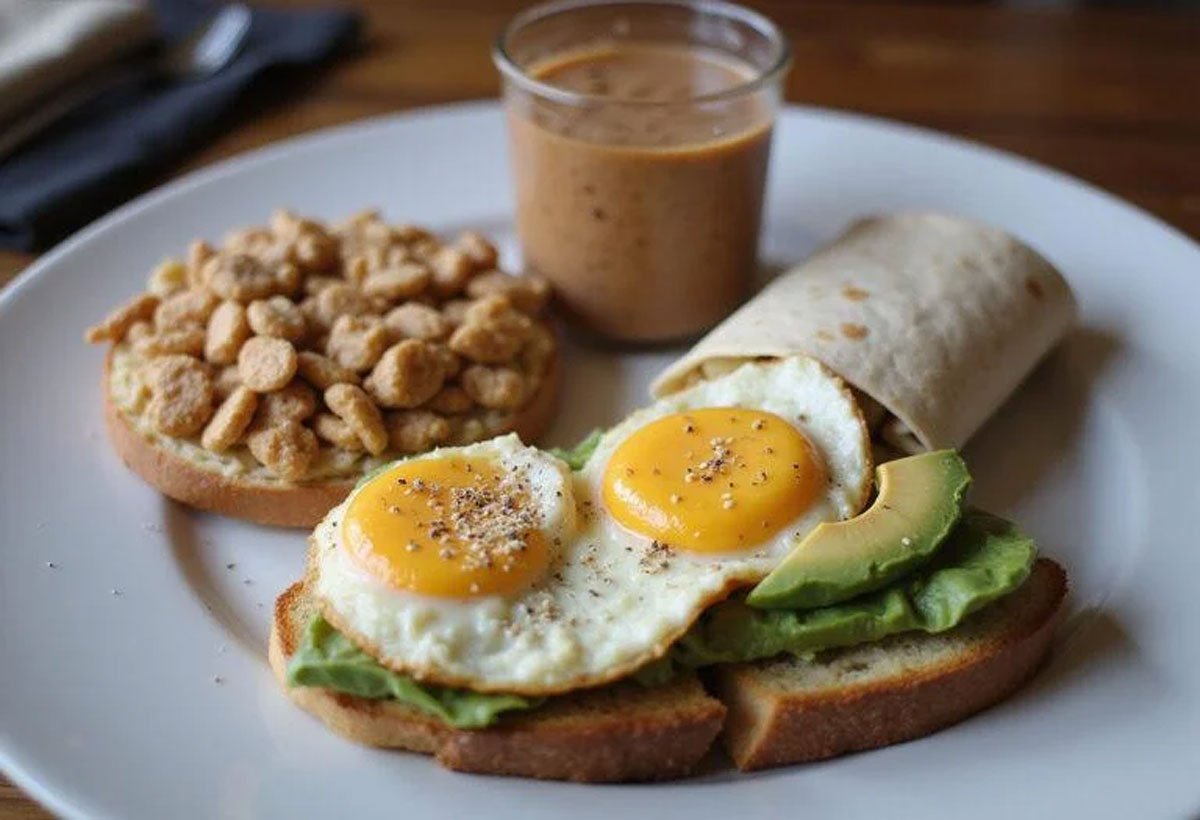
The best high protein breakfast ideas do two jobs at once: they give you roughly 20 to 35 grams of protein, and they still feel like food you want at 7 a.m.
For most mornings, that means pairing a protein anchor with fiber, a little fat, and enough texture that you do not feel cheated. Eggs can help, but they should not have to carry the whole week.
Best High Protein Breakfast Ideas By Morning Type
Pick breakfast by the morning you are actually having, not by an ideal version of yourself. A rushed workday, a slow weekend, and a post-workout appetite need different meals.
The easiest rule is simple: start with one protein anchor, add a fiber-rich carb or fruit, then finish with crunch, heat, or acidity. That last piece matters more than it sounds. Plain yogurt and oats can feel like punishment by Thursday if there is no contrast.
| Morning type | Best choice | Approximate protein | Why it works |
|---|---|---|---|
| Five-minute workday | Greek yogurt, berries, chia, and high-protein granola | 25 to 35 g | No cooking, cold, filling, easy to scale |
| Post-workout | Egg and turkey breakfast burrito with beans | 30 to 40 g | Protein plus carbs, easy to reheat |
| No-egg morning | Cottage cheese toast with smoked salmon or tomato | 25 to 35 g | Savory, fast, and not sweet |
| Plant-forward | Tofu scramble with black beans and salsa | 25 to 35 g | High protein, high fiber, flexible toppings |
| Sweet craving | Protein oats with milk, peanut butter, and hemp seeds | 20 to 30 g | Warm, cheap, and easy to batch |
| Big appetite | Breakfast bowl with chicken sausage, potatoes, eggs, and spinach | 35 to 45 g | More volume without needing a shake |
The U.S. Food and Drug Administration lists the Daily Value for protein as 50 grams on Nutrition Facts labels, but that number is a label reference point, not a custom meal plan for every body size and training schedule. Use it as context, then adjust based on appetite, activity, medical needs, and professional advice.
A high-protein breakfast is general nutrition information, not medical care. If you have kidney disease, diabetes, a history of disordered eating, pregnancy-related needs, or a prescribed diet, check with a qualified clinician or registered dietitian before changing protein targets.
The No-Egg Breakfasts People Actually Keep Eating
High protein breakfast ideas without eggs work best when they stop pretending to be egg replacements. Use dairy, fish, poultry, tofu, legumes, or leftovers, and the meal gets easier.
Reddit threads on this topic are full of the same fatigue: people can only eat so many omelets, boiled eggs, and shakes before breakfast starts feeling narrow. One comment captured the more useful mindset:
“Stop thinking of food as restricted to certain meals or times of day. I don’t care if my kid has cheese tortellini for breakfast, as long as he leaves the house with something sustaining in his tummy. Grill some chicken and have a Caesar wrap for breakfast. Or turkey meatballs and sauce. Or whatever! The options are endless. Food is sustenance, it doesn’t care when you eat it. Neither does your body. Break the breakfast chains!”
– r/loseit, October 2025
That advice is blunt, but it is useful. If a chicken wrap at 8 a.m. keeps you steady until lunch, it belongs on the breakfast list.
Savory No-Egg Options
Cottage cheese toast is the fastest place to start. Spread cottage cheese on sourdough or whole-grain toast, then add smoked salmon, sliced tomato, cracked pepper, cucumber, or everything seasoning.
Turkey roll-ups also work when you do not want a sweet breakfast. Wrap turkey, cheese, spinach, and mustard in a tortilla, then warm it until the cheese just softens. It feels more like lunch, which is the point.
- Cottage cheese toast with smoked salmon, tomato, or avocado.
- Chicken Caesar breakfast wrap with leftover grilled chicken.
- Turkey and cheese tortilla with spinach and mustard.
- Tofu scramble with beans, salsa, peppers, and nutritional yeast.
- Lentil toast with Greek yogurt sauce and pickled onion.
- Breakfast meatballs with marinara and a side of toast.
Sweet No-Egg Options
Greek yogurt is the obvious answer, but the bowl needs structure. Use thick yogurt, add berries or banana, then add chia, hemp seeds, nuts, or cereal with real crunch.
Protein oats can be made without powder by cooking oats in milk, stirring in Greek yogurt after cooking, and topping with peanut butter or seeds. The texture stays creamy instead of gluey if the yogurt goes in after the pan comes off the heat.
Five-Minute High Protein Breakfast Ideas For Rushed Mornings
Quick high protein breakfasts should require assembly, reheating, or one pan at most. If a meal needs chopping, blending, washing, and timing, it is not a weekday fallback.
My bias is toward breakfasts that survive a distracted morning. If the coffee is brewing, a lunch bag is open, and someone is asking where the keys are, the meal still has to happen.
| Breakfast | How to make it fast | Protein range | Watch-out |
|---|---|---|---|
| Greek yogurt bowl | Keep toppings in one jar and pour | 25 to 35 g | Choose lower-sugar granola if using it daily |
| Cottage cheese fruit bowl | Add peaches, berries, cinnamon, and walnuts | 25 to 30 g | Texture is better very cold |
| Microwave egg mug | Eggs, cottage cheese, spinach, 60 to 90 seconds | 20 to 30 g | Stop before it turns rubbery |
| Smoked salmon toast | Toast, cream cheese or cottage cheese, salmon | 20 to 30 g | High sodium for some diets |
| Bean and cheese tortilla | Microwave beans, cheese, salsa in a tortilla | 20 to 30 g | Drain salsa if packing it |
| Protein cereal bowl | High-protein cereal plus milk or soy milk | 20 to 30 g | Some cereals are pricey or very sweet |
For a cleaner nutrition profile, the American Heart Association recommends choosing protein sources such as fish, poultry, beans, nuts, and low-fat or fat-free dairy more often than processed or high-saturated-fat meats. That does not ban bacon forever. It just means bacon should not be the main protein strategy every morning.

Meal Prep Breakfasts That Still Taste Good By Day Three
High protein breakfast meal prep succeeds when the texture is planned before storage. The biggest failures are soggy tortillas, watery oats, dry egg bakes, and reheated meat that tastes tired.
The trick is separating wet components, freezing items that stale quickly, and reheating with a little patience. A burrito that tastes flat from the fridge can come back to life in a skillet or air fryer for two minutes after microwaving.
Freezer Burritos
Build burritos with scrambled eggs or tofu, beans, turkey sausage, potatoes, cheese, and salsa on the side. Let fillings cool before wrapping, because steam trapped in the tortilla turns into ice and then sog.
Wrap each burrito in parchment or foil, freeze flat, and reheat from frozen or thawed. Microwave first, then crisp the outside if you can. That small extra step changes everything.
Egg Bites And Casseroles
Egg bites stay softer when cottage cheese is blended into the mixture. Casseroles hold better when they include vegetables that have been cooked down first, not raw zucchini or mushrooms releasing water into the dish.
Cut portions after cooling, then store in shallow containers. Reheat gently. Blasting egg bakes on high heat gives them that squeaky texture nobody looks forward to.
Overnight Oats And Chia
Overnight oats are better when you think of them as a base, not a complete meal. Oats, milk, Greek yogurt, chia, and a spoon of nut butter can hit a useful protein range without tasting like a supplement.
If using berries, add them the morning you eat. Strawberries can leak water overnight and make the top layer taste washed out.
Breakfast Boxes
A breakfast box is often the least dramatic and most reliable option: Greek yogurt or cottage cheese, fruit, boiled eggs or turkey slices, whole-grain crackers, nuts, and vegetables. It is not fancy. It works.
This format is useful for people who dislike a single large breakfast. You can eat part at home and finish the rest at work without needing a microwave.
Vegetarian And Plant-Forward Ways To Hit The Target
Vegetarian high protein breakfast ideas are strongest when they combine two or three modest protein sources. Dairy, soy, legumes, seeds, and whole grains stack well together.
Harvard T.H. Chan School of Public Health notes that protein source matters, and plant-based protein foods can bring fiber and other nutrients along with protein. That is the advantage of beans, lentils, tofu, nuts, seeds, and whole grains.
- Greek yogurt plus chia, hemp seeds, berries, and cereal.
- Cottage cheese with tomatoes, cucumber, olive oil, and toast.
- Tofu scramble with black beans, peppers, spinach, and salsa.
- Tempeh breakfast hash with potatoes and onions.
- Peanut butter banana oats made with soy milk.
- Chia pudding made with soy milk and topped with Greek yogurt.
- Bean and cheese breakfast tacos with pico de gallo.
- Edamame avocado toast with cottage cheese or tofu spread.
Plant-forward does not have to mean low-protein. It does mean you need to count the whole plate. Almond milk, for example, is often much lower in protein than soy milk, even though both sit in the same grocery aisle.
How To Build Your Own High-Protein Breakfast Without Getting Weird About It
A reliable high-protein breakfast formula is protein anchor plus fiber carb plus produce plus flavor. That structure is flexible enough for eggs, yogurt, tofu, fish, meat, beans, or leftovers.
Use this as a build-your-own template when you are bored with recipe lists:
- Choose one protein anchor: Greek yogurt, cottage cheese, eggs, tofu, turkey, chicken, fish, beans, tempeh, or soy milk.
- Add a fiber carb: oats, whole-grain toast, potatoes, berries, beans, fruit, or a high-fiber tortilla.
- Add produce: spinach, peppers, tomatoes, mushrooms, berries, banana, cucumber, or salsa.
- Add fat or crunch: nuts, seeds, avocado, olive oil, cheese, peanut butter, or crisped tortilla.
- Add a flavor hit: hot sauce, lemon, herbs, pickles, cinnamon, cocoa, mustard, or everything seasoning.
That formula keeps protein powder optional. Powder is convenient, especially in oats or smoothies, but high protein breakfast ideas without protein powder are easy if the main ingredient already carries protein.
The mistake is building breakfast around a tiny protein source and trying to rescue it with toppings. A teaspoon of chia seeds is useful, but it will not turn toast into a 30-gram meal by itself.
Protein Anchors Worth Keeping Around
A protein anchor is the ingredient doing the main work. Once that is handled, breakfast gets much easier because toppings and sides only need to round out the meal.
| Protein anchor | Easy breakfast use | Best pairing | Why it earns fridge space |
|---|---|---|---|
| Greek yogurt | Bowls, oats, smoothies, sauces | Berries, chia, cereal, peanut butter | Fast, cold, and easy to portion |
| Cottage cheese | Toast, bowls, egg bites, pancakes | Tomato, pepper, peaches, smoked salmon | Works sweet or savory |
| Eggs | Scrambles, burritos, muffins, casseroles | Beans, potatoes, spinach, salsa | Cheap and flexible |
| Tofu | Scramble, breakfast tacos, rice bowls | Black beans, peppers, turmeric, hot sauce | No-egg, plant-forward, reheats well |
| Beans or lentils | Tacos, toast, hash, breakfast bowls | Eggs, tofu, cheese, potatoes | Adds fiber along with protein |
| Turkey or chicken | Wraps, bowls, freezer burritos | Whole-grain tortilla, greens, mustard | Useful when sweet breakfasts fail |
Keep at least two anchors ready each week. One can be no-cook, like Greek yogurt or cottage cheese, and one can be savory, like tofu, turkey, beans, or eggs. That small setup prevents the all-or-nothing breakfast problem.
A Practical Protein Target
Many adults feel best with roughly 20 to 35 grams of protein at breakfast, but personal needs vary. A smaller person with a low appetite may be fine at the lower end; a larger, active person may need more.
Instead of chasing one perfect number, watch the next four hours. If you are hungry again by 10 a.m., add more protein, fiber, or overall calories. If breakfast feels heavy and slow, reduce the portion or shift some food later.
When Weight Loss Is Part Of The Goal
High protein breakfast ideas for weight loss should focus on satiety first, not punishment. Protein helps more when it sits beside fiber, produce, and a portion size you can repeat.
The breakfast most likely to backfire is the one that looks virtuous and leaves you prowling the pantry at 10:30. A tiny yogurt cup, a few berries, and black coffee might be low-calorie on paper, but hunger has a way of collecting interest.
A steadier plate usually has three parts: a protein anchor, a bulky fiber source, and a flavor you genuinely like. Think Greek yogurt with berries and chia, a tofu scramble with potatoes and salsa, or eggs with beans and vegetables.
- Choose leaner protein most days: Greek yogurt, cottage cheese, tofu, beans, fish, poultry, eggs, or low-fat dairy.
- Add fiber so the meal has volume: berries, oats, beans, vegetables, chia, whole-grain toast, or potatoes.
- Keep liquid calories in view: fancy coffee drinks can quietly outrun the breakfast itself.
- Do not remove carbs by default. Many people train, work, and think better with some oats, fruit, beans, potatoes, or toast.
- Use higher-fat proteins intentionally. Nuts, cheese, avocado, salmon, and peanut butter can be helpful, but portions matter.
For weight loss, protein is a tool, not a verdict. If a breakfast makes the rest of the day calmer, it is doing useful work. If it triggers cravings, irritability, or rebound snacking, adjust the plate instead of blaming yourself.
Frequently Asked Questions
How much protein should breakfast have?
A useful breakfast protein target for many adults is about 20 to 35 grams, though needs vary by body size, activity, age, and medical history.
The FDA Daily Value of 50 grams is a Nutrition Facts label reference, not a personalized daily target. Athletes, older adults, pregnant people, and people with medical conditions may need different advice.
What is the best high protein breakfast without eggs?
Greek yogurt bowls, cottage cheese toast, tofu scramble, turkey wraps, and bean breakfast tacos are the best no-egg options for most people.
Pick based on texture. If sweet breakfasts leave you hungry, go savory with tofu, turkey, fish, beans, or leftovers instead of forcing another yogurt bowl.
Do you need protein powder for a high-protein breakfast?
No, protein powder is optional. Greek yogurt, cottage cheese, eggs, tofu, beans, fish, poultry, soy milk, and seeds can build a high-protein breakfast without it.
Powder is most useful when you need convenience or dislike large breakfasts. It is less useful when it replaces whole foods that would have added fiber, minerals, and satisfaction.
Are high protein breakfast ideas good for weight loss?
They can help with fullness, but weight loss still depends on total intake, food quality, sleep, activity, and medical factors.
For a more filling plate, pair protein with fiber: Greek yogurt with berries and chia, eggs with beans and vegetables, or tofu scramble with potatoes and salsa. Protein alone is not magic.
What is the cheapest high-protein breakfast?
Oats made with milk, eggs with beans, tofu scramble, cottage cheese toast, and Greek yogurt bought in large tubs are usually among the cheapest options.
Price depends on the store, but single-serve protein products usually cost more than basic ingredients. Batch cooking helps most when you freeze or portion before the week gets chaotic.
The Breakfast That Wins Is The One You Repeat
High protein breakfast ideas only matter if they survive real mornings with your schedule, appetite, budget, and tolerance for dishes. Keep two fast options, one meal-prep option, and one no-egg fallback in rotation.
If eggs sound terrible this week, stop making eggs the test of whether breakfast is healthy. Eat the tofu bowl, the cottage cheese toast, the turkey wrap, or the leftover chicken with potatoes. Breakfast does not care what category the food came from.