

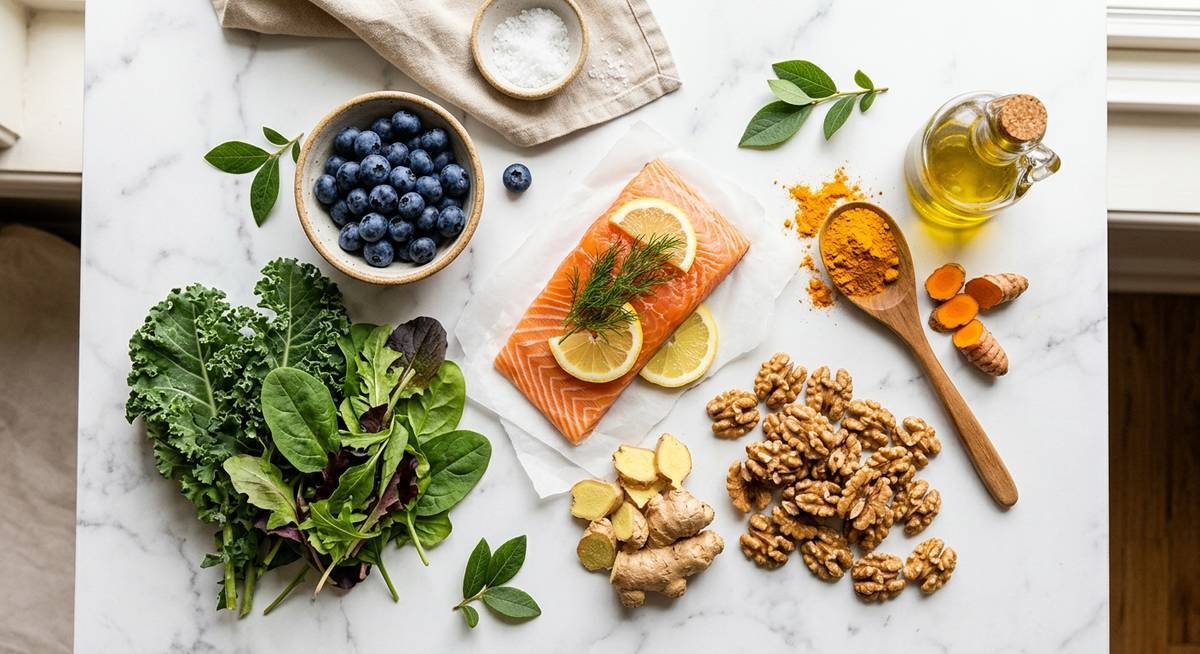
Chronic inflammation sits behind more health problems than most people realize — joint stiffness that won’t quit, fatigue that sleeps off badly, skin flare-ups with no clear cause. The research connecting diet to inflammatory markers is stronger than it has ever been, and the fix is less about elimination than about consistent substitution.
Anti-inflammatory diet recipes are built around omega-3 fatty acids, polyphenols, dietary fiber, and specific spices that reduce chronic inflammatory activity in the body. Fatty fish, colorful vegetables, legumes, whole grains, extra-virgin olive oil, and spices like turmeric and ginger form the foundation. Most of these meals take 20 to 35 minutes to make.
What Actually Makes a Recipe Anti-Inflammatory
An anti-inflammatory recipe is not defined by what it excludes. It is defined by the density and variety of specific compounds it delivers: omega-3 fatty acids, polyphenols, antioxidants, and fermentable fiber. These compounds work at the molecular level, interrupting signaling pathways that keep the body’s inflammatory response running when it should have stopped.
According to the National Institutes of Health (NIH, 2022), omega-3 fatty acids — particularly EPA and DHA found in fatty fish — are among the most studied nutrients for their direct inhibition of pro-inflammatory cytokines. Eating fatty fish two to three times per week is the threshold most research points to.
Polyphenols in colorful fruits and vegetables matter just as much. A 2018 review published in Nutrition Journal confirmed that dietary polyphenols from berries, leafy greens, and cruciferous vegetables help protect cells from oxidative damage that drives low-grade inflammation. The color of your plate is a reasonably good proxy for polyphenol variety.
The three categories to anchor every anti-inflammatory meal around:
- Omega-3 sources: salmon, mackerel, sardines, chia seeds, flaxseeds, walnuts
- Polyphenol-dense produce: blueberries, spinach, kale, broccoli, bell peppers, sweet potatoes, cherries
- Anti-inflammatory spices: turmeric (with black pepper to activate curcumin), ginger, garlic, cinnamon
One thing most recipe lists skip: the ratio matters as much as the ingredients. A salmon fillet served alongside french fries is not an anti-inflammatory meal. The same fillet with roasted broccoli and a drizzle of olive oil is.
Anti-Inflammatory Breakfast Recipes to Start Your Day Right
The best anti-inflammatory diet recipes for breakfast deliver omega-3 fatty acids, antioxidant-rich fruit, and whole grains before 9am. Overnight oats with blueberries and chia seeds, turmeric scrambled eggs, and smashed avocado on whole grain toast are the easiest entry points, each taking under 10 minutes of active time.
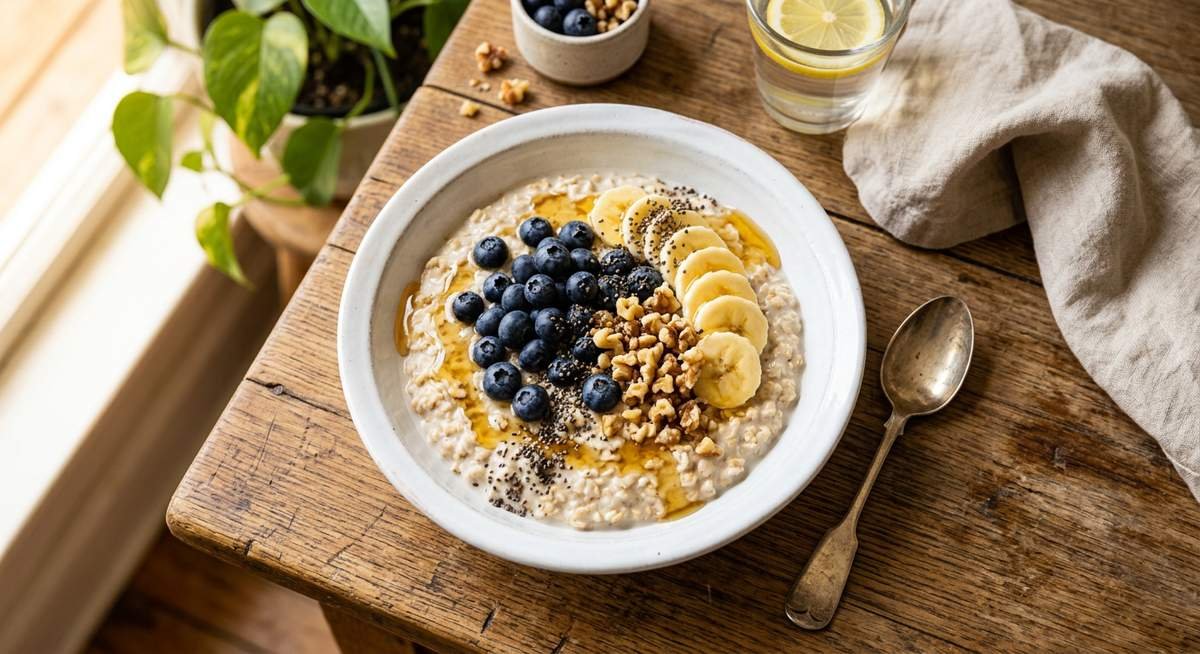
Sunday evening is a good time to set up a week’s worth of overnight oats. Mix half a cup of rolled oats with one cup of unsweetened almond milk, a quarter teaspoon of turmeric, a small pinch of black pepper, and one tablespoon of chia seeds. Seal the jar and refrigerate overnight. In the morning, top with half a cup of fresh blueberries and a small handful of crushed walnuts. That’s it.
The black pepper here is not optional. Curcumin, the active compound in turmeric, has very low bioavailability on its own. Piperine in black pepper increases curcumin absorption by approximately 2,000%, according to research published in Planta Medica. Most recipes omit this detail. It matters.
Three Anti-Inflammatory Diet Recipes for Breakfast Worth Rotating
- Blueberry Turmeric Overnight Oats, 1/2 cup rolled oats, 1 cup almond milk, 1 tsp turmeric, pinch of black pepper, 1 tbsp chia seeds, 1/2 cup blueberries, 1 tbsp walnuts. Prep: 5 minutes the night before.
- Smashed Avocado and Egg on Whole Grain Toast, Mash half an avocado with lemon juice and sea salt. Poach or fry one egg. Serve on a thick slice of whole grain sourdough with red pepper flakes and a drizzle of extra-virgin olive oil.
- Anti-Inflammatory Berry Smoothie, 1 cup frozen mixed berries, 1 cup spinach, 1-inch fresh ginger, 1 tbsp ground flaxseed, 1 cup unsweetened almond milk. Blend until smooth.
Most calorie overages in a day happen mid-morning or mid-afternoon, not at meals. A breakfast with adequate protein and healthy fat, like the avocado egg toast, holds you to lunch without the 10:30am pantry search.
Easy Anti-Inflammatory Lunch Recipes Under 25 Minutes
Quick anti-inflammatory lunches that are filling center on leafy greens, legumes, and fatty fish. A simple salmon and spinach salad, a quinoa-roasted vegetable bowl, or a red lentil and ginger soup can be assembled in 15 to 25 minutes and provides significant anti-inflammatory coverage across multiple food categories.
Salmon Salad with Spinach and Lemon Dressing
Wild-caught salmon, canned works fine here, flaked over a bed of baby spinach, halved cherry tomatoes, sliced cucumber, and a handful of pumpkin seeds. Dress with two tablespoons of extra-virgin olive oil, the juice of half a lemon, and a small amount of Dijon mustard. Season with black pepper and a pinch of sea salt.
This combination hits four separate anti-inflammatory food categories in a single bowl: fatty fish, leafy greens, olive oil, and seeds. The spinach wilts slightly from the dressing and turns a darker, more concentrated green. It looks a bit sad by the second day, which is worth knowing if you’re planning lunch prep for the week.
Quinoa and Roasted Sweet Potato Bowl
Roast cubed sweet potato and chickpeas in olive oil with cumin and smoked paprika at 400°F for 25 minutes. Serve over cooked quinoa with baby kale, sliced avocado, and a lemon-tahini dressing. A pinch of turmeric in the cooking water for the quinoa adds color and a small additional curcumin dose.
Red Lentil and Ginger Soup
In a pot, sauté one diced onion and three minced garlic cloves in olive oil. Add one teaspoon of ground turmeric, one teaspoon of ground cumin, and a tablespoon of freshly grated ginger. Add one cup of rinsed red lentils and four cups of low-sodium vegetable broth. Simmer 20 minutes, season with lemon juice and salt, and serve. This recipe keeps for four days in the refrigerator.
Anti-Inflammatory Dinner Recipes for the Week
Anti-inflammatory dinners built around fatty fish, olive oil, and a variety of vegetables reduce chronic inflammation markers while keeping cooking genuinely simple. The goal is to have three to four go-to dinners that rotate without requiring a lot of decision-making, choice fatigue at 6pm is where most healthy eating falls apart.
| Recipe | Main Anti-Inflammatory Ingredients | Active Cook Time | Best For |
|---|---|---|---|
| Sheet Pan Salmon with Broccoli and Sweet Potato | Salmon (EPA/DHA), broccoli (sulforaphane), olive oil | 10 min prep, 25 min oven | Weeknight default |
| Turmeric Chicken Thighs with Roasted Cauliflower | Turmeric + black pepper, garlic, olive oil, cauliflower | 10 min prep, 35 min oven | Meal prep Sundays |
| Black Bean and Kale Stew | Black beans (fiber), kale (antioxidants), canned tomatoes, cumin | 30 min stovetop | Plant-based nights |
| Mediterranean Stuffed Peppers | Quinoa, olives (polyphenols), tomatoes, olive oil, fresh herbs | 15 min prep, 30 min oven | Weekend cooking |
| Ginger-Garlic Tofu Stir-Fry with Bok Choy | Ginger, garlic, bok choy (glucosinolates), sesame oil | 20 min stovetop | Fast weeknights |
Sheet pan salmon is the most practical of the group. One pan, no more than 10 minutes of preparation, 25 minutes in the oven, and very little cleanup. Salmon’s omega-3 content doesn’t degrade meaningfully with regular roasting temperatures, which is worth knowing if you’ve been eating it only poached or raw out of concern for nutrient loss.
Sheet Pan Salmon with Broccoli and Sweet Potato
Preheat the oven to 400°F. Cut one medium sweet potato into half-inch cubes and toss with olive oil, salt, and smoked paprika. Spread on a lined baking sheet and roast 10 minutes. Add broccoli florets and two salmon fillets to the pan. Brush the salmon with a mixture of olive oil, minced garlic, lemon zest, and dried dill. Roast everything for another 15 to 18 minutes until the salmon flakes easily and the broccoli edges are slightly charred. Serve with lemon wedges.
The broccoli edges that get dark and a bit crispy are not a mistake. That caramelization makes the florets genuinely good to eat rather than something you’re forcing down on principle.
What to Cut Back On, The Flip Side Most Guides Rush Past
Reducing processed foods, refined carbohydrates, sugary beverages, and excess omega-6 vegetable oils matters as much as adding anti-inflammatory foods. According to a 2024 review in Nutrition and Cancer, diets high in ultra-processed foods are independently associated with elevated inflammatory markers even when controlling for calorie intake. Adding salmon to a diet of mostly packaged food produces limited benefit.
The foods that tend to quietly push up inflammatory markers:
- Sugary beverages: Soda, fruit juice with added sugar, sweetened coffee drinks. These spike blood glucose rapidly, which triggers an inflammatory response.
- Refined carbohydrates: White bread, white rice, packaged crackers and chips, stripped of fiber, they digest too quickly.
- Processed meats: Hot dogs, sausages, bologna. High in saturated fat and often sodium.
- Excess omega-6 oils: Soybean oil, corn oil, sunflower oil. These are heavily used in packaged foods and restaurant kitchens. Omega-6 fatty acids are not inherently inflammatory, but an imbalanced omega-6 to omega-3 ratio, which is the norm in Western diets, is associated with increased inflammatory signaling.
You don’t have to eliminate any of these categories completely. What matters more is the default. If your default cooking fat is soybean oil and you swap it for extra-virgin olive oil most of the time, the shift compounds over weeks. Same with the beverage default. Water over soda, sparkling water over juice.
The uncomfortable truth about anti-inflammatory eating: it’s not that the individual good foods are doing everything. It’s that removing the consistent inflammatory inputs gives the good foods room to do their job.
Frequently Asked Questions
How quickly do anti-inflammatory diet recipes actually work?
Most people notice measurable changes in joint stiffness, bloating, and energy levels within two to four weeks of consistent anti-inflammatory eating. Research published in the British Journal of Nutrition found that switching to a Mediterranean-pattern diet reduced CRP (C-reactive protein), a key inflammation marker, within four weeks in sedentary adults. Individual results vary based on starting inflammation levels and how much the underlying diet changes.
Is turmeric actually necessary in anti-inflammatory recipes?
Turmeric is one of the most studied anti-inflammatory spices, but it is not irreplaceable. Ginger, garlic, cinnamon, and rosemary all provide meaningful anti-inflammatory compounds. Turmeric’s curcumin content is valuable, but without black pepper, most of it is not absorbed. If you dislike turmeric, focusing on fatty fish, berries, and olive oil provides strong anti-inflammatory effects without it.
Can anti-inflammatory recipes be prepped ahead for the week?
Yes, and batch cooking is one of the most effective ways to maintain the diet consistently. Grains like quinoa and brown rice keep for five days in the refrigerator. Roasted vegetables hold well for four days. Red lentil soup keeps for four to five days and often tastes better on day two or three. The overnight oats can be portioned into five jars on Sunday evening. Fatty fish is best eaten within two days of cooking.
Is eating anti-inflammatory expensive?
The most expensive anti-inflammatory foods, fresh wild-caught salmon, organic berries, specialty oils, are not required daily. Canned wild-caught salmon and sardines provide equivalent omega-3 levels at roughly one-fifth the cost. Frozen berries have the same polyphenol content as fresh and cost significantly less year-round. Dried lentils, canned black beans, and rolled oats are among the most affordable ingredients in any grocery store.
Can I follow an anti-inflammatory diet without eating fish?
Yes. Plant-based omega-3 sources include ground flaxseed, chia seeds, hemp seeds, and walnuts. These provide ALA (alpha-linolenic acid), which the body converts to EPA and DHA at a low but meaningful rate. For higher conversion, algae-derived omega-3 supplements directly provide EPA and DHA without fish. A vegetarian anti-inflammatory diet built around legumes, leafy greens, olive oil, nuts, seeds, and colorful vegetables is well-supported by research.
Putting It Together
An anti-inflammatory diet does not require a complete overhaul of how you cook. Three or four anchor recipes that you actually like, a reliable salmon dinner, overnight oats, a lentil soup you’d make anyway, shift the default composition of your diet without creating a system you abandon by week three.
The shift worth making is not “eat more healthy food.” It’s changing the ratio of what shows up most often. Swap the cooking oil, make the salmon dinner twice a week instead of once, add chia seeds to the oats you were already making. Small defaults, maintained consistently, are what chronic inflammation responds to. Not a perfect week, followed by a normal one.
Anti-inflammatory eating is not a program with a start date. It’s the accumulated weight of mostly good defaults over time.