

It’s 5:17pm. You open the fridge, scan it for three seconds, close it, and open it again as if something new will appear. There’s leftover rice, a block of tofu you bought with the best intentions on Sunday, and a bag of spinach that has quietly started converting itself into liquid. The kids are already asking.
This is the real dinner problem. Not “what should I eat?” but “what can I actually make in the next 40 minutes that a nine-year-old will put in their mouth?”
Below are eight healthy dinner ideas for family weeknights that survive real schedules, high-protein, genuinely nutritious, and fast enough that you won’t be eating at 8pm. Plus a few things that actually help with picky eaters and a planning structure loose enough to hold up when Wednesday turns chaotic.
What “Healthy” Actually Means at the Family Dinner Table
A healthy family dinner is built around three things: at least 20 grams of protein per serving, at least one vegetable, and a filling carbohydrate that keeps everyone from raiding the pantry 45 minutes later. It doesn’t need to be low-calorie, organic, or photogenic to count as genuinely nutritious.
The USDA Dietary Guidelines for Americans (2020–2025) recommend filling half the plate with fruits and vegetables, with lean protein and whole grains covering the rest. That’s actually achievable on a Tuesday night. A piece of baked salmon, some roasted broccoli, and a scoop of rice technically hits every box. The challenge is always the broccoli.
For growing kids specifically, protein requirements matter more than most parents account for. According to the National Academy of Medicine’s Dietary Reference Intakes, children aged 9–13 need about 34 grams of protein per day, and teenagers need more. A chicken breast at dinner covers most of that in one shot. So does salmon, a couple of eggs, or beans mixed into something they’ll actually eat.
Kale Caesar salad with cashew dressing is healthy. So is chicken fried rice with frozen peas. One of those gets eaten every time. You already know which one.
8 Healthy Dinner Ideas for Busy Family Weeknights
These eight dinners stay on rotation because they’re fast, the ingredients are always findable, and they survive contact with picky eaters. Each one takes 15–35 minutes from fridge to table.
| Recipe | Main Protein | Cook Time | Picky Eater Friendly |
|---|---|---|---|
| Sheet Pan Lemon Chicken and Broccoli | Chicken breast (28g/serving) | 25 min | Yes (components separate) |
| Ground Turkey Taco Bowls | Turkey (26g/serving) | 20 min | Yes (build-your-own) |
| Teriyaki Salmon with Rice | Salmon (30g/serving) | 20 min | Moderate |
| One-Pan Chicken Sausage Orzo | Chicken sausage (22g/serving) | 25 min | Yes |
| Chicken Stir-Fry with Snap Peas | Chicken thigh (27g/serving) | 20 min | Yes (serve rice separate) |
| Turkey and Black Bean Burritos | Turkey + beans (29g/serving) | 20 min | Yes (assemble-your-own) |
| Egg Fried Rice with Frozen Peas | Eggs (14g/serving) | 15 min | Yes, almost universally |
| Baked Chicken Thighs with Sweet Potato | Chicken thigh (30g/serving) | 35 min | Yes |
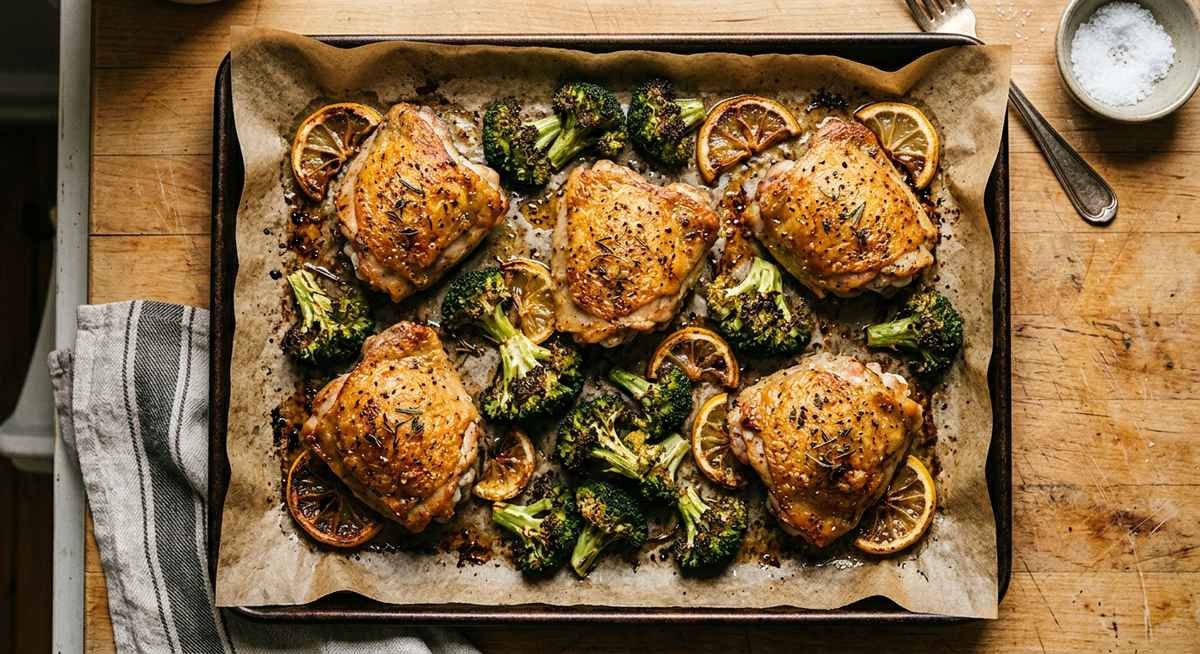
Sheet Pan Lemon Herb Chicken and Broccoli
Cut chicken breasts into roughly even pieces, toss with olive oil, lemon zest, garlic powder, and salt. Broccoli florets go on the same pan. Roast at 425°F for about 22 minutes.
The broccoli gets slightly crispy at the edges, which is, oddly, the version most kids will eat without much commentary. Cleanup is five minutes. By the time you’ve wiped the counter and put the olive oil back, dinner is done. That specific detail is what keeps this on the rotation week after week.
Ground Turkey Taco Bowls
Brown ground turkey with cumin, smoked paprika, garlic, and a splash of chicken broth. Serve over rice with shredded cheese, black beans, salsa, and whatever is in the fridge. Everyone builds their own bowl.
Build-your-own isn’t a lazy workaround. It’s one of the most reliable strategies for feeding four people with different opinions about whether corn belongs in dinner. Each person picks what they want, nobody’s picking things out of their plate, and the meal actually gets finished. That’s a win.
Teriyaki Salmon with Rice
Brush salmon fillets with teriyaki sauce (store-bought is completely fine), bake at 400°F for 12–14 minutes. Serve with steamed rice and sliced cucumbers dressed in a little rice vinegar.
Salmon gets a reputation as a difficult fish for kids. That reputation mostly applies to plain baked salmon. Glazed in something sweet, it lands differently. The teriyaki version tends to disappear without negotiation.
Egg Fried Rice with Frozen Peas and Corn
Day-old rice works best here because freshly cooked rice is too moist and clumps in the pan. Heat oil in a wide pan, scramble two or three eggs in it, add cold rice, frozen peas and corn, soy sauce, and a drizzle of sesame oil. Ten to fifteen minutes total.
Kids who refuse green vegetables in almost any other context will often eat frozen peas buried in fried rice. I have never gotten a clean explanation for why this works. Something about size, or the fact that they’re integrated into everything else rather than sitting on the side like a test. Whatever the reason, it does work.
Baked Chicken Thighs with Sweet Potato
Season bone-in chicken thighs with olive oil, paprika, garlic, and salt. Cube sweet potatoes and spread them on the same baking sheet. Roast at 400°F for 35 minutes.
The sweet potatoes caramelize slightly at the edges. The chicken skin comes out properly crispy, not rubbery. This takes the longest on the list, but most of that is oven time. Active prep is eight minutes, maybe less once you’ve made it a few times.
What Actually Helps With Picky Eaters at Dinner
Picky eaters eat more variety when they have some control over what’s on their plate, not when meals are covertly modified to hide ingredients. Research from the National Institute of Diabetes and Digestive and Kidney Diseases supports involving children in food selection and preparation as a reliable way to reduce mealtime food refusal.
Three things that actually move the needle:
- Deconstructed plating: serve the same ingredients unmixed. Chicken, rice, and vegetables arranged separately on the plate rather than combined lets a child avoid the parts they don’t want without refusing the whole meal.
- One familiar plus one new: pair a guaranteed crowd-pleaser (pasta, rice, chicken) with one new vegetable or item on the side. Low-stakes exposure, no negotiation required.
- Same food, different preparation: kids who won’t eat steamed carrots sometimes accept roasted carrots without complaint. The flavor and texture shift is enough that it can register as a different food. Worth testing before concluding that a vegetable is permanently off the table.
One thing that reliably doesn’t help: announcing “it’s really yummy” while placing a green bean on a plate for the first time. They’re not going to believe that. And now they’re suspicious of all future endorsements.
The American Academy of Pediatrics notes that children typically need 8 to 15 exposures to a new food before they’ll willingly eat it. If you serve broccoli twice a week, that’s two months before it might stop being a standoff. Knowing that doesn’t make Thursday easier. But it does make it feel less like a personal failure.
A Loose Weekly Plan That Doesn’t Fall Apart by Thursday
The simplest family dinner framework assigns a protein category to each weeknight rather than specific recipes. That one structural choice removes the hardest daily decision without locking you into a rigid schedule that collapses the moment someone has practice on Wednesday and you get home at 6:45.
| Night | Protein Category | Quick Meal Options |
|---|---|---|
| Monday | Chicken | Sheet pan chicken, taco bowls, stir-fry |
| Tuesday | Fish or seafood | Teriyaki salmon, shrimp tacos, tuna pasta |
| Wednesday | Ground meat | Turkey bolognese, beef tacos, stuffed peppers |
| Thursday | Eggs or vegetarian | Fried rice, veggie quesadillas, frittata |
| Friday | Flexible or leftovers | Whatever is in the fridge, or takeout |
The protein-per-night structure also simplifies grocery shopping. You know you need chicken thighs, a package of salmon, ground turkey, and eggs. You don’t need to know which specific recipe you’re making until Tuesday afternoon.
Thursday breaks down. Reliably. Vegetarian meals require more pantry confidence and slightly more planning, and most people default back to chicken rather than figure out what to do with a can of chickpeas at 5pm when they’re already tired. If that’s happening consistently in your house, move the vegetarian night to Sunday when there’s slightly more time. Swap Thursday to something you can improvise more easily.
The goal isn’t a perfect weekly meal calendar. It’s a light structure that survives real weeks and gets a nutritious dinner on the table more nights than not. That’s a lower bar than it sounds, and it’s enough.
Frequently Asked Questions About Healthy Dinner Ideas for Family
What is the healthiest dinner for a family?
A healthy family dinner contains lean protein, at least one vegetable, and a whole grain or starchy carbohydrate. Baked salmon with roasted vegetables and brown rice is one of the most nutritionally complete options available, high in omega-3s, fiber, and complete protein, and it comes together in under 25 minutes.
How do I get my kids to eat healthy dinners without a fight?
Build-your-own meal formats reduce food refusal more reliably than most other strategies. Taco bowls, grain bowls, and burrito-style spreads where each person assembles their own plate remove the confrontational dynamic from mealtime. Deconstructed plating, where protein, vegetables, and grains are served separately rather than mixed, also helps significantly with kids who object to foods touching.
What are some easy healthy family dinners under 30 minutes?
Ground turkey taco bowls, sheet pan lemon chicken and broccoli, teriyaki salmon with rice, egg fried rice with frozen peas, and one-pan chicken sausage orzo all come together in 15 to 25 minutes. These use common pantry ingredients, require minimal prep, and scale easily for larger families without changing the method.
Can healthy family dinners be budget-friendly?
Yes. Chicken thighs, eggs, canned beans, frozen vegetables, and whole grains are among the most cost-effective sources of protein and fiber available. Egg fried rice with frozen peas typically costs $1.50 to $2.50 per serving. Ground turkey taco bowls and bean-based meals generally come in under $4 per serving. The most expensive items on most healthy dinner lists are fresh fish nights, which can be offset by buying frozen fillets rather than fresh.
What are good healthy dinner ideas specifically for picky eaters?
Build-your-own meals work best: taco bowls, grain bowls, and burrito-style spreads where each person picks their components. Sheet pan meals where proteins and vegetables stay physically separate are also effective. Starting with milder flavor profiles (teriyaki, lemon-herb, simple garlic and olive oil) tends to work better with hesitant eaters than heavily spiced dishes. Egg fried rice is one of the most reliable options on this list.
How do I start meal planning for a family without it getting complicated?
Assign a protein category to each weeknight rather than planning specific recipes in advance. Knowing Monday is a chicken night and Wednesday is ground meat means you can shop for the week without needing a day-by-day plan written out. This approach holds up better when schedules shift, since you know the ingredient and can decide the specific dish when you actually have time to think about it.
Getting Dinner on the Table
There’s no shortage of advice about optimal macros, anti-inflammatory ingredients, and the best vegetables for growing kids. Most of it is technically correct and practically irrelevant at 5:30pm on a Thursday when the chicken is still frozen solid and someone has homework due tomorrow.
Families eating well consistently aren’t running elaborate prep systems. They’re cooking three or four meals on rotation that everyone will eat, making them on repeat without guilt about variety, and calling it done.
Stock the proteins you’ll actually use. Keep a sheet pan accessible. The rest figures itself out.