

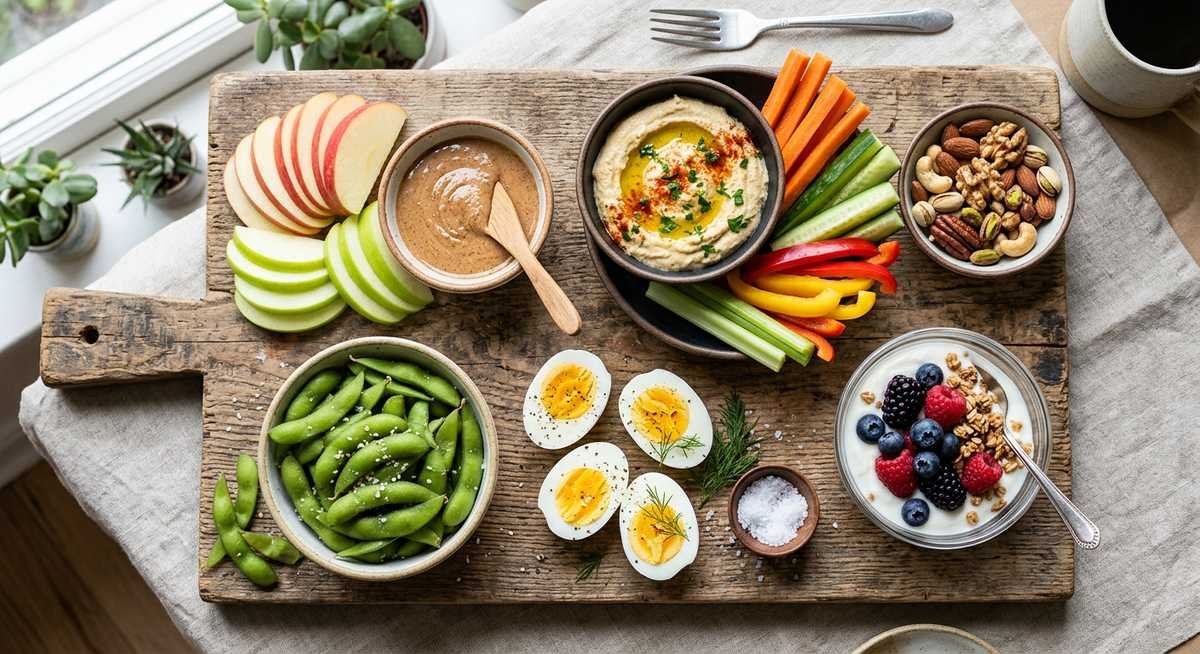
You opened the pantry at 3:47pm with a specific craving — not really hunger, not quite boredom — and closed it thirty seconds later holding a sleeve of crackers you didn’t actually want. Then you ate them all anyway. Then you were still hungry.
Sound familiar? Most snacks fail at the one job they’re supposed to do: keep hunger away long enough to matter. A bag of pretzels or a handful of crackers spikes blood sugar fast, then drops it even faster — leaving you hungrier, slightly annoyed at yourself, and now rummaging through the pantry again. The best healthy snack ideas share two traits — protein and fiber — and they don’t have to be complicated, expensive, or taste like regret.
Below are 50+ healthy snack ideas organized by craving, diet goal, and lifestyle, along with the science behind why they work and a quick-reference nutrition table for the top picks. Some of these will surprise you. Most take less time than your next TikTok scroll.
What Makes a Snack Actually Healthy?
Here’s the honest answer nobody puts on a food package: a healthy snack isn’t about having the fewest calories. It’s about what happens in your body for the next two to three hours afterward.
A genuinely healthy snack delivers at least 5 grams of protein or 3 grams of fiber (ideally both), comes from whole or minimally processed ingredients, and keeps blood sugar relatively stable. That last point matters more than most people realize — and it explains why you can eat 200 calories of crackers and still be hungry 45 minutes later, while 150 calories of cottage cheese keeps you satisfied until dinner.
According to the Harvard T.H. Chan School of Public Health, snacks high in refined carbohydrates without protein or fat cause rapid glucose spikes followed by crashes that drive hunger and overeating. Protein slows gastric emptying. Fiber feeds gut bacteria and extends satiety. Fat from real food sources signals fullness hormones. The trifecta works — the ingredients inside that cracker sleeve do not.
The official dietary guidelines call for snacks that contribute to daily vegetable, fruit, and protein targets — not just fill gaps between meals. In practice, the snacks that accomplish this most reliably are the ones that feel satisfying without a complicated recipe. Which brings us to the real problem: knowing what they are.
High-Protein Snacks That Actually Keep You Full
Protein is the single most filling macronutrient — and if you’ve ever eaten a “light” salad for lunch and found yourself face-deep in the snack drawer by 2pm, this is why. A 2015 meta-analysis in the American Journal of Clinical Nutrition found that high-protein snacks reduce subsequent calorie intake at the next meal by an average of 12%. That’s not nothing. These are the options that consistently deliver:
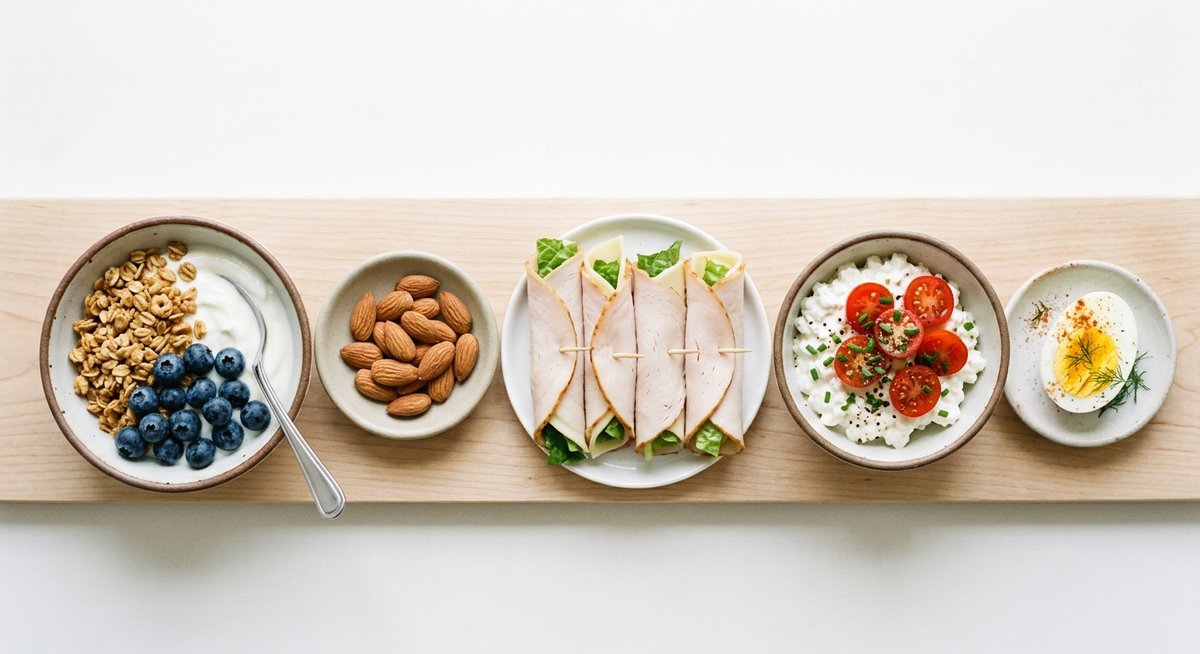
- Greek yogurt (plain, 2%): 17g protein per 170g serving. Add berries for fiber and antioxidants. The 2% version tastes like actual food; the fat-free version often tastes like effort.
- Cottage cheese: 14g protein per half cup. Wildly underrated — pairs well with sliced cucumber or cherry tomatoes, or just eaten straight over the sink if that’s where your afternoon has taken you.
- Hard-boiled eggs: 6g protein each, portable, and prep-friendly. Cook a batch Sunday night and they last five days in the fridge. The hardest part is remembering to do it on Sunday.
- Turkey or chicken roll-ups: 3–4 slices of deli turkey wrapped around cream cheese and a sliver of bell pepper. Around 15g protein, no cooking required, done in ninety seconds.
- Edamame: 9g protein per half cup, plus 4g fiber. One of the few plant foods with all essential amino acids — the kind of snack nutritionists sound almost excited to recommend.
- Canned tuna on cucumber rounds: 20g protein per can, essentially zero carbs, takes two minutes. The cucumber rounds swap in for crackers with none of the spike.
- String cheese: 7g protein, 80 calories, shelf-stable until opened. It also makes every adult who eats one feel approximately eight years old, which is not a downside.
- Roasted chickpeas: 6g protein and 5g fiber per half cup. The crunch factor makes these genuinely satisfying as a replacement for chips — particularly on the days when you need something that fights back a little.
What surprises most people is how few of these require any real cooking skill. The hardest one to execute is boiling eggs.
“Greek yogurt + mixed berries + granola is my go-to. I work 8-hour shifts and this gets me through to lunch without crashing. The protein is real, not just hype.”
— r/EatCheapAndHealthy, January 2023 (176 upvotes)
The Snack You Actually Want (Organized by Craving)
Here’s what nutrition advice gets wrong about snacking: it tells you what you should want, not what to do with what you actually want. Ignoring a craving doesn’t make it go away. It makes you eat the “healthy” snack and then raid the pantry anyway, netting more calories and more guilt than if you’d just addressed the craving honestly.
A better approach: meet the craving where it is, then make the healthiest version of that thing. The craving is information, not weakness.
When You Want Something Crunchy
The crunch craving is often about texture more than taste — your jaw wants something to do. Feed it something with actual nutritional value:
- Celery with nut butter: Classic for a reason. Celery is nearly calorie-free; a tablespoon of almond butter adds 3–4g protein and healthy fat. The crunch-to-satisfaction ratio is excellent.
- Raw bell pepper strips: More vitamin C per gram than an orange. No dip needed, but hummus makes it a complete snack with fiber and protein.
- Seed crackers with avocado: Look for crackers under 5g carbs per serving. Avocado adds monounsaturated fat and fiber — not the thin smear you get at overpriced brunch, a real half-avocado’s worth.
- Air-popped popcorn: 3 cups = 90 calories, 3.5g fiber. The official snack recommendation of anyone watching a movie without wanting to feel terrible about it afterward.
- Almonds: 23 almonds ≈ 160 calories, 6g protein, 3.5g fiber, 7.3g monounsaturated fat. The snack world has done nuts dirty with “watch your portions” messaging that makes people afraid of a food the research consistently supports. Eat the almonds.
When You Want Something Creamy
The creamy craving is usually code for wanting comfort — something that feels like it’s taking care of you. Here are options that actually do:
- Hummus with vegetables: Two tablespoons of hummus with carrots or cucumber delivers fiber, protein from chickpeas, and the satisfying richness of olive oil. This is the snack you tell people you eat and then actually eat.
- Avocado on rice cakes: Filling, satisfying, and takes 90 seconds. The rice cake is the vehicle; the avocado is why you’re eating it.
- Peanut or almond butter on apple slices: The natural sugar in apple paired with fat and protein creates a slow, steady energy release that feels nothing like the usual blood sugar ride. There’s a reason this combination shows up on almost every nutritionist’s list.
- Ricotta with honey and walnuts: Genuinely underused snack combination. Quarter cup of ricotta delivers 7g protein; a drizzle of honey and a few walnuts add texture, omega-3s, and the feeling of eating something on purpose.
When You Want Something Sweet
Fighting the sweet craving with willpower has a failure rate approaching 100%. Working with it — choosing sweet things that also do something useful — has a much better track record:
- Fresh berries: Blueberries, raspberries, and strawberries rank among the lowest-sugar fruits while delivering the highest antioxidant loads. They’re also the snack that feels fancy without requiring any effort whatsoever.
- Banana with peanut butter: Potassium, resistant starch, and protein. The gym crowd’s default for good reason — it works before a workout, after a workout, and during a Wednesday afternoon when you need something to get you through the next two hours.
- Medjool dates stuffed with almond butter: Two dates provide 3g fiber and a sweetness that genuinely competes with candy. The almond butter prevents a sugar spike and makes the whole thing feel like a conscious choice rather than a compromise.
- Dark chocolate (70%+): Two squares ≈ 100 calories, plus flavonoids that research links to improved cardiovascular markers. A 2022 study in Frontiers in Nutrition confirmed flavanol-rich chocolate reduces LDL oxidation. You are now medically justified in your chocolate habit, within reason.
- Frozen grapes: The texture change makes them feel more indulgent than they have any right to. Works surprisingly well when a full dessert isn’t the goal but doing nothing about the craving also isn’t the goal.
When You Want Something Savory
- Olives: High in monounsaturated fat, low in calories. Ten large olives ≈ 50 calories. The kind of snack that feels like something you’d find on a Mediterranean terrace, which makes it easier to not eat seventeen of them.
- Miso soup: One packet ≈ 35 calories, a few grams of protein from soy, and gut-beneficial probiotics. Warm, savory, and surprisingly filling for its calorie count.
- Seaweed snacks: Under 30 calories per pack, rich in iodine and trace minerals, satisfies the salty crunch without processed additives. The first time is a little strange. After that, they’re just the snack.
- Parmesan crisps: Sold pre-made or baked at home in ten minutes. 5g protein per serving, essentially zero carbs. The homemade version costs a fraction of the price and smells amazing coming out of the oven.
Healthy Snacks for Weight Loss: What the Numbers Show
There’s a persistent myth in diet culture that if you want to lose weight, snacking is the enemy. Cut all snacks, reduce total calories, suffer through the hunger — this is the plan that lasts about three weeks before the frozen pizza incident.
Weight-loss snacking actually works when the snack prevents overeating at the next meal. Not when it just reduces total calories in isolation, but when it does the job of keeping you reasonable when dinner gets served. The snacks that do this most reliably combine protein (10g+) with fiber (3g+) in under 200 calories:
| Snack | Calories | Protein (g) | Fiber (g) | Prep Time |
|---|---|---|---|---|
| Greek yogurt (plain, 170g) | 100 | 17 | 0 | 0 min |
| Cottage cheese (½ cup) | 90 | 14 | 0 | 0 min |
| Hard-boiled egg (2) | 155 | 13 | 0 | 10 min (batch prep) |
| Edamame (½ cup, shelled) | 94 | 9 | 4 | 5 min (microwave) |
| Apple + 1 tbsp almond butter | 170 | 4 | 4 | 2 min |
| Hummus (2 tbsp) + carrots | 85 | 3 | 4 | 0 min |
| Roasted chickpeas (½ cup) | 120 | 6 | 5 | 30 min (batch) |
| String cheese (1 stick) | 80 | 7 | 0 | 0 min |
| Turkey roll-ups (3 slices) | 90 | 12 | 0 | 3 min |
| Mixed nuts (28g) | 170 | 5 | 2 | 0 min |
| Tuna on cucumber rounds | 120 | 20 | 1 | 3 min |
| Banana + 1 tbsp peanut butter | 195 | 5 | 3 | 1 min |
One thing nutrition labels rarely explain upfront: protein from dairy sources (Greek yogurt, cottage cheese) tends to be more satiating per gram than protein from plant sources alone, largely due to differences in amino acid profiles and digestion rates. This isn’t an argument against plant protein — it’s an argument for being strategic. Combining plant protein with fat, like edamame with a small handful of almonds, closes that satiety gap considerably. You’re not cheating the system; you’re using it correctly.
Quick No-Cook Snacks: Real Options for Real Schedules
The snack a busy person will actually eat beats the theoretically optimal snack that requires 20 minutes of kitchen time. This is not a motivational failure. This is physics — when hunger hits at 4pm and there’s a meeting at 4:15, you eat whatever is already open and within arm’s reach. Build for that reality, not for the idealized version of yourself who has time to slice vegetables at 3am on a Sunday.
These require zero cooking, minimal cleanup, and most keep without refrigeration:
- Pumpkin seeds (pepitas): 9g protein per ounce, 1.8g fiber. More nutritionally dense than sunflower seeds, and somehow perpetually underrated in the snack conversation.
- Protein bars (real ones): Look for bars with at least 10g protein, under 10g sugar, and an ingredient list that reads like food rather than a chemistry exam. RXBARs, KIND Protein, and Lärabars with added protein hit this mark consistently.
- Single-serve nut butter packets: Justin’s and similar brands sell 1.15-oz packets that pair with any fruit. No knife, no measuring, no cleanup. The kind of invention that makes you appreciate living in the current era.
- Jerky (turkey or beef): Aim for brands with under 200mg sodium per serving. 10–15g protein per ounce, fully shelf-stable, and satisfying in the way that chewing something substantial tends to be. Desk drawer staple.
- Walnuts + dark chocolate chips: A self-mixed trail mix that costs a fraction of the packaged version and tastes better because you control what goes in. Two tablespoons of each ≈ 180 calories, 4g protein, 2g fiber, and genuine satisfaction.
- Pre-cut fruit packs: Grocery store sections now stock single-serve watermelon, mango, and melon cups. Yes, the convenience premium is real. Eat the fruit anyway — because the alternative, at 4pm when you’re tired and hungry, is not the wholesome alternative you’re imagining.
“Non-perishable healthy snacks I keep at my desk: almonds, single-serve peanut butter packets, individual cheese portions, and seaweed snacks. The seaweed ones sound weird but they genuinely replace chips for the salty craving.”
— r/EatCheapAndHealthy, October 2018 (411 upvotes)
When You Snack Matters Almost as Much as What You Eat
Consider the 3pm energy crash. It happens so reliably, to so many people, that entire product categories exist to address it — energy drinks, coffee pods, vending machine everything. But the crash itself is predictable and largely preventable with the right snack, timed correctly, eaten two to three hours before it would otherwise happen.
Snack timing affects energy levels, appetite control, and workout performance. The research divides optimal snacking into three practical windows:
Pre-workout (30–60 minutes before): Fast-digesting carbs paired with moderate protein performs best here. Banana with peanut butter, a small bowl of oatmeal, or a handful of dates with Greek yogurt all deliver glycogen for the workout and amino acids to begin muscle protein synthesis. Think of this as loading the tank right before you need to drive.
Mid-morning or mid-afternoon energy slump (2–4 hours after a meal): This is where blood sugar management matters most. A snack combining protein and fiber here prevents the 3pm energy crash more reliably than caffeine does — without the subsequent caffeine crash that just creates a second problem. Cottage cheese with cucumber, apple with almond butter, or edamame all work well. The goal is stability, not stimulation.
Evening snack (within 1–2 hours of sleep): The official guideline says avoid late-night eating. Reality is messier. For people with active lifestyles, physically demanding jobs, or high-stress days, going to bed genuinely hungry disrupts sleep quality — and poor sleep makes the next day’s food choices worse in a cycle that’s hard to break from the willpower side alone.
Casein-heavy foods (cottage cheese, Greek yogurt) are the smart choice here because casein digests slowly overnight, supporting muscle repair without causing a blood sugar spike. A 2021 review in Nutrients found pre-sleep protein intake of 30–40g improved next-morning muscle protein synthesis without negatively affecting body composition. Eat the cottage cheese. Sleep better. Handle tomorrow better.
Healthy Snacks Kids Will Actually Eat
The thing about feeding kids healthy snacks is that the word “healthy” is precisely the wrong selling point. Children do not care about macronutrients. They care about whether it looks fun, whether they had any say in it, and whether it has enough flavor to compete with the things they actually want.
The best approach isn’t substitution — swapping their favorite for something nutritious and hoping they don’t notice. It’s addition: pairing familiar flavors with nutritious ingredients, and crucially, letting them be involved in the process. Offering a choice of dip, letting them assemble their own snack plate, giving them the cucumber slicer and standing back — these moves increase acceptance rates more reliably than any combination of ingredients alone. These options work consistently:
- Apple slices with peanut butter and mini chocolate chips: The chocolate chips are the permission structure. The apple and peanut butter do the nutritional work. The kid sees a treat. The parent sees a snack with fiber, protein, and antioxidants. Everyone wins.
- Ants on a log (celery + peanut butter + raisins): A 1960s classic that still earns genuine enthusiasm from children who’ve never seen it before. The novelty of the name does half the work.
- Cheese and whole-grain crackers: Calcium from cheese, fiber from whole grains. Works for lunchboxes, after-school, and car trips. The combination that parents reach for when they’re too tired to think.
- Smoothie pouches (homemade): Blending a handful of spinach into a banana-strawberry smoothie turns invisible in both color and taste — the banana overpowers everything. Freeze in reusable pouches for a summer snack that also counts as a vegetable, which remains one of the great food parenting victories available.
- Mini sweet peppers: Bite-sized, naturally sweet, and higher in vitamin C than most fruits. Children often prefer them raw over cooked because of the crunch — a preference worth encouraging before it has a chance to disappear.
- Plain popcorn with nutritional yeast: Nutritional yeast adds a mild cheesy flavor plus B vitamins. Most kids who try it ask for it again. Most adults who try it also quietly keep eating it.
Research from the Cornell Food and Brand Lab confirms it: children who assemble their own snack — even just choosing which dip to use or which fruit to include — show significantly higher acceptance rates for new foods. The control matters to them. Giving a little bit of it costs nothing.
Plant-Based and Vegan Snack Ideas
Plant-based snacking has one honest challenge that most vegan nutrition content glosses over: most plant proteins are incomplete amino acid profiles, which means the satiety per gram of protein is genuinely lower than dairy. This isn’t a reason to avoid plant protein. It’s a reason to be intentional about combining it.
Pairing complementary plant proteins — legumes with grains or seeds — resolves the amino acid gap entirely. Chickpeas, for example, deliver 7g protein per half-cup cooked and form the base of both hummus and roasted chickpea snacks. Eaten alongside a whole-grain cracker, you’ve built a complete protein without thinking about it:
- Hummus on whole-grain pita triangles: Chickpeas plus wheat equals complete amino acid coverage. Cut a standard whole-grain pita into 6 triangles for natural portion control that doesn’t require counting or willpower.
- Trail mix (nuts + seeds + dried fruit): Custom-mix is cheaper and better than pre-packaged. Base: almonds and pumpkin seeds. Add: unsweetened dried cranberries or mango. Skip: added sugar coatings and vegetable oil sprays that add calories without adding anything worth having.
- Roasted lentil snacks: Available packaged (Biena, The Good Bean) or baked at home. 8g protein per serving, 4g fiber, completely plant-based, and crunchy enough to feel like a real snack rather than a concession.
- Avocado on sourdough toast: The fermentation process in sourdough meaningfully improves the glycemic response compared to regular bread — not marketing, actual food chemistry. Half an avocado adds 5g fiber and heart-healthy monounsaturated fat. The combination earns the Instagram attention it perpetually receives.
- Soy-based yogurt with flaxseed: For fully dairy-free Greek yogurt substitutes, Kite Hill and Forager Project versions deliver 10–12g plant protein per serving — genuinely competitive numbers. One tablespoon of ground flaxseed adds 2g omega-3s and 2g fiber, and disappears completely into the texture.
- Nut-stuffed Medjool dates: Press a cashew or almond into a pitted date and eat whole. Three pieces ≈ 7g fiber, natural iron, and enough sweetness to retire the candy bar for the afternoon. A snack that feels like it was designed by someone who cared about both nutrition and pleasure, because it was.
FAQ: Healthy Snack Questions Answered
What are the healthiest snacks to eat between meals?
The best healthy snack ideas for between meals combine at least 5g protein and 3g fiber: Greek yogurt with berries, apple slices with almond butter, edamame, or cottage cheese with vegetables. These combinations slow digestion, stabilize blood sugar, and prevent overeating at the next meal more reliably than any single ingredient alone. The pattern isn’t complicated — it’s just easy to forget when you’re hungry and the crackers are closer.
What healthy snacks are under 100 calories?
Strong options under 100 calories include one hard-boiled egg (78 cal), half a cup of edamame (94 cal), two tablespoons of hummus with a cup of cucumber slices (75 cal), one string cheese stick (80 cal), and ten large olives (50 cal). All provide meaningful nutrition without exceeding a minimal calorie budget — proof that the calorie ceiling doesn’t have to mean the nutrition floor.
What are the best high-protein snacks for adults?
The highest-protein snack options for adults are canned tuna on cucumber rounds (20g), Greek yogurt (17g per serving), cottage cheese (14g per half cup), turkey roll-ups (12–15g), and edamame (9g). For portable, no-refrigeration options when you’re out of the house or at a desk all day, jerky (10–15g per ounce) and roasted chickpeas (6g) are the most practical high-protein choices that don’t require carrying an ice pack.
What is a good late-night snack that won’t cause weight gain?
Late-night snacks built around casein protein — cottage cheese, Greek yogurt — digest slowly enough to avoid blood sugar spikes while supporting overnight muscle repair. A small bowl of cottage cheese with a drizzle of honey, or plain Greek yogurt with a few walnuts, keeps total calories under 200 while providing the slow-release protein that research associates with improved body composition when consumed before sleep. The goal isn’t to eat nothing. It’s to eat something that works with your sleep instead of against it.
What snacks do registered dietitians recommend?
Registered dietitians consistently recommend healthy snack ideas that pair protein with produce: Greek yogurt with fruit, nut butter with apple slices, hummus with raw vegetables, or cottage cheese with cherry tomatoes. The consistent pattern across all of their recommendations is whole food ingredients, minimal processing, and combinations that deliver both macronutrient balance and micronutrient value. Not specialty products. Not supplements. Actual food.
What are cheap healthy snacks on a tight budget?
The most cost-effective healthy snacks by protein and fiber per dollar are canned tuna (under $1.50 per can, 20g protein), dried lentils (around $1 per cup cooked, 9g protein, 8g fiber), eggs (under $0.25 each), frozen edamame (roughly $3 per pound, multiple servings), bananas (under $0.25 each), and plain oats with peanut butter. Buying nuts and seeds from bulk bins instead of pre-packaged typically cuts the cost by 30–40%. The budget-friendly snacks and the optimal snacks overlap considerably more than the health food industry would prefer you to believe.
What snacks are best for blood sugar balance?
Snacks that pair protein or fat with fiber produce the most stable blood sugar response: almonds with an apple, celery with almond butter, cucumber with hummus, or cheese with whole-grain crackers. According to the American Diabetes Association, snacks with a glycemic load under 10 — achievable with most nut-and-fruit or vegetable-and-protein combinations — minimize postprandial glucose spikes in both diabetic and non-diabetic individuals. Managing blood sugar isn’t just for people with diabetes. It’s for anyone who would like to function normally in the second half of the day.
Most people don’t need a total overhaul to eat better between meals. They need two or three of these protein-fiber combinations stocked, visible, and accessible — because what gets eaten at 3:47pm isn’t what’s optimal. It’s what’s closest. Changing that default is the whole game, and it turns out the game is easier than the pantry-staring suggests.