

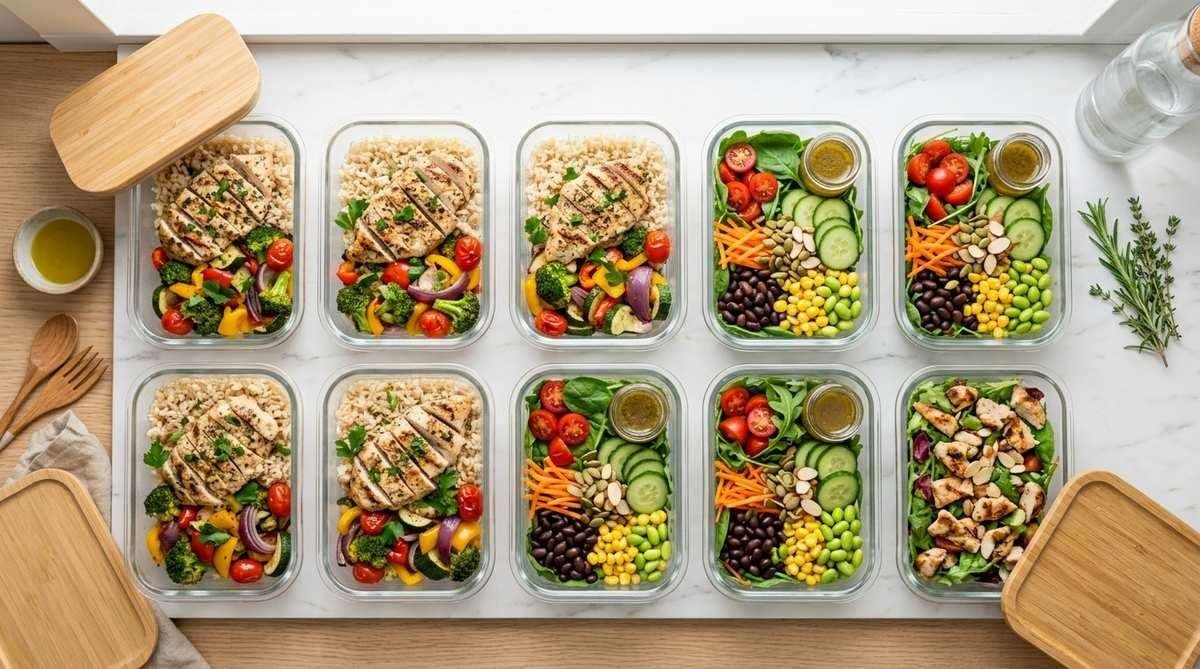
The way weight loss meal prep actually works is simpler than most people make it sound: you remove the decision. Not the hunger, not the cravings. Just that specific moment, usually around 7pm on a Wednesday, where you open the fridge, find nothing ready, and end up ordering something that was never part of the plan.
I have been there more times than I want to count. You eat pretty well Monday and Tuesday, feel okay about it, and then Wednesday happens. Work ran long. There is leftover rice in the fridge but no protein to go with it, half a bag of spinach that is two days from being unusable, and three containers from last week stacked in the corner that you have been pretending not to see. Combining any of this into an actual meal feels like more effort than you have. So you order pizza, or eat crackers over the sink, or just go to bed vaguely annoyed at yourself.
That is usually where it falls apart. Not at restaurants or on weekends. On a regular Tuesday night at home when you are tired and the healthy option requires effort you do not currently have.
Meal prep does not fix motivation. It just means motivation matters less on the nights when it runs out.
What Actually Drives Weight Loss When You Meal Prep
Meal prep has no magical metabolic effect. It does not burn extra calories or trick your body into anything. The math of a calorie deficit does not change because the food was cooked on Sunday instead of Tuesday.
What it actually does is remove three things that reliably blow that deficit: decision fatigue at the end of a long day, the convenience gap where fast food is genuinely faster, and portion drift when you serve yourself straight from a pot. All three of those things sound obvious. All three of them also tank diets constantly, including for people who absolutely know better. I know better and I have still fallen into all three, sometimes in the same week.
There is decent research behind the home cooking connection. A 2019 study published in the International Journal of Behavioral Nutrition and Physical Activity found that people who cooked at home frequently consumed significantly less total energy and fat. Meal prep concentrates that effect, cutting your required decision-making down to one session per week instead of twenty-one separate moments where something can go wrong.
Practically: a 450-calorie meal already in your fridge does more for your weight loss than a theoretically ideal 380-calorie meal that you were going to cook but did not end up making. Because the pizza happened instead.
A lot of people also discover, after weeks of eating pretty well and still not losing weight, that the problem was happening at the container stage. Eating straight from a big batch makes it nearly impossible to know how much you actually ate. Sauce bleeds into the rice overnight. One serving becomes one and a half without anyone intending it.
The Calorie Math Behind Portioning for Weight Loss
To lose weight you need to eat less than you burn. Your total daily energy expenditure (TDEE) is that burn number, and the Mayo Clinic’s TDEE guidance puts average needs between 1,600–2,400 for women and 2,000–3,000 for men depending on activity. A 300–500 calorie daily deficit produces roughly 0.5–1 lb of fat loss per week. Not dramatic. But it compounds and it does not require suffering.
For meal prep purposes, a rough daily framework:
- Breakfast: 300–400 calories
- Lunch: 400–500 calories
- Dinner: 450–550 calories
- Snacks (1–2): 150–300 calories total
That lands most people around 1,300–1,750 calories per day. Low enough to actually lose weight, not so low that you spend most of the day thinking about food. The goal is for this to feel manageable, not brutal.
Protein is the piece that trips people up most often. Hitting 0.7–1 gram per pound of body weight while cutting preserves muscle, keeps your metabolism from downshifting, and meaningfully reduces hunger. Research reviewed by the Academy of Nutrition and Dietetics confirms that higher-protein meals suppress appetite hormones more effectively than high-carb meals at the same calorie level. In practice, that means a 450-calorie meal built around 35–40 grams of protein keeps you full several hours longer than a 450-calorie bowl of pasta. The difference matters at 9pm when you either do or do not end up in the kitchen looking for something else.
| Protein Source | Calories per 4 oz (cooked) | Protein (grams) | Cost per serving (approx) |
|---|---|---|---|
| Chicken breast | 185 | 35g | $1.50–$2.00 |
| Ground turkey (93% lean) | 190 | 28g | $1.25–$1.75 |
| Canned tuna | 120 | 26g | $0.75–$1.25 |
| Lentils (cooked) | 115 | 9g | $0.30–$0.50 |
| Eggs (2 large) | 140 | 12g | $0.50–$0.80 |
| Greek yogurt (plain, 3/4 cup) | 110 | 15g | $0.60–$1.00 |
5 Meal Prep Formulas That Work Every Week
After a few months of doing this consistently, you stop thinking about recipes. You just have a few formats memorized and rotate through them depending on what is on sale or what you can currently stand to look at. These are the formats that actually held up over time, not the most exciting food in the world, but food you will actually eat by Thursday.
The Protein Bowl
Base (1/2 cup cooked grain: brown rice, quinoa, or farro) + protein (4–5 oz chicken, turkey, or legumes) + roasted vegetables (roughly 100–150 calories worth) + sauce (2 tbsp of a lean dressing or salsa, 50–80 calories). Total: 400–520 calories.
I use brown rice most of the time. I know quinoa has slightly better macros and I have made it enough times to know I just do not enjoy it as much. That might be irrational. This format survives long-term because the base, protein, and sauce can all rotate independently. Teriyaki chicken over rice with broccoli one week, ground turkey taco bowl with black beans and salsa the next. Fair warning on the broccoli: it gets soft by day four, turns a dull olive green, and smells slightly off in a way that is hard to describe but easy to notice when you open the container at your desk. Still edible. Not ideal. Cauliflower holds up better if that starts to bother you.
The Sheet Pan Format
One sheet pan, 425°F, 25–30 minutes. Protein on one side, vegetables on the other. Salmon and asparagus. Chicken thighs and zucchini. Turkey meatballs and cherry tomatoes. Sheet pan food holds its texture better than bowl food over several days, which matters when you have been eating from containers for three days and your tolerance for soft vegetables is wearing thin.
The High-Protein Overnight Oat
1/2 cup rolled oats, 1/2 cup plain Greek yogurt, 1/2 cup unsweetened almond milk, optional protein powder, fruit on top. Make six jars at once. Takes about eight minutes. At 300–380 calories and 25–35 grams of protein per jar, this is the best return on prep time of anything on this list. Cold rice is fine. Cold overnight oats are fine. Reheated eggs are a different story, but that is covered later. These keep well for five days and you can eat them straight from the fridge on mornings when even the microwave feels like one decision too many.
Soups and Stews
A large batch of turkey chili, lentil soup, or chicken minestrone covers lunch and doubles as a fallback dinner when the individual containers run out mid-week, which they will. Soup is genuinely harder to overeat than solid food, the volume and the broth slow you down naturally. A 2011 study in Appetite found that starting a meal with broth-based soup reduced calories consumed in the following course by about 20%. More practically: a pot of lentil soup costs almost nothing and lasts the whole week without getting strange.
Pre-Portioned Snacks
Most calorie overages during a deficit happen between 3pm and dinner, not at meals. You hit your targets at breakfast and lunch and then graze your way through an extra 300–400 calories in the late afternoon without really registering it. Pre-portioning snacks during prep closes that gap before it opens. Hard-boiled eggs, apple with almond butter, hummus with cut vegetables, a small handful of mixed nuts. Small containers, already measured, already in the fridge.
I still buy too much spinach every single week. I don’t know why I keep doing this. It seems like a good idea Sunday morning and by Wednesday it is wilting and by Thursday I am throwing half of it out. Raw greens for snacking are a reasonable idea, I’m just apparently not that person. Something pre-portioned that does not require assembling when you are already annoyed is what actually gets eaten.
The Meal Fatigue Problem Nobody Warns You About
Here is the thing nobody really tells you about weight loss meal prep: eating the same food every day gets genuinely hard after a while. Not in a dramatic way. Just in the way where you open the container and you are suddenly very aware it is Wednesday again and this is the fourth time you have seen this exact meal.
I used to prep seven days of food at once because every fitness channel swore it was the efficient approach. The first week or two it felt great. Organized, on track, proud of myself on Sunday. Then by Thursday I was eating cold chicken straight from the container while standing at the kitchen counter because I could not be bothered to warm it up. By the following Sunday I had thrown out two days of food I just could not face eating. Felt like I had failed. Did it again the next week. Same result.
The problem was not the food itself. It was that I had not thought about what it would smell like on day four. What it would feel like to open that container for the sixth time. Reheated chicken breast gets rubbery when it is overcooked even slightly. Broccoli turns dull and smells faintly sulfuric by mid-week. The whole fridge carries a particular smell by Thursday, somewhere between cooked grain and reheated protein, that you stop noticing until someone else does. These are real things that happen.
By Thursday I usually start negotiating with myself about whether tonight could be takeout. One meal off is not a failure. I still order takeout sometimes, probably more than I should. But when the containers are there and the food is okay, I usually just eat it and the negotiation fades. Most of the time. I also know prep twice a week works better than once and I still sometimes just do Sunday only because mid-week prep requires energy I do not always have. So it goes.
On r/loseit, a weight loss community built around sustainable habits, a thread called “Meal prep fatigue making me want to quit weight loss completely” collected hundreds of responses from people describing the same arc: strong start, enthusiasm through week one, creeping exhaustion by week three, full abandonment by week four. Not because of the food choices, mostly. Just the repetition.
“I got so tired of eating the same chicken and rice every day that I started dreading mealtimes entirely. It wasn’t the calories, it was the boredom.”
— r/loseit (based on community feedback)
Two things help. First: cook protein in bulk but leave it unseasoned, then add different sauces at mealtime. Plain baked chicken with teriyaki on Tuesday is not the same eating experience as the same chicken with tahini and lemon on Thursday. Different enough to get through the week without dreading it. Second: stop prepping for seven days. Prep for three or four, do a smaller second session mid-week. More total effort on paper. Less food in the bin, less of that feeling of opening a container and just not wanting to.
Building Your First Meal Prep Session
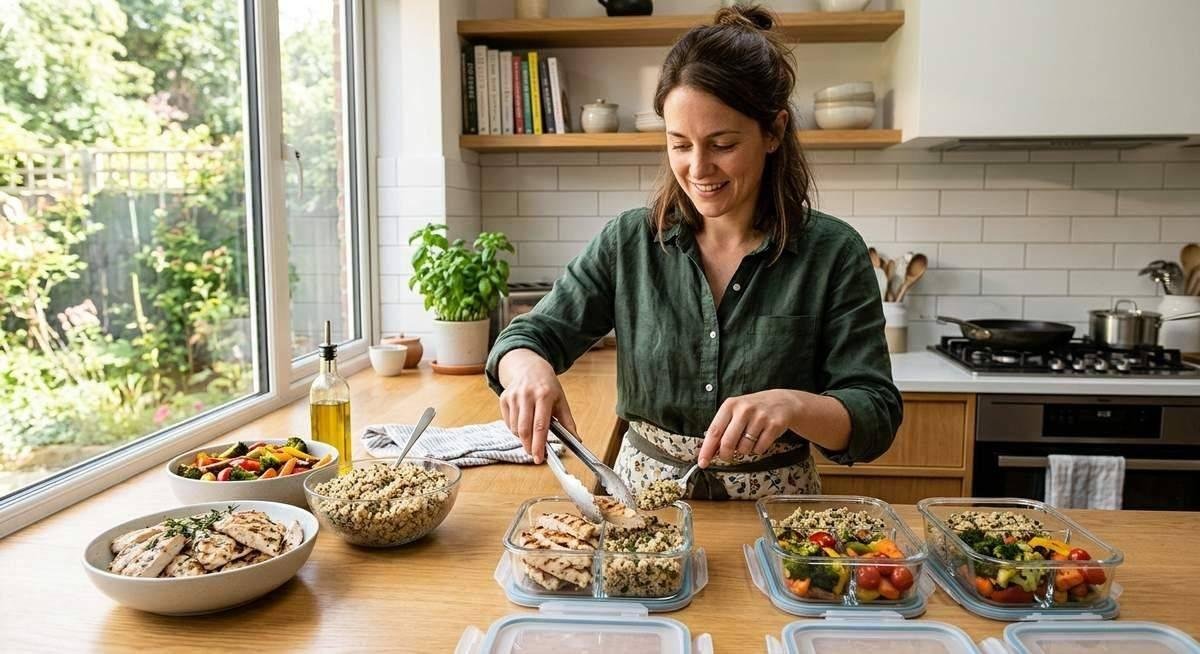
A complete first session takes 60–90 minutes and covers three to four days of food at your calorie target. Start small. One protein, one grain, two vegetables, one sauce. That is the whole first session. Do not try to add overnight oats AND snack prep AND three proteins because you are feeling motivated on Sunday morning. That way lies a four-hour Sunday and a fridge you cannot close properly and a sink full of containers.
- Preheat the oven to 425°F and start a pot of grains first. Brown rice takes 20–30 minutes and needs almost no attention. Starting it first means you are not standing around waiting at the end.
- Season and load the sheet pan. 1.5–2 lbs of chicken breast or thighs, vegetables alongside. Into the oven for 25–30 minutes. Set a timer.
- Use the oven time for everything else. Overnight oats take about 8 minutes. Hard-boiling 6 eggs takes 12. Cutting snack vegetables takes another 10. This is also where I usually end up checking my phone and then wondering where 40 minutes went.
- Let everything cool before portioning. Hot food in sealed containers creates condensation, makes the food soggy, and shortens shelf life. Twenty to thirty minutes on the counter. I know this, I skip it when I am tired, and I notice it by Wednesday. Still skip it sometimes.
- Portion into containers and write down calorie totals. Use a kitchen scale for protein until you have a reliable eye for what 4 oz actually looks like. This is the step that makes the math real rather than approximate.
On containers: glass is genuinely better than plastic. Does not warp, does not absorb smells, safe to microwave. The compartmentalized kind keeps sauce separate so you can vary flavors across the week instead of opening a container where everything has merged into the same thing overnight. A 10–12 piece set runs $30–$60 and lasts for years. The sink situation after prep day is going to be a little grim regardless of which containers you own. That is just how this goes.
Where Weight Loss Meal Prep Goes Wrong
Most meal prep failures trace back to the same handful of mistakes. Not complicated ones. Just ones that are easy to make when you are new to this and optimistic enough that you do not notice you are setting yourself up to quit in three weeks.
Portioning healthy food at maintenance calories. Grilled chicken and sweet potato is good food. But if your portions are sized to satisfy hunger rather than hit a calorie target, you will eat at or above maintenance and not understand why nothing is changing. Healthy food is still food. You can eat at maintenance or above on perfectly clean ingredients. Only the actual calorie gap drives fat loss.
Cutting all flavor to save 50 calories. I did this early on. Got rid of sauces, skipped dressings, ate plain steamed vegetables because that saved calories. Lasted about ten days. By the second week the food was so joyless that I started making exceptions, then larger exceptions, and eventually the whole thing quietly stopped happening. A tablespoon of tahini is 80 calories. A teaspoon of harissa is about 10. These are not the numbers ruining your deficit. They are the numbers that make it possible to keep going.
Also, stop prepping eggs as a snack if you are planning to reheat them. Reheated scrambled eggs are genuinely not good. I don’t know how to explain the texture exactly, just bad, and getting worse. Cold hard-boiled eggs are fine, but there is a hard limit to how many days in a row you can eat them before something shifts. If eggs work for you fine, keep going. For me, Greek yogurt and a handful of almonds cover the same protein ground without the whole thing I just described.
Overcomplicating the first session. I do not trust meal prep plans that require twelve different ingredients and three separate cooking techniques before noon on Sunday. That session takes four hours and leaves you exhausted before the week even begins. One protein, one grain, two vegetables, one sauce. Boring on purpose. Add complexity once this feels like a normal part of Sunday rather than a production you have to psych yourself up for.
Frequently Asked Questions
How many calories should a weight loss meal prep include per day?
For most adults trying to lose 0.5–1 lb per week, prepping 1,300–1,600 calories per day creates a sustainable deficit without feeling like starvation. Calculate your TDEE first, then subtract 300–500 calories from that number. Dropping below 1,200 for women or 1,500 for men without medical supervision tends to accelerate muscle loss and slow metabolism over time, which works against you long-term.
How long does meal-prepped food last in the refrigerator?
Most cooked proteins and grains stay safe and reasonably edible for 4–5 days in airtight containers at 40°F or below. Cooked fish is the exception, 2–3 days at most before the texture and smell get unpleasant. Raw vegetables stored dry last up to 7 days. The USDA guideline is 4 days for cooked food as a general rule, though many people extend chicken and turkey to day 5 without issue. By day 5 the texture is not great regardless, which is part of why prepping in two smaller batches per week is often worth it even though it sounds like more work.
Can you lose weight with meal prep without counting calories?
Yes, eventually. But tracking during the first 4–6 weeks matters more than most people want to admit. Without any reference point, almost everyone underestimates portion sizes, not because they are lying to themselves but because portions are genuinely hard to eyeball without practice. A month of consistent tracking with a kitchen scale gives you a calibrated sense of what portions actually look like. Most people who say tracking does not work stopped a few weeks in, which is usually right before it starts clicking. It takes longer than expected and then suddenly you do not need it anymore.
What are the best foods to include in a weight loss meal prep?
High protein, lower calorie density. Chicken breast, egg whites, Greek yogurt, lentils, and canned tuna do most of the work. For volume, non-starchy vegetables, zucchini, broccoli, spinach, bell peppers, cauliflower, add very few calories while making portions feel more substantial. Whole grains, brown rice, quinoa, farro, extend satiety better than refined alternatives at the same calorie count because the fiber slows digestion. Broccoli will be slightly soggy by day four. Cauliflower holds up better. The spinach you bought with good intentions on Sunday will not make it to Friday.
How do you do weight loss meal prep on a tight budget?
Protein costs the most. Chicken thighs instead of breasts cuts that by 30–40% with almost identical macros. Canned tuna and dried lentils are the most affordable high-protein options per gram, lentils especially once you get comfortable cooking them from dry. Frozen vegetables cost 40–60% less than fresh and lose almost nothing nutritionally. A five-day prep covering lunches and dinners realistically runs $40–$55 per week with these substitutions.
What should a beginner’s weight loss meal prep look like?
One protein (2 lbs chicken breast or ground turkey), one grain (1.5 cups dry brown rice or quinoa), two vegetables (one roasted, one raw), one sauce, one snack portioned into containers. That covers lunch and dinner for four days and takes 60–90 minutes. Add variety once this feels unremarkable. Do not add it while it still feels like a thing you have to prepare yourself for.
What containers are best for weight loss meal prep?
Glass with locking lids. More durable than plastic, does not absorb odors, safe to microwave. Compartmentalized designs let you keep sauce separate, which matters more than it sounds. A 10-piece set runs $30–$60 and lasts for years. Budget plastic warps, stains, and still smells like something you made three weeks ago. Not worth saving the $20.
Getting to a weight you actually want to be at is mostly a logistics problem and meal prep is a logistics solution. It is not enjoyable every Sunday. The food is not always exciting by Thursday. The sink after prep day looks like something happened in there. But the containers are already in the fridge and that is usually enough. Not inspiring, just enough.